Background
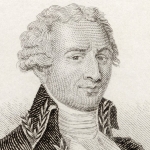
Joseph de Jussieu was born September 3, 1704, in Lyons, France. He was the son of Laurent de Jussieu and Lucie Cousin. He was also a brother of Antoine and Bernard de Jussieu who also became famous botanists.
Botanist engineer explorer naturalist physician scientist
Joseph de Jussieu was born September 3, 1704, in Lyons, France. He was the son of Laurent de Jussieu and Lucie Cousin. He was also a brother of Antoine and Bernard de Jussieu who also became famous botanists.
After hesitating between the medical and engineering professions, Jussieu opted for the former; he also took an interest in botany, thus following his elder brothers Antoine and Bernard.
Jussieu's life would undoubtedly have paralleled his elder brothers' lives but for an event that occurred in 1735. Godin, Bouguer, and La Condamine were charged with measuring an arc of meridian in Peru near the equator; and the minister of the Navy and of the Colonies, Maurepas, an enlightened patron of scientific explorations, was seeking a physician to accompany them and to double as naturalist, collecting and describing the natural products of the countries visited. Jussieu accepted the post.
The mission, which left from La Rochelle on May 16, 1735, in 1743 completed its geodesic work between Quito, in the north, and Cuenca, in the south, in what is now Ecuador. During this period cinchona, known until then in Europe only in the form of quinine, was observed for the first time by La Condamine (1737) near Loja, while he was traveling from Quito to Lima. Jussieu returned to Loja in 1739, repeating and completing La Condamine’s observations and gathering valuable data on cinchona. Their mission concluded, the party separated. Godin went to Lima, where he had accepted the chair of mathematics at the university and the post of first cosmographer of his Catholic majesty; La Condamine and Bouguer went back to France. Jussieu left ill and penniless, was forced to earn a living and to save for his return passage by practicing medicine.
By 1745 Jussieu had saved nearly enough to pay for his return, but in the meantime his abilities and devotion had become so well-known that when an epidemic of smallpox broke out in Quito, a formal order of the royal court forbade him to leave the city and threatened anyone who aided in his departure with serious penalties. Resigned to remaining, Jussieu was torn between the desire to see his friends and family and the passion for discovery. He soon found it impossible to give up a visit to a new region, even if it meant missing a chance to return home. Moreover, for want of money, he was even under pressure to abandon natural history in order to practice medicine for a living.
When he was finally able to leave the province of Quito, Jussieu began, at the request of Maurepas, a long journey to Lima, where the astronomer Godin was living. At the outset he made a detour to examine the canella tree in its natural habitat; its bark is the source of cinnamon. He arrived in Lima in 1748 and left on August 27 with Godin. The following summer they arrived at La Paz, having inspected the mercury mines of Huancavélica, crossed the Great Cordillera of the Andes, and followed the Rio Urubamba as far as Lake Titicaca, where Jussieu assembled a collection of aquatic birds.
At La Paz, once again seized by the passion to explore, Jussieu let Godin continue to Europe and traveled to the Las Yungas Mountains in the eastern Cordillera, to study the cultivation of coca. From there, continuing northeast, he entered the swampy Majos region. He then recrossed the Andes and visited Santa Cruz de la Sierra, Oruro, and Chuquisaca (Sucre), reaching Potosí in July 1749. He stayed in that city four years, studying the famous silver mines while practicing medicine and even serving as an engineer in 1754 when, at the command of the governor of the province, he supervised the construction of a bridge.
Exhausted, Jussieu returned to Lima in 1755. Despondent after the death of his mother and two of his brothers and in a deteriorating physical state, he remained in Lima, caring for the poor and the rich, without the means or the will to tear himself from this draining existence. His family pleaded with him to return, and several French friends, alarmed by his state, finally convinced him to leave. He embarked in October 1770 and sailed for Spain by way of Panama before continuing to France. On July 10, 1771, he reached Paris after an absence of thirty-six years. Affectionately welcomed by his brother Bernard and his nephew Antoine-Laurent, he lived with them in the family residence. Their care partially restored his health but not his taste for life. He published nothing and no longer went out, not even to the Academy of Sciences. Venerated by those close to him as a martyr to science, he lived in a state of despondency for eight more years in the house on the rue des Bernadins from which he had set out, young and enthusiastic, in 1735.
When he set out on his voyage home, Jussieu had left the majority of his scientific papers in Lima; they were destroyed following the death of the man to whom they were entrusted.
Although Joseph de Jussieu was not always connected with botany during his life, he is still best remembered for his contribution to this particular field of science. He is probably best remembered for introduced the common garden heliotrope (Heliotropium arborescens) to European gardeners. He also played a significant role in the Peru expedition of 1735, where he helped in measuring an arc of meridian in Peru near the equator.
In 1743 Jussieu was elected to the Academy of Sciences, but he never visited it in his thirty-six years as member.
Presumably, Jussieu never married.