Background
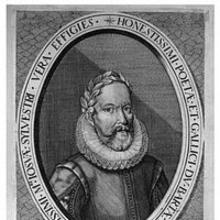
He was born in England in 1563, the son of a Kentish clothier.


(This is a reproduction of a book published before 1923. T...)
This is a reproduction of a book published before 1923. This book may have occasional imperfections such as missing or blurred pages, poor pictures, errant marks, etc. that were either part of the original artifact, or were introduced by the scanning process. We believe this work is culturally important, and despite the imperfections, have elected to bring it back into print as part of our continuing commitment to the preservation of printed works worldwide. We appreciate your understanding of the imperfections in the preservation process, and hope you enjoy this valuable book. ++++ The below data was compiled from various identification fields in the bibliographic record of this title. This data is provided as an additional tool in helping to ensure edition identification: ++++ The Complete Works Of Joshuah Sylvester: For The First Time Collected And Edited: With Memorial-introduction, Notes And Illustrations, Glossarial Index, &c. &c., Portraits, And Facsimiles, &c, Volume 1; The Complete Works Of Joshuah Sylvester: For The First Time Collected And Edited: With Memorial-introduction, Notes And Illustrations, Glossarial Index, &c. &c., Portraits, And Facsimiles, &c; Guillaume De Salluste Du Bartas (seigneur); Chertsey Worthies' Library; The Complete Works: Now For The First Time Collected; Alexander Balloch Grosart Josuah Sylvester, Guillaume de Salluste Du Bartas (seigneur), Gui Du Faur de Pilbrac, Odet de La Noue (seigneur de Téligny), Henry Smith Alexander Balloch Grosart Printed for private circulation by T. and A. Constable, 1880 English poetry; French poetry
http://www.amazon.com/gp/product/1275940374/?tag=2022091-20

(This is a reproduction of a book published before 1923. T...)
This is a reproduction of a book published before 1923. This book may have occasional imperfections such as missing or blurred pages, poor pictures, errant marks, etc. that were either part of the original artifact, or were introduced by the scanning process. We believe this work is culturally important, and despite the imperfections, have elected to bring it back into print as part of our continuing commitment to the preservation of printed works worldwide. We appreciate your understanding of the imperfections in the preservation process, and hope you enjoy this valuable book.
http://www.amazon.com/gp/product/1144489806/?tag=2022091-20
He was born in England in 1563, the son of a Kentish clothier.
In his tenth year he was sent to school at King Edward VI School, Southampton, where he gained a knowledge of French.
After about three years at school, he appears to have been put to business, and in 1591 the title-page of his Yvry states that he was in the service of the Merchant Adventurers' Company.
He was for a short time a land steward, and in 1606 Henry Frederick, Prince of Wales gave him a small pension as a kind of court poet. In 1613 he obtained a position as secretary to the Merchant Adventurers. He was stationed at Middelburg, in the Low Countries, where he died.
He translated into English heroic couplets the scriptural epic of Guillaume du Bartas.
His Essay of the Second Week was published in 1598; and in 1604 The Divine Weeks of the World's Birth. The ornate style of the original offered no difficulty to Sylvester, who was himself a disciple of the Euphuists and added many adornments of his own invention. The Sepmaines of Du Bartas appealed most to his English and German co-religionists, and the translation was immensely popular. It has often been suggested that John Milton owed something in the conception of Paradise Lost to Sylvester's translation. His popularity ceased with the Restoration, and John Dryden called his verse "abominable fustian. "
His works were reprinted by A. B. Grosart (1880) in the Chertsey Worthies Library.
(This is a reproduction of a book published before 1923. T...)
(This is a reproduction of a book published before 1923. T...)