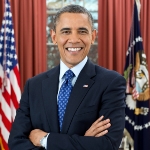
Juan Manuel Santos, President of Colombia, during the EU-CELAC summit.
School period
College/University
Gallery of Juan Santos
Houghton St, Holborn, London WC2A 2AE, United Kingdom
Santos studied economics, economic development, and public administration at the London School of Economics.
Gallery of Juan Santos
1450 Jayhawk Blvd, Lawrence, KS 66045, United States
Santos traveled to the United States to earn a Bachelor of Arts in economics and business at the University of Kansas (1973).
Gallery of Juan Santos
Cambridge, MA, United States
Santos earned a master's degree in public administration from Harvard University (1981).
Career
Gallery of Juan Santos
2018
Madrid, Spain
King Felipe VI of Spain and Queen Letizia of Spain receive President of Colombia Juan Manuel Santos Calderon and wife Maria Clemencia Rodriguez de Santos at the Zarzuela Palace on May 14, 2018, in Madrid, Spain. (Photo by Pablo Cuadra)
Gallery of Juan Santos
2016
455 Madison Ave, New York, NY 10022, United States
(L to R) President of Colombia Juan Manuel Santos shakes hands with U.S. President Barack Obama during a bilateral meeting at the Lotte New York Palace Hotel, September 21, 2016, in New York City. (Photo by Drew Angerer/Getty Images)
Gallery of Juan Santos
2016
Bogota, Colombia
Colombia's President Juan Manuel Santos (C) makes the victory/peace sign with wife Maria Clemencia Rodriguez after voting in the referendum on a peace accord to end the 52-year-old guerrilla war between the FARC and the state on October 2, 2016, in Bogota, Colombia. The guerrilla war is the longest-running armed conflict in the Americas and has left 220,000 dead. The plan calls for a disarmament and re-integration of most of the estimated 7,000 FARC fighters. (Photo by Mario Tama)
Gallery of Juan Santos
2016
Vatican City, Vatican
Pope Francis exchanges gifts with Colombia President Juan Manuel Santos Calderon and wife Maria Clemencia Rodriguez de Santos during an audience at the Apostolic Palace on December 16, 2016, in Vatican City, Vatican. (Photo by Vatican Pool)
Gallery of Juan Santos
2016
Vatican City, Vatican
Pope Francis meets Colombia President Juan Manuel Santos Calderon at the Apostolic Palace on December 16, 2016, in Vatican City, Vatican. (Photo by Vatican Pool)
Gallery of Juan Santos
2017
Washington, DC, United States
U.S. President Donald Trump and Colombian President Juan Manuel Santos walk up to the podiums to hold a joint news conference at the White House on May 18, 2017, in Washington, DC. The Trump administration has said it wants to slash foreign aid and Santos will most likely seek a renewal of $450 million dollars from the U.S. that supports the peace accord between the Columbian government at the Revolutionary Armed Forces (FARC). (Photo by Chip Somodevilla)
Gallery of Juan Santos
2016
New York, United States
Colombia's President Juan Manuel Santos addresses the General Assembly at the United Nations on September 21, 2016, in New York City. Presidents, prime ministers, monarchs, and ministers are gathering this week for the United Nations General Assembly's annual ministerial meeting. (Photo by Spencer Platt)
Gallery of Juan Santos
2013
Boston, Massachusetts, United States
President of the Republic of Colombia, Juan Manuel Santos Calderon, speaks at the Harvard University JFK School of Government John F. Kennedy Jr. Forum Institute of Politics on September 25, 2013, in Boston, Massachusetts. (Photo by Paul Marotta)
Gallery of Juan Santos
2015
New York, United States
President of Colombia Juan Manuel Santos speaks during the 2015 Clinton Global Initiative Annual Meeting at Sheraton Times Square on September 28, 2015, in New York City. (Photo by Taylor Hill/FilmMagic)
Gallery of Juan Santos
2016
Oslo, Norway
President Juan Manuel Santos of Colombia speaks during the press conference at the Norwegian Nobel Institute on December 9, 2016, in Oslo, Norway. Santos received this year's Nobel Peace Prize for his efforts to bring Colombia's more than half-century-long civil war to an end. (Photo by Nigel Waldron)
President of the Republic of Colombia, Juan Manuel Santos Calderon, speaks at the Harvard University JFK School of Government John F. Kennedy Jr. Forum Institute of Politics on September 25, 2013, in Boston, Massachusetts. (Photo by Paul Marotta)
President of Colombia Juan Manuel Santos speaks during the 2015 Clinton Global Initiative Annual Meeting at Sheraton Times Square on September 28, 2015, in New York City. (Photo by Taylor Hill/FilmMagic)
Colombia's President Juan Manuel Santos addresses the General Assembly at the United Nations on September 21, 2016, in New York City. Presidents, prime ministers, monarchs, and ministers are gathering this week for the United Nations General Assembly's annual ministerial meeting. (Photo by Spencer Platt)
455 Madison Ave, New York, NY 10022, United States
(L to R) President of Colombia Juan Manuel Santos shakes hands with U.S. President Barack Obama during a bilateral meeting at the Lotte New York Palace Hotel, September 21, 2016, in New York City. (Photo by Drew Angerer/Getty Images)
Colombia's President Juan Manuel Santos (C) makes the victory/peace sign with wife Maria Clemencia Rodriguez after voting in the referendum on a peace accord to end the 52-year-old guerrilla war between the FARC and the state on October 2, 2016, in Bogota, Colombia. The guerrilla war is the longest-running armed conflict in the Americas and has left 220,000 dead. The plan calls for a disarmament and re-integration of most of the estimated 7,000 FARC fighters. (Photo by Mario Tama)
President Juan Manuel Santos of Colombia speaks during the press conference at the Norwegian Nobel Institute on December 9, 2016, in Oslo, Norway. Santos received this year's Nobel Peace Prize for his efforts to bring Colombia's more than half-century-long civil war to an end. (Photo by Nigel Waldron)
Pope Francis exchanges gifts with Colombia President Juan Manuel Santos Calderon and wife Maria Clemencia Rodriguez de Santos during an audience at the Apostolic Palace on December 16, 2016, in Vatican City, Vatican. (Photo by Vatican Pool)
Pope Francis meets Colombia President Juan Manuel Santos Calderon at the Apostolic Palace on December 16, 2016, in Vatican City, Vatican. (Photo by Vatican Pool)
President Juan Manuel Santos of Colombia receives his Nobel Peace Prize Award during the Nobel Peace Prize ceremony at Oslo Town Hall on December 10, 2016, in Oslo, Norway. (Photo by Nigel Waldron)
U.S. President Donald Trump and Colombian President Juan Manuel Santos walk up to the podiums to hold a joint news conference at the White House on May 18, 2017, in Washington, DC. The Trump administration has said it wants to slash foreign aid and Santos will most likely seek a renewal of $450 million dollars from the U.S. that supports the peace accord between the Columbian government at the Revolutionary Armed Forces (FARC). (Photo by Chip Somodevilla)
King Felipe VI of Spain and Queen Letizia of Spain receive President of Colombia Juan Manuel Santos Calderon and wife Maria Clemencia Rodriguez de Santos at the Zarzuela Palace on May 14, 2018, in Madrid, Spain. (Photo by Pablo Cuadra)
Juan Manuel Santos is a Colombian politician who cofounded (2005) the Social Party of National Unity (Partido Social de Unidad Nacional, or Partido de la U), later served as president of Colombia (2010-2018) and was awarded the Nobel Peace Prize in 2016 for his efforts to end the protracted war with the Marxist guerrilla organization FARC (Fuerzas Armadas Revolucionarias de Colombia; "Revolutionary Armed Forces of Colombia").
Background
Juan Manuel Santos was born on August 10, 1951, in Bogotá, Columbia, to the family of Enrique Santos Castillo and Clemencia Calderón Nieto. He had four brothers named Enrique, Felipe, Luis, and Fernando.
His great-uncle had been president from 1938 to 1942, and his cousin had served as vice president from 2002 to 2010. The family had also been the founders of the Colombian newspaper El Tiempoin which the family owned for over 50 years.
Education
Santos spent most of his school years at the Colegio San Carlos in Bogotá, which is a bilingual boy's school, that teaches the equivalent of first through twelfth grades.
In 1969, he graduated from the Admiral Padilla Naval Cadet School, where he enrolled upon enlisting in the Colombian Navy. In 1971, Santos left the Navy with the rank of naval cadet NA-42 139.
Later he traveled to the United States to earn a Bachelor of Arts in economics and business at the University of Kansas (1973). After graduating, he headed the Colombian delegation to the London-based International Coffee Organization. While there Santos studied economics, economic development, and public administration at the London School of Economics.
He earned a master's degree in public administration from Harvard University (1981) before returning to Colombia to work as an editor at El Tiempo, where his reporting earned him a number of accolades.
In 1991 Santos became minister of foreign trade under President César Gaviria Trujillo. Two years later he was appointed designee to the presidency, a position that was later folded into the office of vice president. In 1994 Santos was part of a team of negotiators who attempted to reach a peace agreement with the FARC, which had been active in Colombia since the 1960s. He was a leader of the Colombian Liberal Party (Partido Liberal Colombiano) in the late 1990s, and from 2000 to 2002 he served as minister of the treasury and public credit in the cabinet of Pres. Andrés Pastrana.
In 2005 Santos helped found the Social Party of National Unity, a coalition of lawmakers and officials from various parties who supported President Uribe's agenda, which included austerity measures and strong anti-terrorism laws. Santos joined Uribe's cabinet as defense minister in 2006, and he escalated the government military campaign against the FARC. A controversial strike in Ecuadoran territory in March 2008 killed a senior FARC leader and a number of his subordinates, causing a diplomatic rift with Colombia's western neighbor. Four months later Santos supervised Operation Checkmate, an intelligence operation that led to the dramatic rescue of 15 hostages held by the FARC, including Colombian politician Ingrid Betancourt. Those two events, along with the death by heart attack of FARC founder Manuel Marulanda Vélez in March 2008, dealt a devastating blow to the rebel movement. Later that year, however, Santos faced controversy when it was revealed that paramilitary, police, and army units had killed hundreds of civilians and disguised them as rebels to inflate body counts during antiguerrilla campaigns. Santos sacked dozens of officers over the matter, but human rights groups criticized the government's delay in bringing those responsible to trial.
Santos resigned his cabinet post in 2009 to run for the presidency. His promise to continue the policies of Uribe, who was constitutionally barred from seeking a third term, proved popular with voters. Santos received 47 percent of the ballots in the first round of polling in May 2010, and in the second round, held on June 20, he secured 69 percent of the vote in a landslide victory. Santos took office on August 7, 2010.
Despite the perception of many Colombians early in Santos's term that their economic welfare and security were deteriorating, the country's GDP grew by an average of more than 4 percent from 2009 to 2013 while unemployment and inflation generally shrank. Yet the most notable accomplishment of Santos's administration was its success in bringing the FARC to the bargaining table. For the third time in Colombian history, the government initiated direct peace negotiations, which began in 2012 in Oslo and continued in Havana. The start of those talks led Santos's popularity to spike to roughly 60 percent approval.
As the talks continued into 2013 without a bilateral cease-fire, however, they continued to come under heavy criticism from conservative sectors of Colombian society, including former president Uribe. Popular support wavered as some of the major points of disagreement became public knowledge, including the potential for political participation by current members of the guerrillas, the possibility of rewriting the constitution, an eventual popular referendum on the peace agreement, and the amnesty that could be granted to guerrillas. The talks were at the center of the 2014 presidential election, which Santos won in a June runoff, capturing some 51 percent of the vote to defeat rightist Oscar Ivan Zuluaga.
Meanwhile, the talks yielded agreements on three of the five major points on the agenda set by the negotiating parties, but the talks were suspended by the government in mid-November when a high-ranking army officer was kidnapped (along with two other people) by the guerrilla group. Talks immediately resumed when the FARC released him some two weeks later. On December 20 the FARC initiated a unilateral cease-fire that was still holding in mid-January 2015 when Santos surprised many observers by directing negotiators in Havana to open discussions regarding a bilateral cease-fire (which he had previously refused to consider until a final agreement had been reached).
The first two-thirds of 2015 brought a disruption of that cease-fire, along with the initiation of another cease-fire by the FARC - which was greeted by the government scaling back its military efforts - and, on September 23, a meeting in Havana between Santos and FARC representatives at which it was announced that they had agreed to reach a final peace accord within six months.
Only two days earlier, meeting in Ecuador, Santos and Venezuelan Pres. Nicolás Maduro had begun the normalization of relations between their two countries, which had begun deteriorating in mid-August when Venezuela closed its border with Colombia. The Venezuelan government also had deported some 1,500 Colombians whom it accused of involvement in the smuggling of subsidized Venezuelan goods into Colombia for sale.
Although the final peace treaty between the government and the FARC had not been consummated by the agreed-upon deadline, on June 23, 2016, Santos was back in Havana, this time joining the FARC's leader, Rodrigo Londoño ("Timoleón Jiménez" or "Timochenko"), to sign a permanent cease-fire agreement. The agreement specified that FARC fighters would turn in their weapons under UN monitoring within 180 days of the final treaty's signing. Meanwhile, Uribe stepped up his hawkish criticism of Santos's efforts, and the president's approval ratings tumbled, at least partly in response to the protracted nature of the peace negotiations. Nevertheless, Santos scored a victory when the country's constitutional court ruled that the final agreement could be put to the Colombian people for their approval in a referendum.
With all of the lingering details worked out, on September 26 in Cartagena, Santos and Londoño signed a historic final peace agreement. Opinion polling indicated solid popular support for the agreement, but when Colombians voted on the referendum on October 2, they narrowly rejected the agreement (50.21 percent of those who voted opposed the agreement, while 49.78 percent approved it). Generally, those who voted "no" indicated that they felt the agreement was too lenient on the FARC rebels, most of whom would be granted amnesty, whereas FARC leaders were to come before transitional justice tribunals that would have the option of sentencing the convicted to community service or confinement in rehabilitation zones rather than prison. Despite the devastating setback, both the government and the FARC announced that they would continue to honor the cease-fire that was already in place.
The defeat of the referendum was a major blow to Santos, who had largely staked his presidency on brokering the peace agreement. After having been discussed as a possible candidate for the Nobel Peace Prize, Santos suddenly appeared to be politically vulnerable as the 2018 presidential election loomed. Bowed but determined, he promised to convene all interested political parties, especially those who opposed the agreement, to try to move toward a resolution. He also dispatched a negotiator to Havana to resume talks there with Londoño. Hopes for the negotiations and a peaceful future were buoyed less than a week later when, despite the failure of the referendum, the Nobel committee surprisingly awarded Santos the Peace Prize for his efforts to end the war. Responding to the announcement of the award, Santos said: "I am infinitely grateful for this honorable distinction with all my heart. I accept it not on my behalf but on behalf of all Colombians, especially the millions of victims of this conflict which we have suffered for more than 50 years. It is for the victims and so that there not be a single new victim, not a single new casualty, that we must reconcile and unite to culminate this process and begin to construct a stable and durable peace."
In late November the House of Representatives and the Senate (both of which were dominated by Santos's ruling coalition) ratified a renegotiated accord that included many changes that had been demanded by opposition leaders. Nevertheless, the new agreement was denounced by the opposition, which had not been allowed to review the revised accord and which took exception to its failure to include some key opposition proposals. By early 2017, however, FARC guerrillas had begun concentrating in the transition zones in which they were to turn over their weapons to United Nations monitors.
On August 15, 2017, the FARC relinquished the last of its accessible weapons (some 900 weapons remained in caches in remote areas) to UN representatives. In declaring an official end to Colombia's conflict with the FARC, Santos said at a ceremony in Fonseca, "Now we can develop parts of the country we were never able to develop before." The legacy of the peace agreement was threatened, however, when Uribe's handpicked candidate, Iván Duque, was elected as Santos's successor in the 2018 presidential election.
The famous politician owns a restaurant chain, the "Fat Santos Burger," and a football team called the Bogotá Angels.
Juan Manuel Santos was the 32nd President of Colombia. He embarked on a political career in the 1970s when he represented the National Federation of Coffee Growers of Colombia in London. In 1991, he was appointed to his first major political post, when he became Colombia's Minister of Foreign Trade. Somewhere around this time, he became interested in the Third Way, political centrism that combines conservative free-market capitalism with liberal social policies. He served a number of different Presidents in different capacities until he was elected President himself in 2010. During much of his career, he has sought to stamp out terrorism, especially FARC, and bring prosperity to Columbia by promoting economic growth.
In 2005, Juan Manuel Santos founded the Social Party of National Unity. The political party extended his support for Presidential candidate Álavaro Uribe.
Since the 1960s, Colombia has been plagued by civil war. In 2012 the country's President Juan Manuel Santos took the initiative for negotiations between the government and the FARC guerillas. In June 2016, an agreement was reached on a ceasefire. In a referendum in October the same year, a narrow majority voted to reject a draft peace agreement. By awarding Juan Manuel Santos the Peace Prize, the Norwegian Nobel Committee has wanted to encourage continued dialogue and struggles for peace and reconciliation.
For his aggressive environmental policies to protect his country's biodiversity and fight climate change, he was awarded the Royal Botanic Gardens Kew International Medal and the Wildlife Conservation Society Theodore Roosevelt Award for Conservation Leadership. In addition, the National Geographic Society honored him for his unwavering commitment to conservation, and Conservation International awarded him the Global Visionary Award.
His innovative and successful policies to fight poverty and inequality earned him the appointment as co-founder of the Multidimensional Poverty Peer Network (MPPN) by the Oxford Poverty and Human Development Initiative (OPHI), along with his former professor and inspirer of his policies, Economics Nobel Laureate Amartya Sen.
Santos voiced his support for same-sex marriage. "Marriage between homosexuals to me is perfectly acceptable and what's more I am defending unions that exist between two people of the same sex with the rights and all of the same privileges that this union should receive," said Santos.
Personality
Physical Characteristics:
In October 2012, Santos underwent surgery for prostate cancer.
Interests
Sport & Clubs
football
Connections
Santos married Silvia Amaya Londoño, a film director. They divorced three years later and had no children.
In 1987, he married María Clemencia Rodríguez Múnera. They first met when Santos was working with the El Tiempo. The couple has three children, named Martín, María Antonia and Esteban.