Background
Of German Jewish ancestry, Dame Julia Myra Hess was born in a traditional Jewish home in a genteel part of London.
Of German Jewish ancestry, Dame Julia Myra Hess was born in a traditional Jewish home in a genteel part of London.
She showed uncommon musicality from an early age and attended the Guildhall School of Music, where, at the age of twelve, she won a scholarship to the Royal Academy of Music. There, she studied exclusively with Tobias Matthay, who was to be her mentor and a major influence on her until his death in 1945. He devised a triangular apparatus to increase her span, and his theories on touch helped her form her style, which combined a masterful technique with lightness.
She made her debut at seventeen in the Beethoven G Major Concerto under Thomas Beecham at Queen’s Hall, London. The following year she gave an all-Beethoven recital, which was fairly well received. Recognition, however, was slow. Depressed, she toyed with the idea of mutilating her hands so that she would never again be able to play.
Throughout her career she devoted part of her time to teaching and delighted in furthering young talent. Her only serious love affair was with the talented violinst, Aldo Antonietti. In 1907 she accompanied him on a highly acclaimed recital tour of Holland. Their romance was short-lived, however, since Hess was not prepared to sacrifice her career for family life. There were many other suitors, among them Mischa Elman and Benno Moisewitsch, both of whom proposed marriage, but she was steadfast in renouncing further intimate relationships so as to devote herself to music.
In 1912 she appeared with the Amsterdam Concertgebouw, already one of the finest orchestras, under Willem Mengelbcrg. Reviews were ecstatic, comparing her sensitive, poetic playing of the Schumann A Minor Concerto to that of the venerated Clara Schumann. In Europe she was an immediate box-office draw long before she was fully recognized in her native England.
She also established an immediate rapport with American audiences. For four decades, from 1922 onward, she made repeated coast-to-coast tours into the United States and Canada. Even during the depression, when most audiences dwindled, hers grew.
During World War II, she conceived, directed, and often appeared in the Myra Hess midday concerts held in London’s National Gallery, denuded of the art treasures that had been removed for safe keeping. Since the regular concert halls were closed, her concerts filled a profound need for music lovers from all walks of life. Almost 1,700 concerts were held, even during periods of bombing. Myra Hess was credited with helping to keep up the morale of the war-ravaged capital. She endeared herself to audiences by asking if they were all “comfy” and suggesting that they “have a good cough and get it over.”
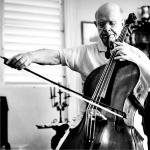
Her vintage years were highlighted by the Casals summer festivals at Perpignan (1951) and Prades (1952), and she collaborated with Pablo Casals, Isaac Stern, and Joseph Szigeti in chamber ensembles.
She suffered the constraints of Jewish Orthodoxy until the age of twenty and finally left home in 1914 after a disagreement with her father. Yet even after embracing Christianity some years later, she remained proud of her Jewish roots, attributing her self-discipline to her strict Jewish upbringing.