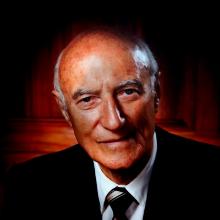
Kenneth Colin Irving was a Canadian entrepreneur and industrialist who built a vertically integrated business empire from a Bouctouche service station and Ford dealership. His companies expanded into oil, forestry, transportation, publishing, broadcasting, shipbuilding, and food processing, making him one of the most influential industrial figures in New Brunswick.
Background
Kenneth Colin Irving was born on March 14, 1899, in Bouctouche, New Brunswick, into a fourth-generation Canadian family of Scottish descent. His father, James Dergavel Irving, operated a sawmill and general store, linking the family to the timber economy that had long shaped the Maritime Provinces. The region was entering a period in which local businesses faced growing competition from central Canadian capital, national retailers, and modern industrial enterprises.
Irving developed an early appetite for work and performed agricultural and other jobs while growing up. He studied at Acadia University from 1916 to 1917 before leaving to serve with the Royal Flying Corps during the First World War; he returned to New Brunswick in 1919 without seeing combat. Acadia, founded in 1838 in Wolfville, Nova Scotia, was a Baptist-rooted liberal arts university that became an important regional institution of higher education.
In 1927, Irving married Harriet Lila MacNairn of Galloway, New Brunswick. They had three sons: James Kenneth, Arthur Lee, and John Ernest. Harriet died in 1976.
Education
Irving studied at Acadia University from 1916 to 1917. The university, founded in Wolfville in 1838, developed from a Baptist educational tradition and became one of the Maritime Provinces' leading liberal arts institutions. Irving left before completing his studies to serve with the Royal Flying Corps during the First World War.
His education was followed by practical training in his family's general store and sawmill environment, then by direct experience in automobile retailing, fuel distribution, transportation, forestry, manufacturing, and publishing. That combination of limited formal higher education and extensive operational experience characterized the business development of his later career.
Irving began his business career in Bouctouche by adding an automobile service station to the family general store and becoming a Ford dealer. In the early 1920s he sold Imperial Oil products, but after that arrangement ended he established his own fuel business. He opened a service station in Saint John in 1925, incorporated K. C. Irving Gas & Oil Ltd. in 1927, and founded Irving Oil Ltd. in 1929.
He moved his main operations to Saint John in 1931 and used the Golden Ball Building as the headquarters of an expanding group of companies. His strategy emphasized close family ownership, direct managerial control, and vertical integration. Transportation companies, including bus and trucking operations, helped distribute fuel and supported expansion into timberlands, veneer production, shipping, and other industries.
During the 1930s and the Second World War, Irving expanded into forestry products and acquired control of Canadian Veneers Ltd., whose veneer production served aircraft manufacturing. After 1944 he entered newspaper publishing, acquiring major New Brunswick newspapers such as the Saint John Telegraph-Journal; the group later added radio and television stations. Other activities included heavy construction, ocean towing, oil tankers, shipbuilding, and the Saint John Drydock Company.
In the 1950s Irving developed an integrated oil operation through partnerships and acquisitions. The Irving Oil Refinery in Saint John began operating in 1960 with an initial capacity of 40,000 barrels per day, and Irving Canaport opened in 1970 as the first deep-water oil terminal in the Western Hemisphere. These facilities connected refining, marine transportation, storage, and retail distribution within a single regional business system.
During the 1960s and 1970s, Irving's companies expanded further into newspapers, forestry, pulp and paper, food processing, construction, shipbuilding, and broadcasting. Cavendish Farms was established within the wider Irving business group in 1979. By the 1980s, the group comprised hundreds of companies and employed tens of thousands of people across Atlantic Canada and neighboring parts of Quebec, Ontario, and Maine.
Irving's economic influence was accompanied by controversy. His companies held dominant positions in several Maritime industries, while his opposition to union penetration and his use of family ownership attracted criticism from labor organizations and governments. From 1971 to 1974, he successfully defended the Irving newspaper chain against a Canadian government challenge alleging that its concentration of ownership operated against the public interest.
In 1971, Irving moved his legal domicile to Bermuda and increasingly delegated operational responsibility to his three sons while retaining close control over the overall group. The transition distributed major sectors of the enterprise among James, Arthur, and John and helped maintain family control after his death.
Irving built an integrated regional business empire spanning oil distribution and refining, forestry, pulp and paper, transportation, shipbuilding, construction, food processing, newspapers, radio, and television.
He initiated a large-scale reforestation program in 1958. The program planted its 100-millionth tree in 1977 and its 200-millionth tree in 1986, making Irving an important figure in New Brunswick forest renewal.
He established the Irving Oil Refinery in Saint John, which began operating in 1960, and helped develop Irving Canaport, the first deep-water oil terminal in the Western Hemisphere, opened in 1970.
(A biography of Irving by Russell Hunt and Robert Campbell...)
1973
Religion
Irving was shaped in his youth by his father James Dergavel Irving's ardent Presbyterianism, which emphasized disciplined work, frugality, and moral responsibility. Although he was not especially religious in later life, Presbyterian teaching formed part of the family and social environment in which he grew up.
Presbyterianism is a Protestant tradition rooted in the Reformation and organized around representative church government, biblical preaching, and the theological heritage associated with John Calvin. In Atlantic Canada, Presbyterian congregations were important institutions in the religious and civic life of many communities during Irving's childhood and early adulthood.
Views
Irving's business philosophy centered on expansion, vertical integration, direct managerial control, and long-term family ownership. His forestry work also expressed a practical conservation outlook: forests were economic resources that required active renewal and protection from fire, disease, and neglect.
His reforestation program linked industrial development with stewardship of New Brunswick's natural resources. The program reflected a belief that private enterprise could undertake large-scale environmental renewal when it was connected to the long-term interests of the province and its future residents.
Quotations:
"Expansion is the thing."
Personality
Irving was known for hands-on management, secrecy, close family control, and a strong preference for direct involvement in the daily operation of his companies. His business philosophy placed exceptional emphasis on expansion, integration, and maintaining control over related industries. He was also described as reclusive, particularly after moving his legal domicile to Bermuda.
Quotes from others about the person
Irving described his business philosophy succinctly as, "Expansion is the thing." In 1986, while planting the 200-millionth tree in his reforestation program, he characterized the work as "an investment in the future of New Brunswick for future New Brunswickers."
Interests
Forestry conservation and reforestation
Connections
Irving married Harriet Lila MacNairn in 1927. They had three sons: James Kenneth, Arthur Lee, and John Ernest, all of whom became involved in the family business. The next generation's participation enabled the Irving companies to remain family-controlled as operational responsibilities were transferred from their father to his sons.
Harriet died in 1976. Irving died in Saint John on December 13, 1992, and was buried in Bermuda.
Son:
James K. Irving
The eldest son, James K. Irving became a Canadian businessman and assumed responsibility for important forestry and industrial operations within the family group.
Son:
Arthur Irving
The second son, Arthur Irving became a Canadian businessman and was closely associated with the development of Irving Oil and its Saint John refinery.
Son:
John E. Irving
The youngest son, John E. Irving became a Canadian businessman and took responsibility for parts of the family's construction, engineering, and communications interests.
K.C.: The Biography of K.C. Irving
A biography by Douglas How and Ralph Costello covering Irving's rise from a Bouctouche service station operator to a major Canadian industrialist.
Appointed in 1989 and invested in 1991 for building an international business empire based in New Brunswick, including oil facilities, service stations, forestry operations, a shipyard, and newspaper and broadcasting companies.
Appointed in 1989 and invested in 1991 for building an international business empire based in New Brunswick, including oil facilities, service stations, forestry operations, a shipyard, and newspaper and broadcasting companies.
Canadian Business Hall of Fame,
Canada
Inducted in 1979; he was the first New Brunswicker elected to the Canadian Business Hall of Fame in recognition of his contribution to Canadian business and industrial development.
Inducted in 1979; he was the first New Brunswicker elected to the Canadian Business Hall of Fame in recognition of his contribution to Canadian business and industrial development.