(In this book, Kurt Koffka reformulates the basic question...)
In this book, Kurt Koffka reformulates the basic question of perception. In the past it had often been assumed that there was really no need to explain the features of veridical perception. Here Koffka rejects this approach: regardless of the veridicality of perception, the researcher must always ask the question, "Why do things look as they do?" The book details the phenomenological and holistic approach to this question which the Gestalt movement embraced, while also reviewing the extensive research which had been conducted up to that time in support of the Gestalt orientation.
The Growth Of The Mind: An Introduction To Child Psychology
(This scarce antiquarian book is a facsimile reprint of th...)
This scarce antiquarian book is a facsimile reprint of the original. Due to its age, it may contain imperfections such as marks, notations, marginalia and flawed pages. Because we believe this work is culturally important, we have made it available as part of our commitment for protecting, preserving, and promoting the world's literature in affordable, high quality, modern editions that are true to the original work.
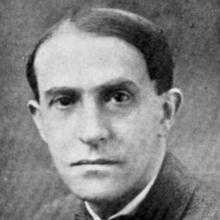
Kurt Koffka was an American psychologist. He will be remembered as an integral part of a movement in psychology from which he cannot and would not wish to be dissociated.
Background
Kurt Koffka was born on March 18, 1886 in Berlin, Germany. He was the eldest of three children of Emil Koffka, a comfortably situated lawyer, and Luise (Levy) Koffka. Though his mother was Jewish, the family attended the Evangelical Church.
Education
Koffka came of a family of lawyers, but his mother's brother, a biologist, aroused his keen interest in science and philosophy, and upon graduating in 1903 from the Wilhelms Gymnasium in Berlin, he entered the University of Berlin, planning to study philosophy. He spent the year 1904-05 at the University of Edinburgh.
Career
On leaving Berlin, Koffka worked with Johannes von Kries at Freiburg and with Oswald Külpe and Karl Marbe at Würzburg. The year 1910 found him as assistant to Friedrich Schumann in Frankfurt. This year was, in his own words, "of special importance in my scientific development with [Wolfgang] K(tm)hler as Schumann's other assistant and [Max] Wertheimer working on the perception of motion in the laboratory. Thus we three who knew each other slightly before were thrown into the closest contact, which resulted in lasting collaboration. " From this contact developed the Gestalt theory, an approach to psychology which was in sharp contrast to the accepted frames of reference in both Europe and America at that time. The word "Gestalt, " meaning form or configuration, was chosen because it emphasized a concept that the whole is more than the sum of its parts. Gestalt psychology was initially a reaction against the traditional atomistic approach to the human being where behavior was analyzed into constituent elements called sensations. Later it rejected the behavioristic psychology of J. B. Watson with its oversimplified units of stimulus and response. The Gestalt psychologist felt that these approaches denuded human life of its essential meaningfulness and were based on an unnecessarily restricted model of the physical universe. Koffka was not the most original of the great Gestaltist triumvirate, but he became in time their most influential spokesman.
In 1911 Koffka was appointed Privatdozent (lecturer) at the University of Giessen and seven years later, ausserordentlicher Professor (associate professor). He and his students at Giessen put out a steady flow of experimental studies. Eighteen articles appeared as part of the series "Beiträge zur Psychologie der Gestalt" in the Psychologische Forschung, the journal of the Gestalt group.
During the years of World War I, Koffka worked with Prof. Robert Sommer at the Psychiatric Clinic in Giessen on patients with brain injuries and especially on aphasics. Later he was engaged on problems of sound localization, first with the army and then with the navy.
In 1921 he published Die Grundlagen der psychischen Entwicklung, which applied the Gestalt viewpoint to developmental psychology. Published in English as The Growth of the Mind (1925), the book had a considerable influence on educational theory by shifting emphasis away from rote learning and onto the significance of intuition. Koffka's outspoken advocacy of Gestalt psychology aroused much enmity among the traditional psychologists of Germany, and it seemed unlikely that he would ever be able to rise above the provincial university of Giessen.
A devoted Anglophile who spoke perfect English, he had hopes of moving to England, but conditions were academically and ideologically unsuitable. Two trips to America, as visiting professor at Cornell in 1924-25 and at Wisconsin in 1926-27, finally convinced him that opportunities lay in the United States, and in 1927 he accepted a post as William Allan Neilson Research Professor at Smith College--a five-year appointment during which no publications were demanded, no teaching required. Again the majority of experimental projects undertaken by Koffka and his students lay in the field of visual perception. These publications appeared again in Psychologische Forschung and were also published as Smith College Studies in Psychology.
In 1932 Koffka was given a regular teaching appointment at Smith as professor of psychology. After joining a somewhat abortive Russian-sponsored expedition to Uzbekistan in Soviet Asia in 1932, where he contracted relapsing fever, Koffka embarked on his monumental work, Principles of Gestalt Psychology (1935). In it he took stock of his position, forcing himself to recognize gaps, inadequacies, and inconsistencies in Gestalt theory as he saw it, thinking through and integrating within this framework his astonishing detailed knowledge of experimental problems. With this book completed, he permitted himself, as a psychologist, to be concerned with wider problems in areas in which he had long been interested, such as art, music, and literature and general social and ethical questions. His article "Problems in the Psychology of Art, " his various lectures on tolerance and on freedom, and his dialogue on "The Ontological Status of Value" all show that he had now extended the province in which he felt the psychologist had a right to participate. To all these more general topics he brought the same stringency of thought, the same careful avoidance of loose generalization, that characterized his intensive work in experimental problems. In 1939, while spending a year as visiting professor at the University of Oxford, Koffka revived one of his old interests, working at the Nuffield Institute with patients with brain lesions and at the Military Hospital for Head Injuries, where he helped develop tests for impaired judgment and comprehension that came into general use. Despite a heart condition which had caused him to restrict his activities for several years, he continued to teach until a few days before his death.
Achievements
Kurt Koffka was one of the founders of Gestalt psychology.
Kurt KolTka was one of the founders of Gestalt psychology along with Max Wertheimer and Wolfgang Köhler. As a student he was interested in Kant and Nietzsche. He enrolled at Berlin University, initially in philosophy, and he remained concerned with the philosophical aspects of psychology throughout his life. His association with Wertheimer and Köhler dated from the period in 1910 11 at the Academy in Frankfurt am Main, and the three remained life long friends. He was for many years the editor of the Psychologische Forschung, a journal founded in the early 1920s in which much of the early research on Gestalt psychology was published. Koffka's visit to the International Congress of Psychology in Oxford in 1923 helped to bring Gestalt theory to a wider international audience.
Perhaps more than his collaborators, KolTka placed a particular emphasis on the importance of insight in the perception of Gestalten. He was also especially interested in developmental psychology, publishing a comprehensive account of Gestalt child psychology in The Growth of the Mind (1924). His central philosophical concern was to find a way of reconciling the importance of meaning and value in human experience with the advances of science. He was deeply opposed to the prevailing hard-line materialism in philosophy and to behaviourism in psychology. These theories, he argued, if taken literally, lead to an impoverishment of the scientific endeavour itself. The alternative, though, was not philosophical idealism, still less Cartesian dualism. It was. rather, the concept of the Gestalt. The essential feature of a Gestalt, that the whole is different from the sum of its parts, provided an avenue for meaning and value to find their proper place in a scientific worldview.
KolTka developed a number of more specific philosophical theses in his Principles of Gestalt Psychology (1935). First, he sought to distinguish between two environments in which people exist—the behavioural, broadly the world-asperceived. and the geographical, corresponding with the world-as-rcvealcd by science. These are not necessarily coextensive: the behavioural environment. forcxample, contains only a small pari of the electromagnetic spectrum revealed by science; conversely, perspective is a feature only of the geographical environment. Second, he tried to clarify the difference between "things' and "notthings'. ‘Things’ include such objects as tables and chairs, which, like Gestalten, have definite boundary properties and a degree of constancy; ‘not* things’ lack these properties. Third, he brought these two ideas together in an attempt to clarify the concept of the ego, as a ’thing’ with definite if somewhat inconstant boundaries, but existing within the behavioural rather than geographical environment. A kindly and well-liked man, Koffka’s interests extended beyond science and philosophy to music and art. Many of his contemporaries in America, under the influence of behavioural psychology, were often impatient with his metaphysical interests. Yet the issues with which he was concerned remain key issues for any discipline which claims to be a human rather than merely natural science. Sources; Edwards; Goldenson; Union Catalogue of Departmental and College Libraries.
Quotations:
"If an environmental trace is in close connection with the Ego system it will not only be in communication with the particular time structure of that system with which it communicated at the time of its formation but because of the coherence of the whole temporal Ego system it will be in communication with later strata also".
Personality
One of Koffka's outstanding characteristics was his genuine lack of interest in personal recognition and his ever-present appreciation of the ideas which he owed to his Gestalt colleagues.
Connections
On January 9, 1909, Koffka married to Mira Klein. They were divorced in 1923, and on July 21 of that year he married to Elisabeth Ahlgrimm, who had received her doctorate from the University of Giessen. Three years later they were divorced and Koffka remarried his first wife but in 1928 he was again divorced and once more married tobElisabeth Ahlgrimm. He had no children.