Background
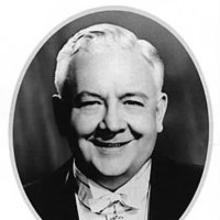
Lauritz Melchior was born on 20 March 1890 in Copenhagen, Denmark, and was the son of Jirgen Conradt Melchior, a schoolmaster, and Julie Sofie Miller, who died a month after his birth.

Lauritz Melchior was born on 20 March 1890 in Copenhagen, Denmark, and was the son of Jirgen Conradt Melchior, a schoolmaster, and Julie Sofie Miller, who died a month after his birth.
After some ten years at the Melchior School, a family institution, he began private vocal studies at age eighteen, and then entered the Royal Opera School, Copenhagen, where he made his debut in the baritone role of Silvio in Pagliacci on April 2, 1913. After several years in baritone roles with this company, Melchior began to study as a tenor on the advice of the distinguished contralto Mme Charles Cahier, who had noted the brilliance of his upper register.
Melchior made his tenor debut as Tannhauser at the Royal Opera in Copenhagen on October 8, 1918, then sang in Oslo and London, where he came to the attention of the British author Hugh Walpole, whose financial and moral backing was an enormous help to Melchior in launching an international career. In the period 1922-1923, Melchior created the foundation of a Wagnerian repertoire with Anna Bahr-Mildenburg, for it was increasingly apparent that his voice was that of a Wagnerian heldentenor. An audition for Wagner's widow Cosima and their son Siegfried led to a Bayreuth engagement in 1924; on the strength of this, he was asked to sing in the first postwar German season at Covent Garden with Frida Leider, Lotte Lehmann, and Maria Olczewska. At Bayreuth that July, he sang the roles of Parsifal and Siegmund, successes that led to guest appearances in Berlin and Prague. In January 1926, Melchior sailed to America and made his New York City debut at the Metropolitan Opera on February 17 as Tannhauser. His New York season was a success, although he was not received with the wild enthusiasm that marked his later American performances. Melchior spent the following season in Hamburg, on sabbatical from the Metropolitan. Ample rehearsals enabled him to polish the roles he already knew and to learn new ones Lohengrin and two Verdi dramatic parts, Radames in Aida and the title role in Otello. His solid success as the Wagnerian heldentenor in New York came with his Tristan in 1929. From then on, his career moved in a steadily ascending curve. With the increasing influence of the Nazis in the early 1930's, Melchior severed his connections with Bayreuth and other German opera houses. He accepted additional engagements in Paris, Brussels, Buenos Aires, London, and New York; Giulio Gatti-Casazza of the Metropolitan, however, refused his pleas to sing the greatest of Italian dramatic roles Otello and restricted him to the Wagnerian repertory. In those roles, he was fortunate to be partnered over almost twenty years by three of the greatest dramatic sopranos of the century Frida Leider, Kirsten Flagstad, and Helen Traubel, all great singers and great artists, who stimulated Melchior's developing powers to even greater achievements. In these years, particularly the 1930's, the Metropolitan's German wing was preeminent in the world, with a roster of Wagnerian singers that no other opera house could equal. Wagner was the mainstay of the house's income, and Melchior and Flagstad were a "draw" comparable to Enrico Caruso and Geraldine Farrar a generation earlier.
For a German-oriented singer, World War II brought inevitable shocks and dislocations. While the Metropolitan Opera did not, as in World War I, discontinue presenting German operas, there were inevitable changes: valued colleagues were no longer available; the Melchiors lost an estate near Berlin; and Europe became increasingly remote and inaccessible. Melchior became an American citizen, though he waited until June 1947 for formal naturalization. New and talented artists like Helen Traubel, Astrid Varnay, Alexander Kipnis, and Herbert Janssen joined Melchior at the Metropolitan. He continued to sing, with little apparent wear, the most difficult roles of the operatic repertoire. Melchior's career at the Metropolitan continued until 1950, when he sang his final performance, as Lohengrin, on February 2, after a difference with the incoming general manager, Rudolf Bing. Melchior had already begun to change his focus, making increasing numbers of radio appearances and such frothy films as Thrill of a Romance (1945) and Luxury Liner (1948). Probably the underlying reason that he and Bing were unable to reconcile their differences was the note of frivolity and clowning that increasingly crept into Melchior's nonoperatic work. Though many of his last years' performances were in nightclubs, he retained enough voice to sing Siegmund in act 1 of Die Walküre in March 1960 to celebrate his seventieth birthday. He died in Santa Monica, California.
A great vocal technician, Melchior had mastered more successfully than any dramatic tenor of the century the art of moving from a solid baritonal sound through the difficult register transition into an upper range of unparalleled brilliance and power. This accomplishment was coupled with a lovely legato line, and his work was eminently qualified for the much overused and rarely deserved accolade of bel canto. He displayed occasional rhythmic inexactness, and he was notorious for avoiding rehearsals, but his status as a great vocal artist is documented by a recorded legacy of enormous scope and value. Melchior's first records were made in his very early baritone years, before World War I; he continued to record prolifically as a tenor for German companies in the 1920's, for EMI-His Master's Voice and RCA-Victor in the 1930's, and for Columbia and MGM in the 1940's and 1950's. Amazingly, in the era of 78-rpm records, when a side was played in four minutes, he recorded Siegmund in Die Walküre and most of Siegfried in the later Ring operas at a time when these were herculean undertakings. There are generous representations of most of his other roles as well. The Melchior's voice is solidly represented in a discography that proves him to have been the heldentenor of the century, possibly of all time.
Melchior was married three times, first to Inger Holst-Rasmussen on November 2, 1913; they had two children. They were divorced in 1925, and on May 26 of that year he married Maria Hacker, a German film actress who until her death in February 1963 did much to advance Melchior's career. Her acute supervision of fees and engagements was profitable, and she promoted Melchior in the American consciousness not as an austere and remote figure in Wagnerian music-drama but as the lovable, roly-poly "Great Dane" of his later career in radio, films, and nightclubs. In 1964, Melchior married his former secretary, Mary Markham; they were divorced in February 1965.