Background
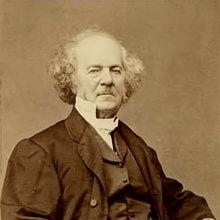
Lewis Tappanwas born in Northampton, Massachussets, in 1788. He grew up in the devout household presided over by his father, Benjamin, and his mother, Sarah (Homes) Tappan.


(This volume is produced from digital images from the Corn...)
This volume is produced from digital images from the Cornell University Library Samuel J. May Anti-Slavery Collection
https://www.amazon.com/American-slavery-editor-British-banner/dp/1429709286?SubscriptionId=AKIAJRRWTH346WSPOAFQ&tag=prabook-20&linkCode=sp1&camp=2025&creative=165953&creativeASIN=1429709286

(Excerpt from Letter From a Gentleman in Boston to an Unit...)
Excerpt from Letter From a Gentleman in Boston to an Unitarian Clergyman of That City The change has not been suddenly made, as you inti mate; and you will not doubt that I have endeavored to view the subject in all its bearings, with deliberation. About the Publisher Forgotten Books publishes hundreds of thousands of rare and classic books. Find more at www.forgottenbooks.com This book is a reproduction of an important historical work. Forgotten Books uses state-of-the-art technology to digitally reconstruct the work, preserving the original format whilst repairing imperfections present in the aged copy. In rare cases, an imperfection in the original, such as a blemish or missing page, may be replicated in our edition. We do, however, repair the vast majority of imperfections successfully; any imperfections that remain are intentionally left to preserve the state of such historical works.
https://www.amazon.com/Gentleman-Unitarian-Clergyman-Classic-Reprint/dp/0259569909?SubscriptionId=AKIAJRRWTH346WSPOAFQ&tag=prabook-20&linkCode=sp1&camp=2025&creative=165953&creativeASIN=0259569909

(This work has been selected by scholars as being cultural...)
This work has been selected by scholars as being culturally important, and is part of the knowledge base of civilization as we know it. This work was reproduced from the original artifact, and remains as true to the original work as possible. Therefore, you will see the original copyright references, library stamps (as most of these works have been housed in our most important libraries around the world), and other notations in the work. This work is in the public domain in the United States of America, and possibly other nations. Within the United States, you may freely copy and distribute this work, as no entity (individual or corporate) has a copyright on the body of the work.As a reproduction of a historical artifact, this work may contain missing or blurred pages, poor pictures, errant marks, etc. Scholars believe, and we concur, that this work is important enough to be preserved, reproduced, and made generally available to the public. We appreciate your support of the preservation process, and thank you for being an important part of keeping this knowledge alive and relevant.
https://www.amazon.com/Address-Non-Slaveholders-Social-Political-Slavery/dp/3732626008?SubscriptionId=AKIAJRRWTH346WSPOAFQ&tag=prabook-20&linkCode=sp1&camp=2025&creative=165953&creativeASIN=3732626008

(This is a reproduction of a book published before 1923. T...)
This is a reproduction of a book published before 1923. This book may have occasional imperfections such as missing or blurred pages, poor pictures, errant marks, etc. that were either part of the original artifact, or were introduced by the scanning process. We believe this work is culturally important, and despite the imperfections, have elected to bring it back into print as part of our continuing commitment to the preservation of printed works worldwide. We appreciate your understanding of the imperfections in the preservation process, and hope you enjoy this valuable book.
https://www.amazon.com/Life-Arthur-Tappan-Lewis/dp/1142138151?SubscriptionId=AKIAJRRWTH346WSPOAFQ&tag=prabook-20&linkCode=sp1&camp=2025&creative=165953&creativeASIN=1142138151

( This work has been selected by scholars as being cultur...)
This work has been selected by scholars as being culturally important, and is part of the knowledge base of civilization as we know it. This work was reproduced from the original artifact, and remains as true to the original work as possible. Therefore, you will see the original copyright references, library stamps (as most of these works have been housed in our most important libraries around the world), and other notations in the work. This work is in the public domain in the United States of America, and possibly other nations. Within the United States, you may freely copy and distribute this work, as no entity (individual or corporate) has a copyright on the body of the work. As a reproduction of a historical artifact, this work may contain missing or blurred pages, poor pictures, errant marks, etc. Scholars believe, and we concur, that this work is important enough to be preserved, reproduced, and made generally available to the public. We appreciate your support of the preservation process, and thank you for being an important part of keeping this knowledge alive and relevant.
https://www.amazon.com/Immediate-Emancipation-Only-Wise-Safe/dp/1362985015?SubscriptionId=AKIAJRRWTH346WSPOAFQ&tag=prabook-20&linkCode=sp1&camp=2025&creative=165953&creativeASIN=1362985015
Lewis Tappanwas born in Northampton, Massachussets, in 1788. He grew up in the devout household presided over by his father, Benjamin, and his mother, Sarah (Homes) Tappan.
He was educated in the town school.
At the age of sixteen became an apprenticed clerk to a dry-goods importing firm in Boston. Here he sat for a time under the preaching of William Ellery Channing, and in 1825, to the distress of his Calvinistic family, served as treasurer of the American Unitarian Association. Soon, however, he returned to Orthodox views, and by 1828 was writing pamphlets upholding Evangelical convictions against Unitarianism. The family Calvinism also appears in his Memoir of Mrs. Sarah Tappan (1834).
Meanwhile, assisted by his employers, he had endeavored to set up a business of his own, but in 1828 he entered into partnership with his brother Arthur as a silk jobber in New York. In the same year he took over from Arthur the New York Journal of Commerce, but in 1831 sold it to David Hale and Gerard Hallock. As credit manager of Arthur Tappan & Company he was an important factor in the prosperity of the firm in the years preceding the panic of 1837. Shortly thereafter he withdrew from the partnership, and in 1841, under the firm name of Lewis Tappan & Company, established "The Mercantile Agency, " the first commercial-credit rating agency in the country. He conducted this enterprise with great success until 1849, when he retired to devote himself to the humanitarian labors which had become his chief concern. In deliberately planning to draw upon his accumulated capital for his support for the rest of his life he was acting upon theories regarding the use of wealth which he later set forth in a pamphlet entitled Is It Right to Be Rich? (1869).
Like his brother Arthur, Lewis Tappan from the time of his first business success was a supporter of the American Board of Commissioners for Foreign Missions and the American Bible Society. He was a promoter of the free church movement in New York, and with Arthur was instrumental in leasing the Chatham Street Theatre and building the Broadway Tabernacle for the revivalist Charles Grandison Finney, and subsequently in sending Finney as professor of theology to Oberlin College.
He was one of the founders of the New York Antislavery Society and the American Antislavery Society in 1833, and by his activities in behalf of abolition drew upon himself hate and obloquy; in July 1834 his house was wrecked by a mob, and his furniture burned. In 1839-41 he was the outstanding member of the committee which undertook to secure the freedom of the Amistad captives, successfully defended before the Supreme Court by John Quincy Adams. Although at first both Tappans worked with William Lloyd Garrison, Lewis, like Arthur, repudiated Garrison when the latter proposed to attach other reforms to the cause of abolition, and with the resulting schism in the American Antislavery Society in 1840, he took a leading part in forming the American and Foreign Antislavery Society, of which he was the first treasurer. He was especially conscious of the international aspect of the American struggle and for this reason maintained a wide and frequent correspondence with sympathetic interests in England, especially with the British and Foreign Antislavery Society. At the suggestion of John Quincy Adams, he attended the international antislavery convention in London in 1843. Realizing that the attitude of Great Britain could have an almost decisive bearing on the outcome of the struggle in the United States, he discussed with his English friends such matters as the annexation of Texas, the position of the negro in the United States, Canada, and Liberia, the coastwise slave trade, and the attitude of the churches.
Believing that slavery could be abolished within the Union, he worked to win the cooperation of churches and missionary societies. When the older foundations which he had supported, notably the American Board, declined to enlist in the fight for abolition, he helped to found and became treasurer of the American Missionary Association (1846), explicitly committed to the cause of the negro. After the passage of the Fugitive Slave Act in 1850, he became a supporter of the work of Alexander M. Ross, who traveled through the South helping slaves to escape by the Underground Railroad. As the struggle in America reached its crisis, Tappan gradually adopted the view that slavery was illegal everywhere and could be abolished by the federal government in all the slave states under the terms of the Constitution. He thus came to favor a more radical method of action than that sponsored by the American and Foreign Antislavery Society, and in 1855 resigned as corresponding secretary of that body to accept office in a new organizatione Abolition Society. By now, however, age was beginning to limit his activity. As the need for antislavery agitation lessened, he gave more attention to the constructive work for negroes being undertaken by the American Missionary Association.
In 1870 he published The Life of Arthur Tappan, and suffered a paralytic stroke just as the book went to press. Three years later he died, as the result of another stroke, at the age of eighty-five.
(Excerpt from Letter From a Gentleman in Boston to an Unit...)
(This work has been selected by scholars as being cultural...)
( This work has been selected by scholars as being cultur...)
(This volume is produced from digital images from the Corn...)
(This is a reproduction of a book published before 1923. T...)
From 1856 Tappan was a member of Plymouth Church, Brooklyn.
Quotations:
"There is too much theology in the Church now, and too little of the Gospel. "
"If you wish to draw off the people from a bad or wicked custom, you must beat up for a march; you must make an excitement, do something that everybody will notice. "
"If any fall by the hand of violence, others will continue the blessed work. "
"These meetings all have excited great attention, and have been of an exceedingly interesting character. "
"Most of the prisoners told the interpreter that they are from Mandingo. "
He was one of the founders of the New York Antislavery Society and the American Antislavery Society in 1833.
Tappan was also among the founders of the American Missionary Association in 1846.
He was married twice: first, September 7, 1813, to Susanna Aspinwall, by whom he had six children, and second, in 1854, to Mrs. Sarah J. Davis. The youngest of his five daughters married Henry Chandler Bowen.