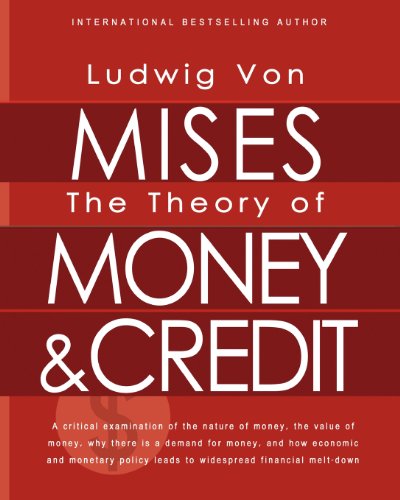
Ludwig von Mises was an Austrian-born economist and social philosopher who became an American citizen. A leading figure of the Austrian School, he developed a theory of business cycles based on credit expansion and argued that socialist planning could not rationally allocate resources without market prices. His books and teaching shaped twentieth-century debates over economics, liberalism, and government intervention.
Background
Mises was born in Lemberg, then part of Austria-Hungary and now Lviv, Ukraine. His father, Arthur von Mises, was a construction engineer and civil servant working for the Austrian railways; his mother was Adele Landau. Both parents came from Viennese families. The family moved to Vienna during Mises's childhood, where he grew up with his younger brother, Richard.
Education
After the family moved to Vienna, Mises entered the Akademisches Gymnasium in 1892 and graduated in 1900. He studied law and government science at the University of Vienna from 1900, receiving the degree of Doctor of Jurisprudence in 1906. During his university years he studied with Carl Grünberg and, in a postdoctoral seminar, the economist Eugen von Böhm-Bawerk. Reading Carl Menger's Principles of Economics in 1903 helped redirect his thinking from the historical approach toward economic theory and the Austrian School.
After graduating in 1906, Mises briefly worked in Austria's financial administration, then trained at a Vienna law firm and began lecturing on economics. In 1909 he joined the Vienna Chamber of Commerce and Industry as an economic adviser, remaining until 1934. In this semi-governmental institution, he advised on economic policy and became one of the leading economic advisers to the Austrian government. His work included advising during the end of Austria's postwar hyperinflation in 1922 and the reorganization of the Austrian National Bank.
Mises became a professor at the University of Vienna in 1913, teaching there until 1938. In 1926 he founded the Austrian Institute for Business Cycle Research in Vienna and served as its executive vice president until 1938. His business-cycle account linked booms to bank-credit expansion and warned that artificially low interest rates could encourage unsustainable investment. His argument that socialist planning could not calculate rationally without market prices became another central part of his work.
In 1934 Mises left Vienna for Geneva, where he was professor of international economic relations at the Graduate Institute of International Studies until 1940. He emigrated to the United States in 1940 and became a naturalized American citizen in 1946. He taught at the National University of Mexico in 1942 and joined New York University as a visiting professor in 1945, holding that post until 1969. From 1946 he was also a part-time staff member of the Foundation for Economic Education, and in 1954–1955 he advised the National Association of Manufacturers.
Mises was a founding member of the Mont Pelerin Society, established in 1947 as an international forum for economists, historians, philosophers, and other students of public affairs. His books, including Human Action, presented his account of economics as a science of purposeful human action and extended his critique of socialism and interventionism. He died in New York City on October 10, 1973. His ashes were placed at Ferncliff Cemetery in Hartsdale, New York.
Founded the Austrian Institute for Business Cycle Research in Vienna in 1926 and served as its executive vice president through 1938.
Developed a theory of business cycles that connected booms with bank-credit expansion and argued that monetary expansion could generate unsustainable investment.
Formulated the economic-calculation argument against socialist planning, contending that the absence of market prices for capital goods prevented rational allocation of resources.
Developed praxeology, a methodological approach that made purposeful human action the foundation of economic analysis.
Mises advocated classical liberalism, emphasizing private property, free exchange, and individual liberty, and argued against socialism and extensive government intervention in economic life. His political and economic writings defended a market order as a basis for social cooperation and criticized policies that he believed distorted prices and economic calculation. In the postwar period, he helped establish the Mont Pelerin Society, an international forum for scholars and other public-affairs thinkers concerned with the principles of a free society.
Views
Mises developed praxeology, a methodology that treated purposeful human action and individual choice as the starting point for economic reasoning. He argued that economic propositions could be derived from the logical implications of action rather than from the methods of the natural sciences. His broader writings defended methodological individualism and social cooperation through voluntary exchange, while rejecting the claim that central planning could reproduce the information conveyed by market prices.
Membership
Mises was a founding member of the Mont Pelerin Society, an international organization formed in 1947 by economists, historians, philosophers, and other scholars to discuss the principles of a free society and the role of liberal ideas.
Founding member.
Mont Pelerin Society
,
Switzerland
1947
Personality
Quotes from others about the person
In a memorial notice drafted by Fritz Machlup, Mises was remembered as a teacher and friend whose students valued the integrity and depth of his teaching. Machlup also observed that Mises's blunt criticism of prevailing policies and his steadfast defense of private enterprise made him a controversial figure among economists.
Connections
Mises married Margit Sereny on July 6, 1938. His parents were Arthur von Mises, a railway construction engineer and civil servant, and Adele (Landau) von Mises. His younger brother was Richard Martin von Mises, who became a mathematician and engineer.
Father:
Arthur von Mises
Railroad construction engineer and civil servant.
Mother:
Adele (Landau) von Mises
Born Adele Landau.
Wife:
Margit Sereny
Married Mises on July 6, 1938.
Brother:
Richard Martin von Mises
His younger brother became a mathematician and engineer.
References
Who Was Ludwig von Mises?
Biographical account of Mises's family, education, professional career, and intellectual development.
2007
Ludwig von Mises
University of Vienna biography documenting his studies, degree, public advisory work, emigration, and teaching career.