

Background
He was born on January 10, 1880 in Alcalá de Henares, New Castile, Spain.


(Rare book)
Rare book
http://www.amazon.com/gp/product/8481098787/?tag=2022091-20

(Booklet describes the set-up at the Teatro Bellas Artes i...)
Booklet describes the set-up at the Teatro Bellas Artes in Madrid, along with short articles about Manuel Azan?a, for the celebration of the centennial of his birth.
http://www.amazon.com/gp/product/8470391844/?tag=2022091-20
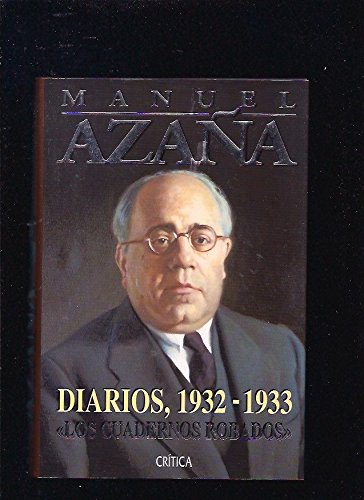
(Book by Azaña Manuel)
Book by Azaña Manuel
http://www.amazon.com/gp/product/8474238684/?tag=2022091-20

(En este libro se reúnen los textos decisivos de Azaña sob...)
En este libro se reúnen los textos decisivos de Azaña sobre la autonomía de Cataluña desde que, aún en la monarquía, promete 'en un discurso pronunciado en Barcelona' que la República reconocerá todas las aspiraciones catalanas. Siendo patente su papel en las Cortes Constituyentes a fin de configurar un régimen de autonomía
http://www.amazon.com/gp/product/8430943536/?tag=2022091-20
He was born on January 10, 1880 in Alcalá de Henares, New Castile, Spain.
He was educated at the college of the Augustinian Order at Escorial, and became one of the leading literary figures of Spain and, in 1930, president of the Madrid Ateneo.
As champion of a movement to restrict clerical power and dissolve the Jesuit Order, he replaced Alcalá Zamora as premier in October 1931. With the first election under the republican constitution, Alcalá Zamora became president in December 1931, and Azaña remained as premier. An increase in conservative sentiment forced Azaña's resignation in September 1933. After Azaña's arrest in October 1934, and the abandonment of his trial in 1935, he became the leader of the Popular Front, which achieved a significant electoral victory in February 1936. Again premier, Azaña rejected reconciliation with President Alcalá Zamora, whom he deposed and succeeded on May 10. In July the Civil War broke out, and the leadership of the republican government was assumed by a succession of premiers. In February 1939 Azaña sought asylum in Paris, and after Great Britain and France recognized the Franco regime, he resigned as president on Mar. 1, 1939. He became reconciled to the Church during an illness that ended with his death at Montauban, France, on November 4, 1940.
He was the second Prime Minister of the Second Spanish Republic and then as the second and last President of the Republic.
He organized the Republican Action Party, which helped overthrow King Alfonso XIII, and in the provisional government set up, Apr. 14, 1931, with Niceto Alcalá Zamora as premier, Azaña became war minister. He was suspected of involvement in the 1934 revolts of the Asturian miners and Catalan nationalists and organized a new Left Republican Party, which dissociated itself from the Alcalá Zamora government.
(En este libro se reúnen los textos decisivos de Azaña sob...)
(Booklet describes the set-up at the Teatro Bellas Artes i...)
(Plumas Y Palabras de Azaña Manuel. B., Grijalbo Crítica, ...)
(Book by Azaña Manuel)
(Rare book)

