

Background
Manuel Esquivel was born in Belize City on 2 May 1940.
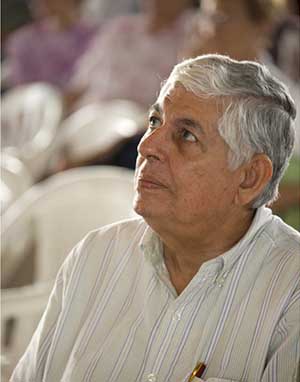
Manuel Esquivel was born in Belize City on 2 May 1940.
After attending primary and secondary schools in Belize City, Esquivel attended Loyola University in New Orleans, where he earned a bachelor’s degree in physics; Bristol University in England, acquiring certification in physics education; and postgraduate work at New York University.
Esquivel accepted a teaching post at the Jesuit-associated St. John’s College in Belize City. He held that post until 1984.
Esquivel helped to form the United Democratic Party (UDP) in 1973 out of a merger of three of the country’s opposition parties. His first elective post came in 1974, when his party won control of the Belize City Council. He was again successful in municipal elections in 1977 and 1980. In the interim, he contested and lost a seat in the country’s House of Representatives in 1979, an election the ruling party was expected to lose to the UDP, but in which the UDP was able to capture only 5 of 18 seats. Esquivel was appointed to the Belizean Senate, however.
Dissatisfaction with UDP leadership as a result of the party’s electoral loss led to a shakeup in the party with Esquivel being chosen party leader in January 1983. He had previously been chairman of the party.
Under Esquivel’s leadership the UDP grew in strength, particularly in Belize City, the country’s largest city and port, where a majority of the country’s population resides. The country had been granted independence from Great Britain on September 21, 1981.
However, unemployment in the port city was estimated to be more than 40 percent, which worked to the advantage of Esquivel and his UDP in the country’s first post-independence elections. Esquivel emphasized an economic development program based on attracting foreign multinationals as a way out of the country’s economic plight, which he blamed on mismanagement by the country’s then ruling party. He presented a more pro-Western position in the country’s foreign relations, harshly criticizing the government of Prime Minister George Price for its relations with the socialist states of Cuba and Nicaragua. Esquivel led the UDP to a stunning landslide victory in 1984.

