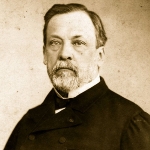
Sir Marc Armand Ruffer (29 August 1859 – 15 April 1917) was a Swiss-born British experimental pathologist and bacteriologist. He is considered a pioneer of modern paleopathology.
School period
College/University
Gallery of Marc Ruffer
University of Paris, Paris, France
Ruffer was first educated in Paris, where he was later a pupil of Pasteur and Metchnikoff.
Gallery of Marc Ruffer
Brasenose College, Radcliffe Square, Oxford, England, United Kingdom
Ruffer went to England in 1878, where he graduated with a Bachelor of Arts degree from Brasenose College, Oxford in 1882.
Gallery of Marc Ruffer
University College London, London, England, United Kingdom
Ruffer graduated with a Bachelor of Medicine from University College, London, in 1887.
Career
Achievements
Membership
British Red Cross Society
British Red Cross Society, London, England, EC2 United Kingdom
Ruffer was a member of the British Red Cross Society, and so during the First World War, he went to Greece in capacity as Commissioner of the British Red Cross Society to improve sanitation.
Awards
Order of St Michael and St George
1905
Ruffer was made a Companion of the Order of St Michael and St George (CMG).
Order of the Medjidie
Ruffer was a recipient of the Grand Cross of the Ottoman Orders of Osmanieh and the Medjidie.
Order of the Redeemer (2nd class)
Ruffer was a recipient of the Order of the Redeemer (2nd class) of Greece.
Order of Saint Anna
Ruffer was a recipient of the Order of Saint Anna.
Order of the Crown of Italy
Ruffer was a recipient of the Order of the Crown of Italy.
British Red Cross Society, London, England, EC2 United Kingdom
Ruffer was a member of the British Red Cross Society, and so during the First World War, he went to Greece in capacity as Commissioner of the British Red Cross Society to improve sanitation.
Connections
collaborator: Grafton Smith
collaborator: Frederic Jones Wood
Frederic Jones Wood (1879–1954), a British anatomist and anthropologist.
teacher: Élie Metchnikoff
teacher: Louis Pasteur
Louis
colleague: Charles Jacques Bouchard
Charles-Joseph Bouchard (6 September 1837 – 28 October 1915) was a French pathologist.
Sir Marc Armand Ruffer was an eminent British experimental pathologist and bacteriologist. Ruffer’s reputation rests securely on his pioneering work in paleopathology. He was able to revolutionize techniques for the microscopic examination of ancient human tissues.
Background
Ethnicity:
Ruffer was born to Swiss father and his mother was German.
Marc Armand Ruffer was born on August 29, 1859, in Lyon, the son of Swiss banker Baron Alphonse Jacques Ruffer and his German wife, Caroline, who were resident in Switzerland at time of his own death.
Education
Ruffer was first educated in Paris, where he was later a pupil of Pasteur and Metchnikoff. Then, after additional study in Germany, he went to England in 1878, where he graduated with a Bachelor of Arts degree from Brasenose College, Oxford in 1882 and a Bachelor of Medicine from University College, London, in 1887.
After graduating from University College, London in 1887, Ruffer was naturalized as a British citizen in 1890. In 1891, he was appointed the first director of the British Institute of Preventive Medicine, latterly the Lister Institute. After contracting a laboratory infection there, he convalesced in Egypt in 1896, where he became a professor of bacteriology at the Cairo Medical School. Ruffer was drowned while returning to Egypt from Salonika when his ship was torpedoed during World War I.
Although anticipated in paleohistological studies by Czermak, D. M. Fouquet, H. M. Wilder, and Samuel Shattock and in the osseous pathology of ancient remains by Elliot Smith and Wood Jones, Ruffer’s influence in paleopathology is unparalleled. Few paleopathological works are published without extensive reference to him.
Because of the ample material supplied by his colleagues in the field of Egyptology. Ruffer was able to revolutionize techniques for the microscopic examination of ancient human tissues. He published important papers on the normal and pathological histology of Egyptian mummies of all periods. Many normal tissues, even from Predynastic bodies, were often wonderfully preserved. Ruffer’s most important pathological observations revealed the presence of eggs of Schistosoma bilharzia in mummy kidneys, of degenerative arterial disease in bodies ranging from the New Kingdom to Coptic Christian times, and of probable smallpox lesions. Contemporary paleopathology utilizes more sophisticated tinctorial, histochemical, and electron microscope techniques, but these are all derived from Ruffer’s original methods.
In the field of morbid anatomy, Ruffer’s major observations concerned osseous and dental pathology. These observations complemented and consolidated important earlier work by Elliot Smith and Wood Jones on human remains uncovered by the Archaeological Survey of Nubia (1907–1908). His studies proved conclusively that osteoarthritis was a common degenerative disease over a period of three millennia in ancient Egypt. Ruffer showed also that dental disease was very common. Among the other pathological lesions that he described, the most important was a unique example of Pott’s disease of the spine in a New Kingdom mummy. Because the soft tissues had survived, the diagnosis of tuberculosis could be made with great confidence. This report is of considerable significance since it supports tentative diagnoses of tuberculosis in other purely skeletal remains from ancient Egypt.
Ruffer showed conclusively that certain common and important maladies have affected man for almost 5,000 years, a valuable observation for both the physician and the historian. In 1921 Ruffer’s papers were published posthumously in a collected volume. The book has continued to stimulate interest in the field of paleopathology.
Achievements
One of the Ruffer's major achievements was in becoming president of the Sanitary, Maritime, and Quarantine Council of Egypt, where he contributed to the elimination of plague and cholera from the country by quarantining pilgrims making their way to and from Mecca. At the outbreak of the first World War, he became head of the Red Cross in Egypt.
Also, he made many important and fundamental discoveries. In 1910, he discovered and identified Shistosoma hematobium bilharzia‐calcified eggs in the kidneys of Egyptian mummies dating from 1250 to 1000 BC, revealing for the first time the existence of schistosomiasis in ancient Egypt. He also reported the presence of bacteria in the kidneys of mummified bodies, although he could not describe their exact nature. In addition, he was the first to identify inflammatory diseases of the joints, thereby describing the presence of arthritis and spondylitis in an atypically young population. In his study of Ramses II (1298–1232 BC), he diagnosed atherosclerosis by calcification of the arteries.
Ruffer also described Pottˈs disease in another Egyptian mummy, opening the debate about the occurrence of tuberculosis in ancient times. All his great pioneering works were later confirmed by other paleopathologists using far more sophisticated technical and molecular approaches.
For his significant accomplishments, Ruffer was made a Companion of the Order of St Michael and St George (CMG) in 1905 and knighted in 1916. He also received the Grand Cross of the Ottoman Orders of Osmanieh and the Medjidie, the Order of the Redeemer (2nd class) of Greece, and was Commander (2nd class) in the Order of St Anne of Russia and the Crown of Italy.
Ruffer was a member of the British Red Cross Society, and so during the First World War, he went to Greece in capacity as Commissioner of the British Red Cross Society to improve sanitation.
British Red Cross Society
,
United Kingdom
Connections
Ruffer married Alice Mary Greenfield in 1890 and had three children.
23 January 1879 – 29 September 1954, usually referred to as Wood Jones, was a British observational naturalist, embryologist, anatomist, and anthropologist, who spent considerable time in Australia.