

Education
from Brown University, and his Doctor of Philosophy in English literature from Brandeis University in 1983, where he studied with poets Allen Grossman and Frank Bidart.

http://www.amazon.com/gp/product/B01MY3M6WH/?tag=2022091-20

( In his third book of poems, Mark Halliday grapples with...)
In his third book of poems, Mark Halliday grapples with the endless struggle between self-concern and awareness of the rights of others. Through humor, ironic twists, and refreshing candor, these poems confront a variety of situations—death, divorce, artistic egotism and envy, personal relationships—where the very idea of self is under siege. "If Selfwolf were a pop music CD, it would be hailed as Mark Halliday's breakthrough album. . . . This third collection of poems teems with unsparing confessions of misdirected lust, lost faith, regret and a winningly goofy cheerfulness in the face of all that bad stuff. . . . The informal, conversational quality of Halliday's work almost hides its artfulness, which seems to be precisely his intention."—Ken Tucker, New York Times Book Review "With unflinching, often comic honesty about how 'ego-fetid, hostile, grasping' we are, Halliday exposes the self's wolfish hungers and weaknesses."—Andrew Epstein, Boston Review "Mark Halliday's new book offers more of his trademark riffs on self-consciousness. His subversive, surprising, hugely enjoyable poems will make you laugh out loud, squirm in uncomfortable recognition, and appreciate anew the comedy of our daily battles for self-preservation. . . reading Halliday is pure delight. . . . I love the daring and intelligence with which Halliday skates along the shifting boundary between self within and world outside. Selfwolf slows down our habitual negotiations between 'in here' and 'out there,' exposing the edgy comedy of how we survive."—Damaris Moore, Express Books
http://www.amazon.com/gp/product/0226313840/?tag=2022091-20

http://www.amazon.com/gp/product/B00Y2ZYDDO/?tag=2022091-20

http://www.amazon.com/gp/product/B00Y2ZYARS/?tag=2022091-20

http://www.amazon.com/gp/product/B01FIY0B8S/?tag=2022091-20

( With Wallace Stevens emerging as a father figure for Am...)
With Wallace Stevens emerging as a father figure for American poetry of the late twentieth century, Mark Halliday argues that it is time for this "poet of ideas" to undergo an ethical critique. In this bold, accessible reconsideration of Stevens' work, he insists on the importance of interpersonal relations in any account of human life in the modern world. Although Stevens outwardly denies aspects of life that center on such relations as those between friends, lovers, family members, and political constituents, Halliday uncovers in his poetry an anxious awareness of the importance of these relations. Here we see the difficulties Stevens made for himself in wanting to offer a thoroughly satisfying version of secular spiritual health in the modern world without facing up to the moral and psychological implications of his own interpersonal needs, problems, and responsibilities. The final chapter reveals, however, an unusually encouraging "avuncular" attitude toward the reader of the poetry, which may be felt to redeem Stevens from the alienation observed earlier. Halliday develops his views by way of comparisons between Stevens and other poets, especially Thomas Hardy, Emily Dickinson, Robert Frost, and John Ashbery. Originally published in 1991. The Princeton Legacy Library uses the latest print-on-demand technology to again make available previously out-of-print books from the distinguished backlist of Princeton University Press. These editions preserve the original texts of these important books while presenting them in durable paperback and hardcover editions. The goal of the Princeton Legacy Library is to vastly increase access to the rich scholarly heritage found in the thousands of books published by Princeton University Press since its founding in 1905.
http://www.amazon.com/gp/product/0691605246/?tag=2022091-20

(Brand New. In Stock. Will be shipped from US. Excellent C...)
Brand New. In Stock. Will be shipped from US. Excellent Customer Service.
http://www.amazon.com/gp/product/B019L5OEYC/?tag=2022091-20

(Winner of the 1991 Juniper Prize, the annual poetry award...)
Winner of the 1991 Juniper Prize, the annual poetry award sponsored by the University of Massachusetts Press.
http://www.amazon.com/gp/product/0870237772/?tag=2022091-20
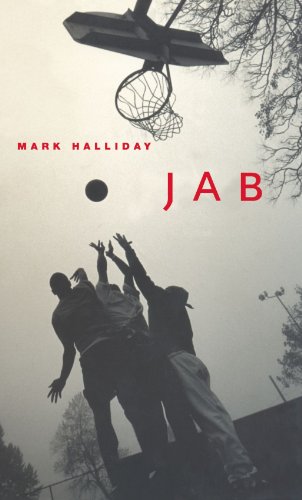
( Human, hunger, happiness, hope, heart, and Halliday all...)
Human, hunger, happiness, hope, heart, and Halliday all start with h, as does ham. Accident? Maybe! But seldom have the flour of the humanistic and the egg yolk of honesty mixed more swellingly with the yeast of desire and the salt of self-doubt—not to mention the olive paste of ambition. Halliday has whacked Death and Mutabilitie before, but this time . . . this time he whacks them again. After this Jab, the world will never be the same. Or at least, a few hundred conversations, here and there, will be somewhat affected. Roll over Death, and tell Mutabilitie the news.
http://www.amazon.com/gp/product/0226313867/?tag=2022091-20

(Book by Mark Halliday)
Book by Mark Halliday
http://www.amazon.com/gp/product/0688075193/?tag=2022091-20

( In his sixth collection, Mark Halliday continues to see...)
In his sixth collection, Mark Halliday continues to seek ways of using the smart playfulness of such poets as Frank O’Hara and Kenneth Koch to explore life’s emotional mysteries—both dire and hilarious—from the perpetual dissolving of our past to the perpetual frustration of our cravings for ego-triumph, for sublime connection with an erotically idealized Other, and for peace of spirit. Animated by belief in the possible truths to be reached in interpersonal speech, Halliday’s voice-driven poetry wants to find insight—or at least a stay against confusion—through personality without being trapped in personality. History will leave much of what we are on the threshing floor, Halliday notes, but in the meantime we do what we can; let posterity (if any!) say we rambled truly. Forward Prizes for Poetry: Highly Commended for 'Classic Blunder' and 'Lois in the Sunny Tree'
http://www.amazon.com/gp/product/022603870X/?tag=2022091-20

(Poetry. In this, his fifth book of poems, written in the ...)
Poetry. In this, his fifth book of poems, written in the aftermath of his father's death, Mark Halliday proves to be one of America's most intimate poets. Like Frank O'Hara and Kenneth Koch, Halliday's poems chat with the reader in earnest yet humorous ways and in wholly believable voices. Whether exploring grief or desire or loneliness, these poems never forget the human longing for permanence. "He is prolix and quotidian, a Whitman in a supermarket, a confessional poet who does not take himself very seriously.... His cool patter skewers pomposity..."--The New Yorker. Mark Halliday was born in Ann Arbor, Michigan, in 1949, and grew up in Raleigh, North Carolina and then in Westport, Connecticut. He earned a B.A. at Brown University, an M.A. in creative writing at Brown, and a Ph.D. in English at Brandeis University. He has taught at Wellesley College, the University of Pennsylvania, Wilmington Friends School, Indiana University, Western Michigan University, and Ohio University.
http://www.amazon.com/gp/product/1932195726/?tag=2022091-20
from Brown University, and his Doctor of Philosophy in English literature from Brandeis University in 1983, where he studied with poets Allen Grossman and Frank Bidart.
He is author of six collections of poetry, most recently "Thresherphobe" (University of Chicago Press, 2013) and Halliday earned his Bachelor of Arts (1971) and Master of Arts He has taught English literature and writing at Wellesley College, the University of Pennsylvania, Western Michigan University, Indiana University. Since 1996, he has taught at Ohio University, where, in 2012, he was awarded the rank of distinguished professor
Halliday"s poetry is characterized by close observation of daily events, out-of-the-ordinary metaphors, unsentimental reminiscence, colloquial diction, references to popular culture, and uncommon humor.
The poet David Graham has described Halliday as one of the "ablest practitioners" of the "ultra-talk poem," a term said to have been coined by Halliday himself to describe the work of a group of contemporary American poets, including David Kirby, Denise Duhamel, David Clewell, Albert Goldbarth, and Barbara Hamby, who frequently write in a wry, exuberant, garrulous, accessible style. Halliday has acknowledged the influences of New York School poets Frank O’Hara and Kenneth Koch on some of his poems.
His honors include serving as the 1994 poet in residence at The Frost Place, inclusion in several annual editions of The Best American Poetry series and of the Pushcart Prize anthology, receiving a 2006 Guggenheim Fellowship, and winning the 2001 Rome Prize from the American Academy of Arts and Letters.
( In his sixth collection, Mark Halliday continues to see...)
( With Wallace Stevens emerging as a father figure for Am...)
( In his third book of poems, Mark Halliday grapples with...)
(Winner of the 1991 Juniper Prize, the annual poetry award...)
( Human, hunger, happiness, hope, heart, and Halliday all...)
(Book by Mark Halliday)
(Brand New. In Stock. Will be shipped from US. Excellent C...)
(Poetry. In this, his fifth book of poems, written in the ...)
