

Background
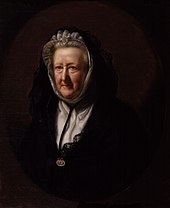
Mary Delany was born at Coulston, Wiltshire on the 14th of May 1700, the daughter of Colonel Bernard Granville. She was also a niece of the 1st Lord Lansdowne, her father's brother.

(Excerpt from The Autobiography and Correspondence of Mary...)
Excerpt from The Autobiography and Correspondence of Mary Granville, Mrs. Delany, Vol. 2 of 3: With Interesting Reminiscences of King George the Third and Queen Charlotte Edward Stanley, eldest son of James, Lord Strange, and grandson of Edward, 11th Earl of Derby, whom he succeeded in the earldom, married first, 23rd June, 1774, Elizabeth, only daughter of James, 6th Duke of Hamilton. About the Publisher Forgotten Books publishes hundreds of thousands of rare and classic books. Find more at www.forgottenbooks.com This book is a reproduction of an important historical work. Forgotten Books uses state-of-the-art technology to digitally reconstruct the work, preserving the original format whilst repairing imperfections present in the aged copy. In rare cases, an imperfection in the original, such as a blemish or missing page, may be replicated in our edition. We do, however, repair the vast majority of imperfections successfully; any imperfections that remain are intentionally left to preserve the state of such historical works.
http://www.amazon.com/gp/product/0331902559/?tag=2022091-20
Mary Delany was born at Coulston, Wiltshire on the 14th of May 1700, the daughter of Colonel Bernard Granville. She was also a niece of the 1st Lord Lansdowne, her father's brother.
When Mary was young, her parents moved the family to London, and Mary attended a school taught by a French refugee, Mademoiselle Puelle. Mary came into close contact with the Court when she was sent to live with her aunt, Lady Stanley.
While living with Lady Stanley, Mary was educated in english, french, history, music, dancing. Mary came in contact with Handel while at the household, listening to music he had composed; this contact with Handel would stay with Mary for the rest of her life.
Mary Delany had always been an artist, but during her second marriage to Dr Delany she had the time to hone her skills. She was also a gardener, and did needlework, drawing, and painting.
In 1771, a widow in her early 70s, Mary began on decoupage, a fashion with ladies of the court. Her works were detailed and botanically accurate depictions of plants. She used tissue paper and hand colouration to produce these pieces. She created 985 of these works, calling them her "Paper Mosaiks" , from the age of 71 to 88, when her eyesight failed her.
When her patroness, the Dowager Duchess, died, King George III and Queen Charlotte gave her a small house at Windsor and a pension of 300 pounds a year.
Frances Burney (Madame D'Arblay) was introduced to her in 1783, and frequently visited her at her London home and at Windsor, and owed to her friendship her court appointment. At this time Mrs Delany was a charming and sweet old lady, with a reputation for cutting out and making the ingenious “paper mosaiks” now in the British Museum.
She had known many of the luminaries of her day, had corresponded with Jonathan Swift, Sir Joseph Banks, and Young, and left a detailed picture of polite English society of the 18th century in her six volumes of Autobiography and Letters (ed. Lady Llanover, 1861–1862).
(Excerpt from The Autobiography and Correspondence of Mary...)
Mary was unhappily married to Alexander Pendarves. He was a rich old Cornish landowner, who died in 1724. During a visit to Ireland Mary Delany met Dean Swift and his intimate friend, the Irish divine, Patrick Delany, who became her second husband, and the two were married in June 1743. Both of them were very interested in botany and gardening.

