(Mary E. Wilkins's Collected Works contained 20 works writ...)
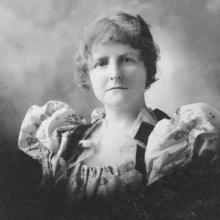
Mary E. Wilkins's Collected Works contained 20 works written by Mary Eleanor Wilkins Freeman (October 31, 1852 – March 13, 1930) was a prominent 19th-century American author.
These are the 20 works of Mary Eleanor Wilkins Freeman in this book:
1. THE ADVENTURES OF ANN (1886)
2. A New England Nun (1891)
3. Jane Field (1892)
4. Comfort Pease And her Gold Ring (1895)
5. Madelon (1896)
6. Jerome, A Poor Man (1897)
7. SILENCE AND OTHER ST.. (1898)
8. Evelina's Garden (1899)
9. THE JAMESONS (1899)
10. Pembroke (1900)
11. THE HEART'S HIGHWAY (1900)
12. The Portion of Labor (1901)
13. The Wind in the Rose-Bush And..(1903)
14. The givers (1904)
15. The Debtor (1905)
16. A FAR-AWAY MELODY AND..(1905)
17. By the Light of the Soul (1907)
18. The Shoulders of Atlas (1908)
19. THE GREEN DOOR (1910)
20. The Butterfly House (1912)
A New-England Nun: And Other Stories (Penguin Classics)
(A collection that shows Freeman's many modes - romantic, ...)
A collection that shows Freeman's many modes - romantic, gothic, and psychologically symbolic - as well as her use of pathos and sentimentality, humour, satire and irony. These stories centre on questions of women's integrity, courage and privation; explore the idea of masculinity; and dramatise the relationship between rural New England and modern culture and commerce. Also included here is 'The Jamesons', a series of sketches about village life reprinted for the first time since the turn of the 20th century.
For more than seventy years, Penguin has been the leading publisher of classic literature in the English-speaking world. With more than 1,700 titles, Penguin Classics represents a global bookshelf of the best works throughout history and across genres and disciplines. Readers trust the series to provide authoritative texts enhanced by introductions and notes by distinguished scholars and contemporary authors, as well as up-to-date translations by award-winning translators.
The Heart's Highway: A Romance of Virginia in the Seventeeth Century
(This is a pre-1923 historical reproduction that was curat...)
This is a pre-1923 historical reproduction that was curated for quality. Quality assurance was conducted on each of these books in an attempt to remove books with imperfections introduced by the digitization process. Though we have made best efforts - the books may have occasional errors that do not impede the reading experience. We believe this work is culturally important and have elected to bring the book back into print as part of our continuing commitment to the preservation of printed works worldwide. This text refers to the Bibliobazaar edition.
Mary Eleanor Wilkins Freeman was a writer and poetess.
Background
Mary Eleanor Wilkins Freeman was born on October 31, 1852, in Randolph, Massachusetts. She was the daughter of Warren E. and Eleanor (Lothrop) Wilkins, both of old New England families.
Her father was a carpenter, and for a time kept a small shop in Brattleboro, Vermont, whither the family removed when she was a child.
Education
Mary Eleanor was educated in the schools of Randolph and Brattleboro, and spent one year, 1870-71, at Mount Holyoke Female Seminary.
Career
After the death of her parents, about 1883, she returned to Massachusetts, which remained her home until her marriage some years later. It is noticeable that although many of her impressionable years were spent in Brattleboro, neither the exceeding beauty of southern Vermont nor the life of a small city is reflected in her most characteristic writings.
The flat, inland scenery of eastern Massachusetts forms the background of her tales, and her people are essential of the country. The setting of her best work is always that which she knew first and to which she returned. There are also no clearly discernible literary influences in her writings, although it is known that she was a lover of the great English novelists and was familiar with the work of some of the Russians.
Her earliest stories and poems were published in a Sunday-school magazine for children, and later she wrote, mostly verse, for the juvenile monthly, Wide Awake. “A Shadow Family, ” her first adult story, was written for a Boston paper, and “Two Old Lovers, ” her second, appeared in Harper’s Bazaar for March 31, 1883.
Her connection with the Harper publications thus begun was strengthened when Henry M. Alden accepted “A Humble Romance” for Harper’s Magazine for June 1884. Public recognition of the quality of her work was almost immediate, and gradually her tales were gathered into volumes: A Humble Romance (1887); A New England Nun (1891); and many others.
Her first stories were not the work of a girl, as was then generally supposed, but the work of a woman over thirty, who had the time as well as the natural ability for observation. Responding to the wide-spread interest in tales of local color, she caught the spirit of her rustic surroundings and soon came to be known as one of the chief exponents of New England rural life.
In New Jersey, she spent the remainder of her life, though the later years of her marriage were unhappy. The change of environment consequent on her marriage is reflected in several of her stories, especially in her novel The Debtor (1905) ; but her intellectual and esthetic home remained in the New England village. Mrs. Freeman tried many kinds of writing.
A play, Giles Corey, Yeoman, dealing with Salem witchcraft, was produced in the early nineties, and one or two of her stories were dramatized, but without success. She anticipated a popular vogue in mystery stories involving spiritism, but in this type, she had not the qualities necessary for perfection.
Despite her facility in handling the materials of a short story, Mrs. Freeman was unable to achieve a like facility with her novels. The best - Jane Field (1893), Pembroke (1894), Jerome (1897) - are good because of the qualities that give excellence to the tales, but even they lack organic unity.
Achievements
Mary Eleanor is best remembered for her two collections of stories, "A Humble Romance and Other Stories" (1887) and "A New England Nun and Other Stories" (1891). Her books dealt mostly with life in New England and are among the best of their kind.
In the field of her best work, however, Mary Eleanor was given generous recognition not only in America but in England and France as well, and final honors came to her in 1925 when she was awarded the William Dean Howells medal for fiction by the American Academy of Arts and Letters and was elected a member of the National Institute of Arts and Letters in 1926.
In short stories of a country life, Mary Eleanor was master of herself and of her art. In that realm, her work challenges comparison with the best of its kind, for it is there that she identified herself completely with her material.
She seemed hardly to be an observer, certainly not an interpreter, yet she wrote with dispassionate objectivity, the more noteworthy because at the time sentimentality was appallingly popular.
Such was the subtlety of her writing that some of its most artistic results may easily escape the unwary. The humor is characteristically elusive, and the style, at its best, has a rare note of inevitability. Fine writing Mrs. Freeman never attained; only seldom could she be fluent without prolixity.
She was easily in the front rank of dialect writers. The speech of her characters is of New England, but it is old English and truly racial in that its distinctive quality lies not in separate words and idioms but in those cadences which denote the spirit of a people. Men and women share life’s burdens, but it is through the women’s somber eyes that the reader looks upon the incidents and characters of the tales; it is their problems and perplexities which she presents.
She analyzed the strange manifestations of inbreeding and introspection and the inability of man to break the fetters of his own forging. Overworked, underfed, poorly clad, her people have no touch of squalor; life is to them always significant. It is the moral element in their natures, their adherence to the “painful right” that gives to them a dignity which at times approaches grandeur.
Quotations:
"Sometimes duties act on the soul like weeds on a flower. They crowd it out. "
"Cats love one so much - more than they will allow. But they have so much wisdom they keep it to themselves. "
"Any deviation from the ordinary course of life in this quiet town was enough to stop all progress in it. "
"No matter how tired or wretched I am, a pussycat sitting in a doorway can divert my mind. "
"Nobility of character manifests itself at loop-holes when it is not provided with large doors. "
"The Cat was a creature of absolute convictions, and his faith in his deductions never varied. "
"The dog without his master was like a body without a soul. "
"Every builder builds somewhat for unknown purposes, and is in a measure a prophet. "
"When a man or a woman holds fast to youth, even if successfully, there is something of the pitiful and the tragic involved. It is the everlasting struggle of the soul to retain the joy of earth, whose fleeing distinguishes it from heaven, and whose retention is not accomplished without an inner knowledge of its futility. "
Membership
Freeman was a member of the American Academy of Arts and Letters.
Personality
Mary Eleanor could handle an incident, but not a plot; she could analyze dominating and perverting characteristics, but the final synthesis by which characters are created and placed in perspective was not within her power.
Connections
On January 1, 1902, Mary Eleanor married Dr. Charles Manning Freeman.