(Frankenstein; or, The Modern Prometheus is a novel that t...)
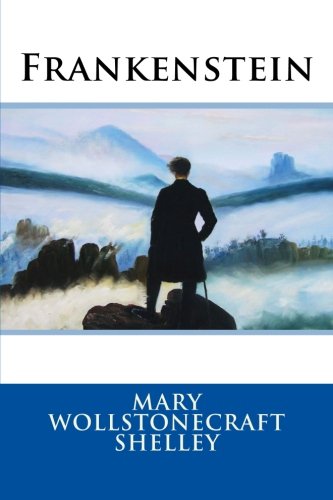
Frankenstein; or, The Modern Prometheus is a novel that tells the story of Victor Frankenstein, a young scientist who creates a hideous sapient creature in an unorthodox scientific experiment.
(Valperga is a historical novel which relates the adventur...)
Valperga is a historical novel which relates the adventures of the early fourteenth-century despot Castruccio Castracani, a real historical figure who became the lord of Lucca and conquered Florence. In the novel, his armies threaten the fictional fortress of Valperga, governed by Countess Euthanasia, the woman he loves. He forces her to choose between her feelings for him and political liberty.
(The Fortunes of Perkin Warbeck: A Romance is an 1830 hist...)
The Fortunes of Perkin Warbeck: A Romance is an 1830 historical novel by Mary Shelley about the life of Perkin Warbeck. The book takes a Yorkist point of view and proceeds from the conceit that Perkin Warbeck died in childhood and the supposed impostor was indeed Richard of Shrewsbury. Henry VII of England is repeatedly described as a "friend" who hates Elizabeth of York, his wife, and Richard's sister, and the future Henry VIII, mentioned only twice in the novel, is a vile youth who abuses dogs. Her preface establishes that records of the Tower of London, as well as the histories of Edward Hall, Raphael Holinshed, and Francis Bacon, the letters of Sir John Ramsay to Henry VII that are printed in the Appendix to John Pinkerton's History of Scotland establish this as fact. Each chapter opens with a quotation. The entire book is prefaced with a quotation in French by Georges Chastellain and Jean Molinet.
(Lodore focuses on the microcosm of the family. The centra...)
Lodore focuses on the microcosm of the family. The central story follows the fortunes of the wife and daughter of the title character, Lord Lodore, who is killed in a duel, leaving a trail of legal, financial, and familial obstacles for the two "heroines" to negotiate. Lodore's daughter, Ethel, is raised to be over-dependent on paternal control while his estranged wife, Cornelia, is preoccupied with the norms and appearances of aristocratic society. They are both contrasted with the intellectual and independent Fanny Derham.
Mary Wollstonecraft Shelley was a British writer and author of Frankenstein; or, The Modern Prometheus, which has transcended the Gothic and horror genres and is now recognized as a work of philosophical and psychological resonance.
Background
Mary Wollstonecraft Shelley was born on August 30, 1797 in Somers Town, London, England. She was the daughter of Mary Wollstonecraft, the early feminist and author of A Vindication of the Rights of Woman, and William Godwin, the political philosopher and novelist.
Her parents' wedding, which occurred when Wollstonecraft was five months pregnant with Mary, was the marriage of two of the day's most noted freethinkers. While they both objected to the institution of matrimony, they agreed to marry to ensure their child's legitimacy. Ten days after Mary's birth, Wollstonecraft died from complications, leaving Godwin, an undemonstrative and self-absorbed intellectual, to care for both Mary and Fanny Imlay, Wollstonecraft's daughter from an earlier liaison.
Mary's home life improved little with the arrival four years later of a stepmother and her two children. The new Mrs. Godwin, whom contemporaries described as petty and disagreeable, favored her own offspring over the daughters of the celebrated Wollstonecraft, and Mary was often solitary and unhappy. In 1816, Mary's half-sister Fanny committed suicide.
Education
Mary Shelley was not formally educated, but absorbed the intellectual atmosphere created by her father and such visitors as Samuel Taylor Coleridge. She read a wide variety of books, notably those of her mother, whom she idolized.
Career
Mary completed her novel Frankenstein and another novel, Valperga in 1823.
She wrote several other novels and contributed a series of biographical and critical sketches to Chamber's Cabinet Cyclopedia, as well as occasional short stories, which she considered potboilers, to the literary annuals of the day. Too ill in her last few years to complete her most cherished project, a biography of her husband, Shelley died at age fifty-four.
Although Frankenstein has consistently dominated critical discussions of Shelley's oeuvre, she also composed several other novels in addition to critical and biographical writings. Her five later novels attracted little notice, and critics generally agree that they share the faults of verbosity and awkward plotting.
After Frankenstein, The Last Man (1826) is her best-known work. This novel, in which Shelley describes the destruction of the human race in the twenty-first century, is noted as an inventive depiction of the future and an early prototype of science fiction.
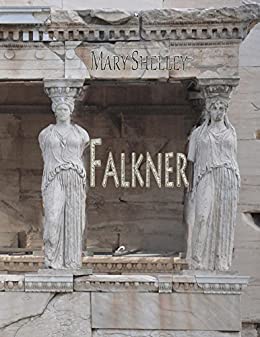
Valperga and The Fortunes of Perkin Warbeck (1830) are historical novels that have received scant attention from literary critics, while Lodore (1835) and Falkner (1837), thought by many to be autobiographical, are often examined for clues to the lives of the Shelleys and their circle.
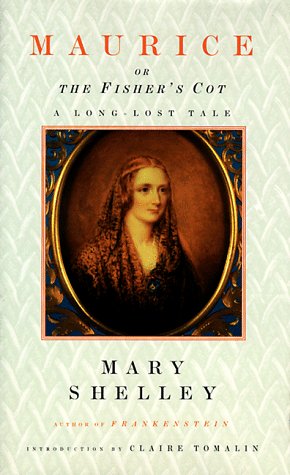
Shelley's stories were collected and published posthumously, as was Mathilda, a novella that appeared for the first time in the 1950s. The story of a father and daughter's incestuous attraction, it has been viewed as a fictional treatment - or distortion - of Shelley's relationship with Godwin.
The posthumously published verse dramas, Proserpine and Midas (1922), were written to complement one of Percy Shelley's works and have garnered mild praise for their poetry.
Critics also admire Shelley's non-fiction: the readable, though now dated, travel volumes, the essays for Chamber's Cabinet Cyclopedia, which are considered vigorous and erudite, and her illuminating notes on her husband's poetry.
Achievements
Shelley is best known for her novel Frankenstein; or, The Modern Prometheus, which has been fictionalised several times and formed the basis for a number of films.
Quotations:
"I think that I can maintain myself, and there is something inspiriting in the idea."
"Every thing must have a beginning . .. and that beginning must be linked to something that went before."
"When any prevailing prejudice is attacked, the wise will consider, and leave the narrow-minded to rail with thoughtless vehemence at innovation."
"An air of fashion, which is but a badge of slavery . .. proves that the soul has not a strong individual character."
"The instructor can scarcely give sensibility where it is essentially wanting, nor talent to the unpercipient block. But he can cultivate and direct the affections of the pupil, who puts forth, as a parasite, tendrils by which to cling, not knowing to what -- to a supporter or a destroyer."
Connections
Young Mary's favorite retreat was Wollstonecraft's grave in the St. Pancras churchyard, where she went to read and write and eventually to meet her lover, Percy Shelley. An admirer of Godwin, Percy Shelley visited the author's home and briefly met Mary when she was fourteen, but their attraction did not take hold until a subsequent meeting two years later. Shelley, twenty-two, was married, and his wife was expecting their second child, but he and Mary, like Godwin and Wollstonecraft, believed that ties of the heart superseded legal ones.
In July 1814, one month before her seventeenth birthday, Mary eloped with Percy to the Continent, where, apart from two interludes in England, they spent the next few years traveling in Switzerland, Germany, and Italy. These years were characterized by financial difficulty and personal tragedy. Percy's father, Sir Timothy Shelley, a wealthy baronet, cut off his son's substantial allowance after his elopement.
In 1816, Percy's wife, Harriet, drowned herself. Mary and Percy were married in London, in part because they hoped to gain custody of his two children by Harriet, but custody was denied. Three of their own children died in infancy, and Mary fell into a deep depression that was barely dispelled by the birth in 1819 of Percy Florence, her only surviving child. The Shelleys' marriage suffered, too, in the wake of their children's deaths, and Percy formed romantic attachments to other women.
Despite these trying circumstances, both Mary and Percy maintained a schedule of rigorous study-including classical and European literature, Greek, Latin, and Italian language, music and art-and ambitious writing. The two also enjoyed a coterie of stimulating friends, notably Lord Byron and Leigh Hunt. The Shelleys were settled near Lenci, Italy, on the Gulf of Spezzia in 1822 when Percy drowned during a storm while sailing to meet Leigh and Marianne Hunt. After one mournful year in Italy, Mary returned permanently to England with her son. Shelley's life after Percy's death was marked by melancholy and hardship as she struggled to support herself and her child. Sir Timothy Shelley offered her a meager stipend, but ordered that she keep the Shelley name out of print; thus, all her works were published anonymously.
The Shelleys' financial situation improved when Sir Timothy increased Percy Florence's allowance with his coming of age in 1840, which enabled mother and son to travel in Italy and Germany; their journeys are recounted in Rambles in Germany and Italy in 1840, 1842, and 1843 (1844).
Father:
William Godwin
William Godwin (3 March 1756 – 7 April 1836) was an English journalist, political philosopher and novelist. He is considered one of the first exponents of utilitarianism and the first modern proponent of anarchism.
Mother:
Mary Wollstonecraft
Mary Wollstonecraft (27 April 1759 – 10 September 1797) was an English writer, philosopher, and advocate of women's rights.
child:
Percy Florence Shelley
Sir Percy Florence Shelley, 3rd Baronet of Castle Goring (12 November 1819 – 5 December 1889) was the only surviving child of Percy Bysshe Shelley and Mary Wollstonecraft Shelley.