

Background
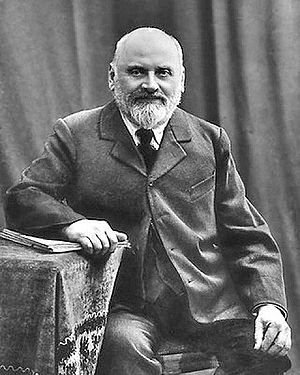
Mily Balakirev was born at Nijni-Novgorod, Russia on the 2nd of January, 1837, into a poor clerk's family with Tatar roots
http://www.amazon.com/gp/product/B000001K3G/?tag=2022091-20

http://www.amazon.com/gp/product/0660063913/?tag=2022091-20
http://www.amazon.com/gp/product/0706392833/?tag=2022091-20

http://www.amazon.com/gp/product/B000024OVU/?tag=2022091-20
http://www.amazon.com/gp/product/B00P2NJYHA/?tag=2022091-20

http://www.amazon.com/gp/product/B076VY2M6B/?tag=2022091-20
http://www.amazon.com/gp/product/B00J54MVRW/?tag=2022091-20
http://www.amazon.com/gp/product/B002UKGM78/?tag=2022091-20
http://www.amazon.com/gp/product/1001532767/?tag=2022091-20

http://www.amazon.com/gp/product/B00JHQD6LI/?tag=2022091-20
Mily Balakirev was born at Nijni-Novgorod, Russia on the 2nd of January, 1837, into a poor clerk's family with Tatar roots
He had the advantage as a boy of living with Oulibichev, author of a Life of Mozart, who had a private band, and from whom Balakirev obtained a valuable education in music.
At eighteen, after a university course in mathematics, he went to St Petersburg, full of national ardour, and there made the acquaintance of Glinka.
Balakirev had the use of Ulibishev’s music library and at age 15 began to compose and was allowed to rehearse the local theatre orchestra. He made his first appearance as a concert pianist in Kronshtadt in December 1855. Thereafter Balakirev performed often, composed an Overture on Russian Themes and music to King Lear (1858–61), and became the mentor of two young composers, César Cui and Modest Mussorgsky. In 1861 and 1862 his circle of disciples was joined by Nikolay Rimsky-Korsakov and Aleksandr Borodin, forming the group known as The Five. In 1862 he joined the Free School of Music, which had been opened in opposition to the St. Petersburg Conservatory, and soon became principal concert conductor.
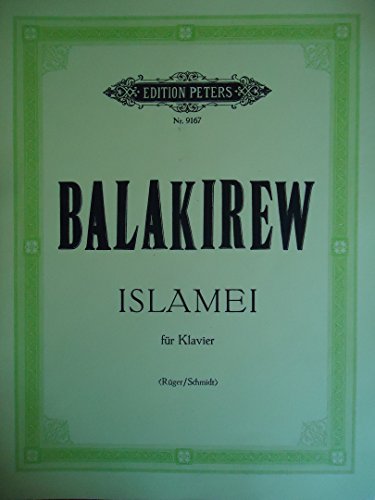
During the 1860s Balakirev was at the height of his influence. He collected folk songs up and down the Volga and introduced them in his Second Overture on Russian Themes, which ultimately became the symphonic poem Russia; he spent summer holidays in the Caucasus, gathering themes and inspiration for his brilliant piano fantasy Islamey (1869) and his symphonic poem Tamara (1867–82); he published the works of composer Mikhail Glinka and visited Prague to produce them; and for a time (1867–69) he conducted the symphony concerts of the Russian Music Society.
Balakirev’s despotic nature and his tactlessness made him innumerable enemies, so that even his friends and young disciples came to resent his tutelage; and a series of personal and artistic misfortunes led to his almost complete withdrawal from the world of music during 1872–76 and his taking a post as a railway clerk. Balakirev had passed through a period of acute depression 10 years earlier; now he underwent a more severe crisis from which he emerged a totally changed man, a bigoted and superstitious Orthodox Christian. He gradually returned to the music world, resumed directorship of the Free School, and from 1883 to 1894 was director of the imperial chapel. He also resumed musical composition, completing several works, including a symphony he had abandoned many years before, and writing several new pieces, among these his Piano Sonata (1905), Symphony No. 2 (1908), and a number of piano pieces and songs. The last decade of his life was spent in almost complete retirement.
It has been said that it was Balakirev, even more than Glinka, who set the course for Russian orchestral music and lyrical song during the second half of the 19th century. He developed an idiom and technique that he imposed on his disciples (above all on Rimsky-Korsakov and Borodin, and to some extent on Pyotr Ilyich Tchaikovsky) not only by example but by constant autocratic supervision of their own earlier works. His music is superbly colourful and imaginative, but his creative personality was arrested in its development after 1871, and his later work is couched in the idiom of his youth.
Balakirev was a Russian pianist, conductor, and composer known today primarily for his work promoting musical nationalism and his encouragement of more famous Russian composers, notably Pyotr Ilyich Tchaikovsky.
In 1862 Balakirev founded the Free Music School, a nationalist rival to the St. Petersburg Conservatory, which was cosmopolitan and conservative.
Although he was an immense force in establishing Russia's nationalist music, Balakirev composed comparatively little himself. His orchestral works include two symphonies, several overtures, incidental music to King Lear (1858-1861), and the symphonic poems Tamara (1867-1882) and Russia (1884). For the piano, he wrote the Sonata in B flat minor (1905), various short works, and the brilliant showpiece Islamey (1869). His vocal works include a number of fine songs and a collection of Russian folk songs. Balakirev's musical style blends the Russian folk and church idioms with ideas taken from Liszt, Chopin, and Berlioz.
In Balakirev's earlier days he was politically liberal, a freethinker and an atheist; for a while, he considered writing an opera based on Chernishevsky's nihilistic novel What is to Be Done?. He also became a political reactionary and "xenophobic Slavophile who wrote hymns in honor of the dowager empress and other members of the royal family. "
Balakirev apparently never married nor had any children since none are mentioned in biographical sources.

