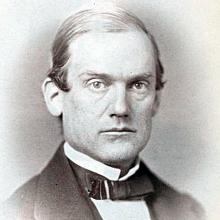
Background
Muscoe Russell Hunter Garnett was born on July 25, 1821, at "Elmwood," Essex County, Virginia. He was the descendant of two prominent Virginia families, and the son of James Mercer Garnett, Jr., and Maria Hunter.


Charlottesville, VA, United States
Muscle attended the University of Virginia, where he received his law degree in 1842.
Charlottesville, VA, United States
Muscle attended the University of Virginia, where he received his law degree in 1842.

https://www.amazon.com/Union-Past-Future-Works-Save/dp/1342208234/ref=tmm_hrd_swatch_0?_encoding=UTF8&qid=&sr=
1850

https://www.amazon.com/Speech-Garnett-Virginia-State-Union/dp/1333106718?SubscriptionId=AKIAJRRWTH346WSPOAFQ&tag=prabook-20&linkCode=sp1&camp=2025&creative=165953&creativeASIN=1333106718
1861
Muscoe Russell Hunter Garnett was born on July 25, 1821, at "Elmwood," Essex County, Virginia. He was the descendant of two prominent Virginia families, and the son of James Mercer Garnett, Jr., and Maria Hunter.
Garnett was educated by his maternal kin and by tutors until he was seventeen. After a successful session at the University of Virginia, he devoted two years to an elaborate scheme of private studies before returning to the University to study law.
In 1842, he was admitted to the bar, and commenced practice at Loretto, Essex County. He continued his self-education systematically, reading, writing occasional reviews, and building a reputation for eloquent and scholarly oratory, with the intention of qualifying himself for a political career.
After serving (1854-1857) in the Virginia House of Delegates, where Muscle Garnett headed the committee on finance and figured conspicuously in the debate, Garnett was elected to Congress in November 1856, from the First Virginia District; and was re-elected to the Thirty-fifth and Thirty-sixth Congresses.
In Congress he was active in tariff and retrenchment legislation - he resembled his distinguished uncle, Robert Mercer Taliaferro Hunter, in his talent for financial matters - but the speeches in which he challenged Northern infringements of the Constitution and encroachment upon the rights of the South furnish better evidence of his fearlessness, cogent logic, and ardent temperament.
Withdrawing from Congress when Virginia seceded, he was chosen in May 1861 to fill a vacancy in the Virginia convention, and in November was elected to the First Confederate Congress.
Although Garnett eagerly supported the conduct of the war, at his own request being transferred from the committee on ways and means to that on military affairs, he was defeated for reelection by the soldier vote. Before his term ended, he contracted typhoid fever in Richmond and died soon after reaching his home in Essex County.
Twice a delegate to Democratic national conventions, Garnett was known as one of the most brilliant Southern statesmen, a strict constructionist, and an uncompromising defender of slavery. His public career loomed larger in promise than it appears in retrospect; but there is little doubt that his learning, ability, and integrity might have won him, had he lived longer, the highest political honors within Virginia’s bestowal.
Muscle was a strong advocate of Virginia's secession, holding during the winter of 1860-61 that such a step would be "the best possible mode of preventing war and reconstructing a Union of equality."
In 1850, Garnett published "The Union, Past and Future: How it Works and How to Save it," a forceful pamphlet arraying the economic disadvantages of the Union to the South and protesting against Northern efforts toward governmental centralization.
The earliest able philosophical exposition of the relations of slavery to the federal government, it created wide-spread interest and contributed to his election to the state constitutional convention that fall.
On July 26, 1860, Garnett married Mary Picton Stevens, of Hoboken, New Jersey.