Background
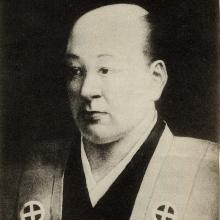
Nariakira Shimazu was born on 28 April 1809 in the domain residence in Edo.

島津 斉彬
Nariakira Shimazu was born on 28 April 1809 in the domain residence in Edo.
Under the influence of his great-grandfather Shimazu Shigehide, he took an interest in the material culture of the West and favored the opening of the country to foreign contacts. In 1844, when a French warship appeared in the Ryukyu Islands, which were under the jurisdiction of the domain of Satsuma, and requested to engage in trade, the roju (senior councilor) Abe Masahiro, who was friendly with Nariakira, left the matter up to Nariakira to handle. He accordingly adopted a policy of opening the Ryukyus to trade.
In spite of opposition within the domain, Nariakira, supported by members of the reform faction such as Saigo i akamori and Okubo Toshimichi, in 1851 succeeded his father Narioki as lord of the domain and set about to reform the domain administration.
He set up a refinery, manufactured chemicals, and succeeded in constructing five warships propelled by sail and one steamship. He proposed to the shogunate that a flag with a rising sun on a white background be used by such ships, and this in time became the origin of the Japanese national flag.
In 1853 in the grounds of his residence in Kagoshima he had a reverberatory furnace built. He built a Western style factory called the Shuseikan in which cannon, gun powder, ceramics, colored glass, and telegraphic instruments were manufactured. He also introduced the use of spinning machines and tried his own hand at photography.
On the political scene, he joined with Tokugawa Nariaki and Matsudaira Yoshinaga in supporting Hitotsubashi Yoshinobu as a candidate for succession to the shogunate. But with the appointment of Ii Naosuke, leader of the opposing faction, to the position of tairo (chief councilor) in 1858, his hopes on this score were disappointed, and he died shortly afterward. Shimazu Hisamitsu, who played an important role in politics at the end of the Edo period, was his younger brother by a different mother.
He was one of the most enlightened and progressive daimyo of the time and worked assiduously to encourage production and industrialization within his domain.