Background
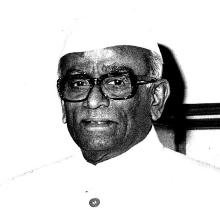
Reddy was born on 19 May 1913 in Illur village, then in Madras Presidency and now in Andhra Pradesh's Anantapur district. He belonged to a Telugu Hindu family.


Sri Venkateswara University, where Neelam Reddy studied (Honorary Doctor of Laws, 1958). Photo: Munna Aawara

Indian independence movement, Anantapur, where Neelam Reddy worked as activist (1929–1945)

1977
President Reddy doing an aerial survey of flood affected areas of Tamil Nadu. Photo: Institution:Presiden'ts Secretariat

1978
President Jimmy Carter visited India during January 1–3, 1978. Seen in this picture of his reception at the airport in Delhi are (from left to right) President Neelam Sanjiva Reddy, his wife, Jimmy Carter, Prime Minister Morarji Desai, the Indian Ambassador to the United States Nanabhoy Palkhivala, First Lady of the United States Rosalynn Carter and the External Affairs Minister Atal Bihari Vajpayee.[66]

1980
President Neelam Sanjiva Reddy led seven state visits between 1980 and 1982. He visited USSR, Bulgaria, Kenya, Zambia, UK, Ireland, Indonesia, Nepal, Sri Lanka, Ireland and Yugoslavia. Photo: Ashwin147

Seen here (from left to right) are Speaker of the Lok Sabha Balram Jakhar, Vice President Mohammad Hidayatullah, Mani Ram Bagri, Prime Minister Indira Gandhi and President Neelam Sanjiva Reddy. Photo: Viksb

President R. Venkataraman with Neelam Sanjiva Reddy at the Rashtrapati Bhavan. Photo: President's Secretariat

Lok Sabha, New Delhi, where Neelam Reddy worked as member from Hindupur (1967–1969). Photo: KuwarOnline
1977
President Reddy doing an aerial survey of flood affected areas of Tamil Nadu. Photo: Institution:Presiden'ts Secretariat
1978
President Jimmy Carter visited India during January 1–3, 1978. Seen in this picture of his reception at the airport in Delhi are (from left to right) President Neelam Sanjiva Reddy, his wife, Jimmy Carter, Prime Minister Morarji Desai, the Indian Ambassador to the United States Nanabhoy Palkhivala, First Lady of the United States Rosalynn Carter and the External Affairs Minister Atal Bihari Vajpayee.[66]
1980
President Neelam Sanjiva Reddy led seven state visits between 1980 and 1982. He visited USSR, Bulgaria, Kenya, Zambia, UK, Ireland, Indonesia, Nepal, Sri Lanka, Ireland and Yugoslavia. Photo: Ashwin147
Sri Venkateswara University, where Neelam Reddy studied (Honorary Doctor of Laws, 1958). Photo: Munna Aawara
Indian independence movement, Anantapur, where Neelam Reddy worked as activist (1929–1945)
Lok Sabha, New Delhi, where Neelam Reddy worked as member from Hindupur (1967–1969). Photo: KuwarOnline
Seen here (from left to right) are Speaker of the Lok Sabha Balram Jakhar, Vice President Mohammad Hidayatullah, Mani Ram Bagri, Prime Minister Indira Gandhi and President Neelam Sanjiva Reddy. Photo: Viksb
President R. Venkataraman with Neelam Sanjiva Reddy at the Rashtrapati Bhavan. Photo: President's Secretariat
Reddy was born on 19 May 1913 in Illur village, then in Madras Presidency and now in Andhra Pradesh's Anantapur district. He belonged to a Telugu Hindu family.
Reddy attended the Theosophical High School at Adyar, Madras, and then enrolled as an undergraduate at the Government Arts College in Anantapur, which was affiliated with the University of Madras. After Mahatma Gandhi visited Anantapur in July 1929, Reddy joined the independence movement. While still a student, he was associated with the Youth League and took part in a student satyagraha. He left college in 1931 to pursue political activism.
In 1958, Sri Venkateswara University in Tirupati awarded Reddy an honorary Doctor of Laws degree in recognition of his role in the university's founding.
In 1938 Reddy became secretary of the Andhra Pradesh Provincial Congress Committee, serving for ten years. During the Quit India Movement, he spent much of 1940–1945 in prison. Released in March 1942, he was arrested again in August and held at Amravati jail until 1945 alongside activists including Tanguturi Prakasam, S. Satyamurti, K. Kamaraj, and V. V. Giri.
Elected to the Madras Legislative Assembly in 1946 as a Congress representative, Reddy became secretary of the Congress legislature party and a member of the Constituent Assembly from Madras. From April 1949 to April 1951, he served in the Madras State government as minister for Prohibition, Housing and Forests. He lost the 1951 Madras Assembly election to Communist leader Tarimela Nagi Reddy, his brother-in-law. In a closely contested election that year, he became president of the Andhra Pradesh Congress Committee, defeating N. G. Ranga.
When Andhra State was formed in 1953, Reddy became deputy chief minister under Chief Minister T. Prakasam. After Andhra State and Telangana were combined to form Andhra Pradesh, Reddy became the new state's first chief minister on 1 November 1956. He held the office until 11 January 1960, representing Sri Kalahasti and Dhone during his respective terms. He returned as chief minister from 12 March 1962 to 20 February 1964, bringing his two periods in office to more than five years. The Nagarjuna Sagar and Srisailam multipurpose river-valley projects were initiated during his leadership; the Srisailam project was later named Neelam Sanjiva Reddy Sagar in his honour. His governments emphasized rural development, agriculture, and related sectors, while industrialization remained limited and depended largely on central-government investment in public-sector enterprises. He resigned as chief minister in 1960 after being elected president of the Indian National Congress. In 1964 he resigned voluntarily after the Supreme Court made adverse observations about the state government in the Bus Routes Nationalisation case.
Reddy was thrice a member of the Rajya Sabha and served three times as president of the Indian National Congress, at its Bangalore, Bhavnagar, and Patna sessions from 1960 to 1962. At the 1962 Congress session in Goa, he declared India's determination to end Chinese occupation of Indian territory and described the liberation of Goa as irrevocable; delegates received the speech enthusiastically. From June 1964 he was Union minister of Steel and Mines in Lal Bahadur Shastri's government. In Indira Gandhi's cabinet, he served as Union minister of Transport, Civil Aviation, Shipping and Tourism from January 1966 to March 1967.
Elected to the Lok Sabha from Hindupur in the 1967 general election, Reddy became Speaker of the Fourth Lok Sabha on 17 March, during his first parliamentary term. He resigned from Congress to stress the Speaker's independence. His tenure included the admission of a no-confidence motion on the day of the President's address to a joint sitting, a sentence of imprisonment for contempt of the House, and the establishment of the Committee on the Welfare of Scheduled Castes and Scheduled Tribes. A defamation suit brought against him by a member of Parliament led to a Supreme Court ruling that parliamentarians had complete freedom of speech in the House and that courts could not intervene in such matters. Reddy called the Speaker's role the “watchman of the Parliament.” His confrontations with Prime Minister Indira Gandhi in the House later became a source of political difficulty when Congress selected him as its 1969 presidential candidate.
After President Zakir Husain died in 1969, Congress nominated Reddy, who belonged to the party's Syndicate faction, despite Gandhi's opposition. Gandhi urged Congress legislators to vote according to their conscience, encouraging support for independent candidate V. V. Giri. In the election on 16 August, Giri received 420,077 votes in the final tally against the 418,169-vote quota; Reddy received 405,427. The result deepened divisions within Congress and preceded its historic split and Gandhi's increased dominance in national politics. Reddy had resigned as Speaker to contest the election. After losing, he left active politics and returned to Anantapur, where he took up farming.
Reddy re-entered public life in 1975 in response to Jayaprakash Narayan's call for “Total Revolution” against Gandhi's government. In January 1977 he joined the Janata Party's committee and contested the March general election from Nandyal in Andhra Pradesh. He was the sole non-Congress candidate elected from the state. Congress lost power after three decades of rule, and a five-party coalition led by Morarji Desai formed the government. Reddy was unanimously elected Speaker of the Sixth Lok Sabha on 26 March 1977, but resigned a few months later to contest the presidential election. His second spell as Speaker lasted three months and 17 days, the shortest tenure for anyone to hold the office.
The 1977 presidential election followed the death in office of Fakhruddin Ali Ahmed. Desai sought to nominate dancer Rukmini Devi Arundale, who declined. Supported unanimously by political parties, including the opposition Congress, Reddy was elected unopposed. Thirty-seven candidates filed nominations; the returning officer rejected 36, leaving Reddy as the only validly nominated candidate. He became the first Indian president elected without a contest and remains the only one elected unopposed. At 64, he was then the youngest person elected president, a distinction he held until Droupadi Murmu's election in 2022. He was also the only serious candidate to have contested the presidency twice, in 1969 and 1977.
Reddy was elected on 21 July 1977 and sworn in as India's sixth president on 25 July. He served until 1982, working with prime ministers Morarji Desai, Charan Singh, and Indira Gandhi. On the eve of India's thirtieth Independence Day, he announced that he would leave Rashtrapati Bhavan for smaller accommodation and take a 70 percent reduction in his salary in solidarity with impoverished people.
His relationship with Desai deteriorated over Desai's promotion of his son, Kanti, in politics and over communications with Andhra Pradesh chief ministers Vengala Rao and Channa Reddy concerning land ceilings. After mass defections from the Janata Party and cabinet, Desai resigned in July 1979 before a parliamentary no-confidence motion could be brought. Reddy accepted his resignation before another government had been formed, a decision constitutional scholar H. M. Seervai criticized for creating a ministerial vacuum. Although Desai's Janata faction had the support of 205 members of Parliament, compared with 80 for Charan Singh, Reddy exercised presidential discretion to appoint Singh instead of the competing claimant, Jagjivan Ram.
Reddy appointed Singh prime minister on 28 July 1979 on the condition that Singh prove his majority in the Lok Sabha by the end of August. Singh had presented a letter claiming majority support with the backing of Indira Gandhi's Congress; Gandhi demanded repeal of a law establishing special courts to try her and her son Sanjay, a condition Singh would not accept. Gandhi withdrew her support, and Singh resigned after 24 days without facing Parliament. Reddy had convened the Lok Sabha for 20 August, but Singh never appeared before it to prove his majority. Reddy then consulted Chandrashekhar and Jagjivan Ram about forming another government. Concluding that neither could do so, he accepted Singh's advice to dissolve the Lok Sabha and call a midterm election, asking Singh to remain as caretaker prime minister. Janata members denounced the decision and threatened impeachment. Singh proposed seven ordinances while caretaker, covering matters including company law, public funding of elections, and reservations in employment for backward classes. Reddy declined to promulgate them, reasoning that a caretaker government should not make such consequential changes. The practice of appointing a prime minister in a hung House subject to a deadline to demonstrate a majority was later adopted by President R. Venkataraman.
Indira Gandhi's party, Congress (I), returned to power in the 1980 election with 351 Lok Sabha seats. Neither the Janata Party nor Singh's Janata Party (Secular), later known as Lok Dal, won the 54 seats required for recognition as the official opposition. Reddy swore Gandhi in as prime minister in January 1980 for what became her final term. Between 1980 and 1982, he made seven state visits abroad, visiting the Soviet Union, Bulgaria, Kenya, Zambia, the United Kingdom, Ireland, Indonesia, Nepal, Sri Lanka, and Yugoslavia. As president he signed an ordinance giving the government broad authority to detain people for up to a year without trial under preventive-detention provisions. On the government's advice, he also ordered President's rule in nine states governed by opposition parties.
Giani Zail Singh succeeded Reddy and was sworn in on 25 July 1982. In his farewell address, Reddy criticized successive governments for failing to improve the lives of the country's people and called for a strong political opposition to guard against misrule. Karnataka Chief Minister Ramakrishna Hegde invited him to settle in Bangalore, but Reddy retired to his farm in Anantapur. He died of pneumonia in Bangalore on 1 June 1996, aged 83. His samadhi is at Kalpally Burial Ground in Bangalore. Parliament mourned his death on 11 June, with members from across party lines paying tribute to his contribution to the country and to the House.
In the 1960s, while Union minister for Mines, Reddy asked for a statue of himself unveiled at Vijayawada by Congress president K. Kamaraj to be removed, because he considered erecting statues of people holding public office undesirable. A statue unveiled in 2005 stands at the Andhra Pradesh Secretariat in Hyderabad, now the Telangana Secretariat. The Government of Andhra Pradesh marked his birth centenary in 2013 with a concluding ceremony in Anantapur attended by President Pranab Mukherjee and the chief ministers of Andhra Pradesh and Karnataka. India's Postal Department issued a commemorative stamp and special cover. The state government also announced plans to rename the Andhra Pradesh State Revenue Academy, Government Arts College, and Government Medical College in Anantapur after him. Neelam Sanjeeva Reddy College of Education in Hyderabad also bears his name.
Became the first chief minister of Andhra Pradesh after the state was formed in 1956 and served two terms in the office, during which the Nagarjuna Sagar and Srisailam multipurpose river-valley projects were initiated.
As Speaker of the Fourth Lok Sabha, established the Committee on the Welfare of Scheduled Castes and Scheduled Tribes and presided over parliamentary developments including the admission of a no-confidence motion on the day of the President's address.
Elected unopposed as India's sixth president in 1977, becoming the first president elected without a contest and the only one to have been elected unopposed.
Published Without Fear or Favour: Reminiscences and Reflections of a President, a memoir reflecting on his presidential service and public life.
Reddy was born into a Telugu Hindu family. Hindu traditions encompass a diverse range of devotional, philosophical, and ritual practices, with religious life shaped by varied regional and linguistic communities across the Indian subcontinent.
Reddy began his political career in the Indian National Congress, joining the independence movement and serving the party at provincial and national levels. The Congress brought together a broad coalition opposing British rule and, after independence, became a major governing party. Reddy led the Andhra Pradesh Congress Committee and served three times as president of the national party between 1960 and 1962. He resigned from Congress in 1967 to underline the independence of the Lok Sabha Speaker's office. In the 1969 presidential election, Congress nominated him as its candidate, although Prime Minister Indira Gandhi opposed his candidacy. The dispute between Gandhi and the party's Syndicate faction contributed to the party's split that year. In 1977 Reddy stood for the Janata Party, a coalition that brought together opponents of Gandhi's government and won power after the end of the Emergency. His political career therefore extended from the Congress-led independence movement through the formation of India's post-independence institutions and the emergence of a national opposition.
Reddy married Neelam Nagaratnamma, the sister of politician T. Nagi Reddy. They had one son and three daughters. In P. V. Narasimha Rao's novel The Insider, the fictional chief minister Mahendranath is based on Reddy; the character's political career in Andhra Pradesh and rivalry with Kasu Brahmananda Reddy draw on Reddy's public life.