

Background
Forsyth, Neil Robert was born on January 17, 1944 in Southampton, England. Arrived in Switzerland, 1980. Son of James and Alice (Eggs) Forsyth.
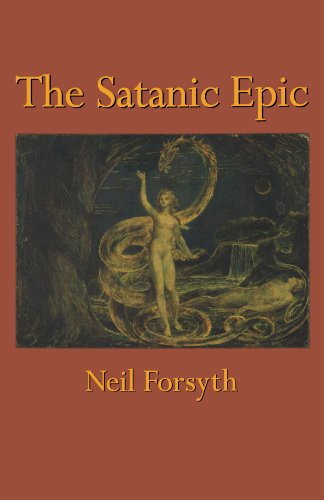
( The Satan of Paradise Lost has fascinated generations o...)
The Satan of Paradise Lost has fascinated generations of readers. This book attempts to explain how and why Milton's Satan is so seductive. It reasserts the importance of Satan against those who would minimize the poem's sympathy for the devil and thereby make Milton orthodox. Neil Forsyth argues that William Blake got it right when he called Milton a true poet because he was "of the Devils party" even though he set out "to justify the ways of God to men." In seeking to learn why Satan is so alluring, Forsyth ranges over diverse topics--from the origins of evil and the relevance of witchcraft to the status of the poetic narrator, the epic tradition, the nature of love between the sexes, and seventeenth-century astronomy. He considers each of these as Milton introduces them: as Satanic subjects. Satan emerges as the main challenge to Christian belief. It is Satan who questions and wonders and denounces. He is the great doubter who gives voice to many of the arguments that Christianity has provoked from within and without. And by rooting his Satanic reading of Paradise Lost in Biblical and other sources, Forsyth retrieves not only an attractive and heroic Satan but a Milton whose heretical energies are embodied in a Satanic character with a life of his own.
http://www.amazon.com/gp/product/0691113394/?tag=2022091-20
("The Satan of Paradise Lost" has fascinated generations o...)
"The Satan of Paradise Lost" has fascinated generations of readers. This book attempts to explain how and why Milton's Satan is so seductive. It reasserts the importance of Satan against those who would minimize the poem's sympathy for the devil and thereby make Milton orthodox. Neil Forsyth argues that William Blake got it right when he called Milton a true poet because he was 'of the Devils party' even though he set out 'to justify the ways of God to men'. In seeking to learn why Satan is so alluring, Forsyth ranges over diverse topics - from the origins of evil and the relevance of witchcraft to the status of the poetic narrator, the epic tradition, the nature of love between the sexes, and seventeenth-century astronomy.He considers each of these as Milton introduces them: as Satanic subjects. Satan emerges as the main challenge to Christian belief. It is Satan who questions and wonders and denounces. He is the great doubter who gives voice to many of the arguments that Christianity has provoked from within and without. And by rooting his Satanic reading of "Paradise Lost in Biblical" and other sources, Forsyth retrieves not only an attractive and heroic Satan but a Milton whose heretical energies are embodied in a Satanic character with a life of his own.
http://www.amazon.com/gp/product/B00IFZ3JJQ/?tag=2022091-20
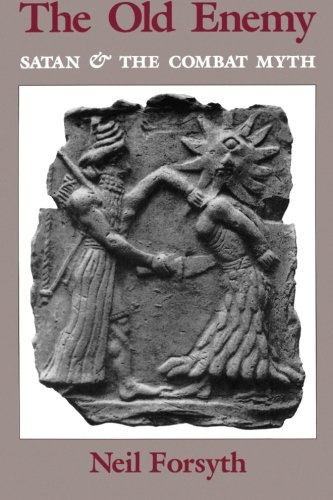
( The description for this book, The Old Enemy: Satan and...)
The description for this book, The Old Enemy: Satan and the Combat Myth, will be forthcoming.
http://www.amazon.com/gp/product/0691014744/?tag=2022091-20
Forsyth, Neil Robert was born on January 17, 1944 in Southampton, England. Arrived in Switzerland, 1980. Son of James and Alice (Eggs) Forsyth.
Bachelor, King's College, Cambridge, England, 1965. Master of Arts, University North Carolina, 1967. Doctor of Philosophy, University California, Berkeley, 1976.
Postdoctoral fellow, Bryn Mawr (Pennsylvania) College, 1977-1980; assistant Professor of English, U. Geneva, 1980-1985; professor, U. Lausanne, Switzerland, since 1986; chairman English Department, University Lausanne, Switzerland, since 1989.
( The description for this book, The Old Enemy: Satan and...)
( The Description for this book, The Old Enemy: Satan and...)
("The Satan of Paradise Lost" has fascinated generations o...)
( The Satan of Paradise Lost has fascinated generations o...)
Children: James, Alice.
