Background
Nikolai Kurnakov was born on December 6, 1860, in Nolinsk, Russia.


Saint Petersburg Institute of Mines, Saint Petersburg, Russia
Kurnakov graduated from the Saint Petersburg Institute of Mines in 1882.

1907
Some participants of the first Mendeleev Congress.

1930
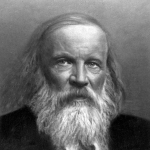
Kurnakov in 1930.

A photo of Kurnakov.

1951
A Soviet stamp issued in 1951 to commemorate Kurnakov's scientific achievements in chemistry.

1913 - 1941
Saint Petersburg Academy of Sciences, Saint Petersburg, Russia
On December 7, 1913, Kurnakov was elected a member of the Saint Petersburg Academy of Sciences.

1928
Kurnakov was awarded the Order of Lenin in 1928.

1939
Kurnakov was awarded the Order of the Red Banner of Labour in 1939.

1941
Kurnakov was awarded the Stalin Prize in 1941.
1907
Some participants of the first Mendeleev Congress.
1928
Kurnakov was awarded the Order of Lenin in 1928.
1930
Kurnakov in 1930.
1939
Kurnakov was awarded the Order of the Red Banner of Labour in 1939.
1941
Kurnakov was awarded the Stalin Prize in 1941.
1951
A Soviet stamp issued in 1951 to commemorate Kurnakov's scientific achievements in chemistry.
Saint Petersburg Institute of Mines, Saint Petersburg, Russia
Kurnakov graduated from the Saint Petersburg Institute of Mines in 1882.
A photo of Kurnakov.
Saint Petersburg Academy of Sciences, Saint Petersburg, Russia
On December 7, 1913, Kurnakov was elected a member of the Saint Petersburg Academy of Sciences.


Николай Семёнович Курнаков
Nikolai Kurnakov was born on December 6, 1860, in Nolinsk, Russia.
Kurnakov attended Nizhny Novgorod Gymnasium and later graduated from the Saint Petersburg Institute of Mines in 1882.
From 1893 Kurnakov was a professor of inorganic chemistry at Saint Petersburg Institute of Mines and also a professor of physical chemistry at the Institute of Electrical Engineering in 1899-1908. From 1902 to 1930 he was a professor of general chemistry at the Saint Petersburg Polytechnic Institute. In 1918, at Kurnakov’s suggestion, the Academy created the Institute of Physical and Chemical Analysis; in 1934 it became the Institute of General and Inorganic Chemistry, and in 1944 it was renamed the N. S. Kurnakov Institute of General and Inorganic Chemistry.
Kurnakov’s first scientific interest was in salts. In the 1890s he completed a series of experiments on the chemistry of coordination complexes that were generalized in his inaugural dissertation, On Complex Metallic Bases. Kurnakov discovered the reaction of cis- and trans-isomers of divalent platinum with thiourea; this reaction is named for him. He showed that trans-isomers form a coordination complex with two molecules of thiourea in an internal sphere, while cis- compounds react with four particles of thiourea. This reaction permits questions concerning the structure of derivatives of bivalent platinum.
Kurnakov’s main scientific accomplishment was the creation of physicochemical analysis based on the study of equilibrium systems by measuring their characteristics in relation to changes in composition and by constructing appropriate phase diagrams. Beginning in 1898, Kurnakov carried on a systematic study of heterogeneous systems. Developing the work of Chernov, Le Chatelier, Osmond, and Roberts-Austen in thermal analysis, in 1900 Kurnakov developed the means of finding the composition of specific compounds in alloys by using the method of fusibility.
In 1903 Kurnakov invented a self-registering pyrometer - a device for recording heating and cooling curves - with the aid of which he significantly improved the methodology of thermal analysis. In 1906, he introduced the measurement of electroconductivity as a method of studying the change in the characteristics of a system in relation to changes in its composition. With S. F. Zhemchuzhny he demonstrated that in the formation of solid solutions of two metals there is a reduction in electroconductivity. They established the basic composition-electroconductivity diagrams for systems of two metals which form continuous solid solutions.
In 1906 Kurnakov established that technical alloys of high electric resistance, which are widely employed in the manufacture of rheostats and resistance boxes, consist of solid solutions. Expanding his research on alloys, Kurnakov applied the measurement of hardness and the determination of flow pressure as a new method of physicochemical analysis (1908-1912).
In 1912, while studying the viscosity of two-liquid systems in relation to their composition, Kurnakov found that the formation of specific compounds in the given systems corresponds to special points (which he called singular or Dalton points) on the phase diagrams. These results permitted Kurnakov to formulate the general conclusion that “a chemical individuum belonging to a specific chemical compound represents a phase, which possesses singular or Dalton points on the lines of its characteristics” (1914).
The composition corresponding to these points remains constant even with a change in the facts of the system’s equilibrium. Through investigation of tellurium-bismuth, iron-silicon, antimony, aluminum-iron, and lead-sodium systems, using all methods of physico-chemical analysis, phases of variable composition were discovered that, according to Kurnakov, belonged to the berthollide type. These phases were not characterized by singular points on the phase diagrams. According to Kurnakov, the berthollides are crystal-phase nonstoichiometric compounds, the variable composition of which cannot be expressed by simple integer relationships.
Kurnakov and his student's proposed methods of physicochemical analysis for the study of a great variety of systems formed by salts, metals, and inorganic compounds. Without destroying the system under investigation, Kurnakov precisely specified the conditions of separation of the various phases for intermetallic compounds and for the hydrate forms of double salts; he also found the limits of their stable state - unobtainable with the common methods of chemical investigation then in use.
Studies of the salt lakes in the Crimea and in the Volga basin, of the Tikhvin bauxite deposits, and of other valuable sources of minerals are associated with Kurnakov.

Nikolai Kurnakov is remembered as one of the pioneers of physical chemistry in the USSR. A chemical reaction that he pioneered, known as the Kurnakov test, is still used to differentiate cis from trans isomers of divalent platinum and is his best-known contribution to coordination chemistry.
Kurnakov was an active participant in the introduction of chemical processes into Soviet agriculture and helped to organize many scientific conventions and conferences. He also fostered a large school of inorganic chemists and metallurgists, including G. G. Urazov, S. F. Zhcmchuzhny, N. I. Stepanov, and N. N. Efremov.
He was awarded the Order of Lenin in 1928, the Order of the Red Banner of Labour in 1939, and the Stalin Prize in 1941. He was also named the Merited Engineering Scientist of the RSFSR.
A mineral was named kurnakovite in his honor.
Kurnakov ascribed great significance to the study of the genetic connection between daltonides and berthollides chemical compounds. “In equilibrium sys-tems,” he said, “discreteness and continuity are inter-combined and coexist.”
On December 7, 1913, Kurnakov was elected a member of the Saint Petersburg Academy of Sciences.
Kurnakov probably was married, but nothing is known about his family.