
Background
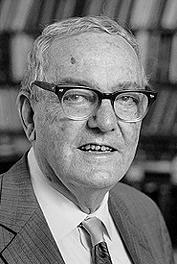
WILLIAMSON, Oliver Eaton was born in 1932 in Superior, Wisconsin, United States of America.
WILLIAMSON, Oliver Eaton was born in 1932 in Superior, Wisconsin, United States of America.
Bachelor of Science Massachusetts Institute of Technology, Cambridge, Mass., USA, 1955. Master of Business Administration Stanford University, 1960. Doctor of Philosophy Camegie-Mellon University, 1963.
Assistant Professor of Economics, University California Berkeley, 1963-1965. Association Professor of Economics, University Pennsylvania, 1965-1976. Special Economics Assistant, Antitrust Division, United States Department
Justice, 1966-1967.
Visiting Professor, University Warwick, 1973. Distinguished Visiting Professor, University Kyoto, Japan, 1983. Gordon B. Tweedy Professor of Economics, Law and Organisation, University Pennsylvania, Philadelphia, Pennsylvania, since 1976.
Co-editor, J. Law, Economics and Organization.
"The Elasticity of the Marginal Efficiency Function: Comment", American Economic Review, December 1962, 52, 1099-1103.
"Selling Expense as a Barrier to Entry," Quarterly Journal of Economics, February 1963, 77, 112-88.
"A Model of Rational Managerial Behavior," Church 9 in R.M. Cyert and J.D. March, A Behavioral Theory of the Firm, Englewood Cliffs, New Jersey, 1963.
"Managerial Discretion and Business Behavior," American Economic Review, December 1963, 53, 1032-57.
"Innovation and Market Structure," Journal of Political Economy, February 1965, 73, 67-73.
"Incentive Contracts: An Analysis of Adaptive Response," RM-4363 Puerto Rico, Research and Development, June 1965, pp. 64 and ix.
"A Dynamic Theory of Interfirm Behavior," Quarterly Journal of Economics, November 1965, 79, 579-607.
"Peak Load Pricing and Optimal Capacity under Indivisibility Constraints," American Economic Review, September 1966, 56, 810-27.
"The Economics of Defense Contracting: Incentives and Performance," in The Economics of Defense, Columbia University Press, 1967.
"Hierarchical Control and Optimum Firm Size," Journal of Political Economy, April 1967, 76, 123-38.
“A Rational Theory of the Federal Budgeting Process," Papers on Non-Market Decision Making The second (Gordon Tullock, educated), Charlottesville, Veterans Administration, 1967.
(with Douglas G. Olson and August Ralston), "Externalities, Insurance, and Disability Analysis," Economica, August 1967, 34, 235-53.
"A Dynamic-Stochastic Theory of Managerial Behavior," (Phillips and Williamson, eds.), Prices: Issues in Theory, Practice, and Public Policy, University of Pennsylvania Press, 1968.
(with Thomas J. Sargent), "Social Choice: A Probabilistic Approach," Economic Journal, December 1967, 77, 797-813.
"Wage Rates as a Barrier to Entry: The Pennington Case in Perspective," Quarterly Journal of Economics, February 1968, 82, 85-116.
"Economies as an Antitrust Defense: The Welfare Trade-Offs," American Economic Review, March 1968, 58, 18-36.
"Economics as an Antitrust Defense: Correction and Reply," American Economic Review, December 1968, 58, 1372-76.
“The Vertical Integration of Production: Market Failure Considerations”
The Economics of Discretionary Behavior: Managerial Objectives in a Theory of the Firm
Corporate Control and Business Behavior: An Inquiry into the Effects of Organization Form on Enterprise Behavior, Prentice-Hall, Englewood Cliffs, New Jersey, 1970; translated into Japanese and reprinted by Maruzen Company, Limited, 1974.
Markets and Hierarchies: Analysis and Antitrust Implications
The Economic Institutions of Capitalism: Firms, Markets, Relational Contracting
The Mechanisms of Governance, Oxford University Press, 1996; translated into Italian by Margherita Turvani, and reprinted by Franco Angeli, 1998; translated into Chinese by Chien Wang et al. and reprinted by China Social Sciences Publishing House, 2001.
Co-editor (with Almarin Phillips) and contributor, Prices: Issues in Theory, Practice, and Public Policy, University of Pennsylvania, 1968.
Editor and contributor, Antitrust Law and Economics, Dame Publishing, Houston, 1980.
Co-editor (with Masahiko Aoiki and Bo Gustafsson), The Firm as a Nexus of Treaties, Sage Publications, London, 1989.
Editor and contributor, Organization Theory: From Chester Barnard to the Present and Beyond, Oxford University Press, New York, 1990.
Editor and contributor, Industrial Organization, Edward Elgar Publishing Limited, London, 1990.
Co-editor (with Sidney Winter) and contributor, The Nature of the Firm, Oxford University Press, New York, 1991; translated into Russian and Ukrainian and published by A.Sk. Publishing Company, 2000.
Co-editor and contributor, Transaction Cost Economics, Vols. I and The second, Edward Elgar Publishing Limited, Brookfield, Vermont, 1995.
I became an economist with interdisciplinary interests because, in the convoluted course of events, that was the natural thing to do. Being a Doctor of Philosophy student at CarnegieMellon in the early 1960s was an exciting experience. The study of economic organisation — within and between markets and hierarchies, to include both standard and nonstandard forms of contracting — became an obsession thereafter.
The four key academic figures in my research on problems of economic organisation were Kenneth Arrow, Alfred D. Chandler, Junior, Ronald Coase, and Herbert Simon. Although I had only two (Arrow and Simon) in
the classroom, I regard Chandler and Coase as my teachers nonetheless. From Arrow I learned about the importance of information and not to shoe-horn difficult problems into orthodox boxes.
Chandler taught me that organisational innovation was an important and neglected phenomenon that had pervasive ramifications for understanding American industry. Coase taught me that transaction costs were central to the study of economic organisation and that such studies should be performed in a comparative institutional manner. And Simon taught me that behavioural assumptions were important and not to be intimidated by disciplinary boundaries.
It has given me statisfaction to have been a participant in helping to shape the ‘new institutional economics’ during the past 20 years and to see research contributions reflected in public policy reforms — especially in the area of antitrust. Not only do the revised ‘merger guidelines’ reflect the importance of economies as an antitrust defence, but the concept of the firm as a governance structure (rather than as a production function) has taken a secure hold.

A student of Ronald Coase.
A student of Herbert A. Simon.

A student of Richard Cyert