Background
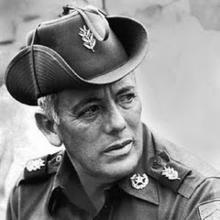
Omar Torrijos was born on13 February 1929 in Santiago. His parents were schoolteachers.

Omar Torrijos was born on13 February 1929 in Santiago. His parents were schoolteachers.
He attended the military academy of El Salvador between 1947 and 1952.
He had the rank of lieutenant colonel in the National Guard at the time of the 1968 coup which overthrew the ten-day government of Amulfo Arias Madrid. Relatively unknown outside of Panama, within the country he enjoyed a swashbuckler’s image as a counterinsurgency officer. He vaulted past several senior officers and consolidated his control within six months, becoming a general.
Torrijos remained final arbiter of Panamanian affairs until his death in an airplane crash in 1981.
Torrijos was determined to bring change and proclaimed himself Maximum Leader of the Revolution, placing figureheads in the presidency. He banned political parties, creating a corporative system to provide some opportunity for particular sectors of society to influence decisions, denied traditional urban elites access to power, and strengthened the influence of provincial leaders and rep¬resentatives. He enlarged the public sector and instituted social programs for the masses.
Torrijos also undertook a new vitality in foreign relations. He revived the Canal talks, which had been virtually suspended in 1967. He played on U. S. fears. Although not a Marxist, he permitted the Communist Party to function when other parties were banned, and he exchanged abrazos with Fidel Castro. The more liberal foreign policy of the Carter administration provided the final ingredient for Torrijos’ greatest triumph, the Panama Canal treaties of 1977. He attained the Panamanian dream of isthmian sovereignty and eventual ownership and control of the Canal.
A downturn in the economy brought Torrijos to announce a “return to the barracks” in 1978 and to appoint Aristides Royo as president, with some independence of action. Torrijos estabished the Democratic Revolutionary Party, apparently hoping to create a Mexican-style, single-party political system and a return to an elected president in 1984.