Background
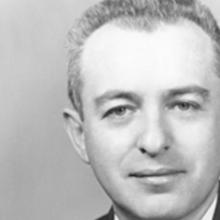
Oscar Lewis was born in New York City in 1914. The son of a rabbi, he was raised in upstate New York and majored in history at the City College of New York.


(Dust Jacket Notes: "Pedro Martinez is a Mexican peasant, ...)
Dust Jacket Notes: "Pedro Martinez is a Mexican peasant, now over seventy born in 1889. This is the story of his life and of the lives of his wife and children, told in his own words and, from time to time, in theirs. Like Professor Lewis' earlier book, The Children of Sanchez, Pedro Martinez is at once an anthropological study of great force and subtlety and a literary masterpiece; a book in which the details and structure of the lives of peasants are accurately and minutely reported, but a book too in which these lives present themselves with the immediate reality of a work of art...."
http://www.amazon.com/gp/product/0394703707/?tag=2022091-20

( A pioneering work from a visionary anthropologist, The ...)
A pioneering work from a visionary anthropologist, The Children of Sanchez is hailed around the world as a watershed achievement in the study of povertya uniquely intimate investigation, as poignant today as when it was first published. It is the epic story of the Sánchez family, told entirely by its membersJesus, the 50-year-old patriarch, and his four adult childrenas their lives unfold in the Mexico City slum they call home. Weaving together their extraordinary personal narratives, Oscar Lewis creates a sympathetic but ultimately tragic portrait that is at once harrowing and humane, mystifying and moving. An invaluable document, full of verve and pathos, The Children of Sanchez reads like the best of fiction, with the added impact that it is all, undeniably, true.
http://www.amazon.com/gp/product/0307744531/?tag=2022091-20

( One of the truly seminal works in modern cultural anthr...)
One of the truly seminal works in modern cultural anthropology, Five Families is a dramatic and forceful account of the men, women, and children of five Mexican families and the impoverished communities in which they live.
http://www.amazon.com/gp/product/0465097057/?tag=2022091-20

(Puerto Rican, Poverty, Anthropology V-421)
Puerto Rican, Poverty, Anthropology V-421
http://www.amazon.com/gp/product/B001QX3UK2/?tag=2022091-20

(The social, economic, political, and religious life of th...)
The social, economic, political, and religious life of the community of Tepoztlan is studied from an ethnographic and historical viewpoint
http://www.amazon.com/gp/product/0252725301/?tag=2022091-20

(A short and poignant account of how the poor die, of the ...)
A short and poignant account of how the poor die, of the death of Aunt Guadalupe, and of her funeral, to which the members of the Sanchez family come as mourners.
http://www.amazon.com/gp/product/B0000BKYW0/?tag=2022091-20

(Tells the stories of explorers, mountain men, missionarie...)
Tells the stories of explorers, mountain men, missionaries, thieves, settlers, naturalists, and writers associated with the Sierra Nevada Mountains and discusses the history of the region
http://www.amazon.com/gp/product/0874171415/?tag=2022091-20
Oscar Lewis was born in New York City in 1914. The son of a rabbi, he was raised in upstate New York and majored in history at the City College of New York.
After receiving his B. A. in history in 1936 he matriculated as a history student at Columbia University. Becoming somewhat disaffected from the history then taught at Columbia, he followed the advice of his wife's brother, Abraham Maslow, and had a long talk with Ruth Benedict of the Anthropology Department. Attracted by the field and by Benedict, he switched departments. Among those at Columbia who influenced him, in addition to Ruth Benedict, were Ralph Linton and Margaret Mead.
Lewis was poor, and there was little financial aid available at the time. Therefore, his dissertation research was done in the library, rather than in the field, and combined history and anthropology. Receiving his degree in 1940, his dissertation on the effects of white contact on the Blackfeet Indians was published in 1942. That year Lewis worked for the Human Relations Area Files in New Haven, and in 1943 he went to Mexico as a U. S. representative of the Interamerican Indian Institute to work with Manuel Gamio and Juan Comas. Lewis conducted his first field work in Tepoztlan during these years, thereby beginning a life-long association with Latin America.
Upon his return to the United States Lewis worked for the U. S. Department of Agriculture as a social scientist. Briefly on the faculties of Brooklyn College and Washington University, Lewis was appointed to the faculty at the university of Illinois in Champagne-Urbana in 1948, starting the anthropology program there. Lewis served briefly as a consultant to the Ford Foundation in India, and while in this post he recruited a number of Indian students and directed an ethnographic study of a village in India.
Lewis's research in Tepoztlan was in a village made famous earlier by the pioneering work of Robert Redfield. When Lewis published a book on Tepoztlan, it roused a considerable controversy for it was critical of Robert Redfield's findings. Redfield was not disturbed by this, but many other people were. Lewis had paid a great deal of attention in this study to economics and factional politics. An offshoot from this research developed into the major thrust of the rest of his career—the study of poor people by means of a detailed investigation of a small number of individuals in the family setting.
The first major publication with this focus was Five Families, about families who lived in Mexico City. This was followed by The Children of Sanchez and later by several other books on various members of and events in the Sanchez family. He also published a lengthy study of Pedro Martinez, a resident of Tepoztlan. Subsequently he added an interest in Puerto Rican poor people, both in Puerto Rico and in New York, and he was working on a study of Cuba when he died without warning at age 56.
Lewis is probably best known for his "culture of poverty" concept, which evolved from his work on poor families in Mexico. The basic idea was that the poor had a culture of poverty which in effect kept them poor. Thus a culture of poverty would be reproduced by generations of the poor and would last for some time even if the individuals or families were able to work themselves out of economic poverty. The concept of culture of poverty has been strongly attacked on conceptual grounds by Anthony Leeds in 1971 and earlier on other grounds as well by Charles Valentine (1968).
While Oscar Lewis is most well known for the culture of poverty concept, several of his other accomplishments were much more lasting. A major contribution was his study of variation in a peasant village. Much of anthropology had been presented as if a village, culture, or tribe were homogeneous and the important variation was that found between villages, tribes, etc. Redfield's account of Tepoztlan presented the village as essentially homogeneous. Lewis protested that there were wealth differences within the village, that there were profound political disputes and differences, and that these differences were important for an understanding of Tepoztlan, and by extension of any peasant village. Many subsequent accounts of peasant villages have described such differences or at least taken them into account.
Oscar Lewis's works include "The Effects of White Contact upon the Blackfoot Indians, " in Monographs of the American Ethnological Society, Vol. 6, edited by J. J. Augustin (1942); Life in a Mexican Village: Tepoztlan Restudied (1951); Village Life in Northern India (1958); Five Families: Mexican Case Studies in the Culture of Poverty (1959); The Children of Sanchez (1961); Pedro Martinez, A Mexican Peasant and His Family (1964); La Vida: A Puerto Rican Family in the Culture of Poverty—San Juan and New York (1966); A Death in the Sanchez Family (1969); and Anthropological Essays (1970).
He won the 1967 U. S. National Book Award in Science, Philosophy and Religion for La Vida; A Puerto Rican Family in the Culture of Poverty.
( A pioneering work from a visionary anthropologist, The ...)
( One of the truly seminal works in modern cultural anthr...)
(Tells the stories of explorers, mountain men, missionarie...)
(A short and poignant account of how the poor die, of the ...)
(The social, economic, political, and religious life of th...)
(Dust Jacket Notes: "Pedro Martinez is a Mexican peasant, ...)
(Puerto Rican, Poverty, Anthropology V-421)