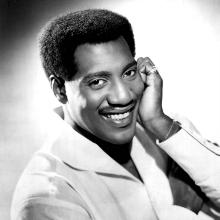
Background
Otis Redding was born on September 9, 1941, in Dawson, Georgia. When he was 5 years old, Redding's family moved to Macon, Georgia, where he grew up listening to the music of Sam Cooke and Little Richard.


1965
Memphis, Tennessee, United States
Otis Redding poses for a full-length portrait in Memphis, Tennessee in 1965.

1965
Otis Redding poses for a full-length portrait sitting in a chair in 1965.

1966
London, England, United Kingdom
Otis Redding performs on the TV show Ready Steady Go in 1966 in London, England.

1966
Otis Redding performs onstage in 1966.

1967
695 Park Ave, New York, NY 10065, United States
Soul singer Otis Redding performs onstage with his guitar player Steve Cropper of "The Bar-Kays" at Hunter College on January 21, 1967, in New York City, New York.

1967
Otis Redding passionately gets down on his knees with his horn section behind him as he performs onstage in 1967.

1967
Blaise's Club, London, England, United Kingdom
Ahmet Ertegun (left) and Otis Redding (striped suit) pose for a portrait with some other men at Blaise's Club in 1967 in London, England.

1967
265 Peachtree St NE, Atlanta, GA 30303, United States
From left, American actor and Civil Rights activist Dick Gregory, Student Nonviolent Coordinating Committee chairman H Rap Brown (born Hubert Gerold Brown, later known as Jamil Abdullah Al-Amin), and musician Otis Redding (1941 - 1967) attend the NARA (National Association of Radio Announcers) convention in the Regency Hyatt Hotel, Atlanta, Georgia, August 9 through 13, 1967.

1967
695 Park Ave, New York, NY 10065, United States
American singer and songwriter Otis Redding (1941 - 1967) being interviewed at Hunter College, New York City, 21st January 1967. (Photo by Don Paulsen)

1967
695 Park Ave, New York, NY 10065, United States
American singer and songwriter Otis Redding (1941 - 1967) makes a surprise appearance at Hunter College, New York City, 21st January 1967.

1967
2004 Fairground Rd, Monterey, CA 93940, United States
Otis Redding performing at the Monterey Pop Festival at the Monterey Country Fairgrounds on June 17, 1967, in Monterey, California. (Photo by Elaine Mayes)

Otis Reddin, Jim Stewart, Rufus Thomas, Booker T. Jones, and Carla Thomas pose for a portrait after recording the hit duet "Tramp" that featured Carla and Otis on vocals.

3800 Davenport Dr, Montgomery, AL 36105, United States
"Otis Redding Sittin' on the Dock of the Bay," statue in Gateway Park.
1965
Memphis, Tennessee, United States
Otis Redding poses for a full-length portrait in Memphis, Tennessee in 1965.
1965
Otis Redding poses for a full-length portrait sitting in a chair in 1965.
1966
London, England, United Kingdom
Otis Redding performs on the TV show Ready Steady Go in 1966 in London, England.
1966
Otis Redding performs onstage in 1966.
1967
695 Park Ave, New York, NY 10065, United States
Soul singer Otis Redding performs onstage with his guitar player Steve Cropper of "The Bar-Kays" at Hunter College on January 21, 1967, in New York City, New York.
1967
Otis Redding passionately gets down on his knees with his horn section behind him as he performs onstage in 1967.
1967
Blaise's Club, London, England, United Kingdom
Ahmet Ertegun (left) and Otis Redding (striped suit) pose for a portrait with some other men at Blaise's Club in 1967 in London, England.
1967
265 Peachtree St NE, Atlanta, GA 30303, United States
From left, American actor and Civil Rights activist Dick Gregory, Student Nonviolent Coordinating Committee chairman H Rap Brown (born Hubert Gerold Brown, later known as Jamil Abdullah Al-Amin), and musician Otis Redding (1941 - 1967) attend the NARA (National Association of Radio Announcers) convention in the Regency Hyatt Hotel, Atlanta, Georgia, August 9 through 13, 1967.
1967
695 Park Ave, New York, NY 10065, United States
American singer and songwriter Otis Redding (1941 - 1967) being interviewed at Hunter College, New York City, 21st January 1967. (Photo by Don Paulsen)
1967
695 Park Ave, New York, NY 10065, United States
American singer and songwriter Otis Redding (1941 - 1967) makes a surprise appearance at Hunter College, New York City, 21st January 1967.
1967
2004 Fairground Rd, Monterey, CA 93940, United States
Otis Redding performing at the Monterey Pop Festival at the Monterey Country Fairgrounds on June 17, 1967, in Monterey, California. (Photo by Elaine Mayes)
3800 Davenport Dr, Montgomery, AL 36105, United States
"Otis Redding Sittin' on the Dock of the Bay," statue in Gateway Park.
Otis Reddin, Jim Stewart, Rufus Thomas, Booker T. Jones, and Carla Thomas pose for a portrait after recording the hit duet "Tramp" that featured Carla and Otis on vocals.

1957
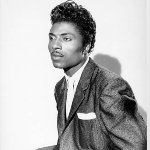
Musician Little Richard poses for a portrait. Photo by Michael Ochs Archives.


https://www.amazon.com/Pain-In-My-Heart/dp/B001FAK91Y/ref=sr_1_1?keywords=Pain+in+My+Heart&qid=1584362873&sr=8-1
1964

https://www.amazon.com/Great-Redding-Sings-Ballads-Vinyl/dp/B000063149/ref=sr_1_1?keywords=The+Great+Otis+Redding+Sings+Soul+Ballads&qid=1584362915&sr=8-1
1965

https://www.amazon.com/Otis-Blue-Redding-Collectors-Reformat/dp/B0128ETUA6/ref=sr_1_2?keywords=Otis+Blue%3A+Otis+Redding+Sings+Soul&qid=1584362957&sr=8-2
1965

https://www.amazon.com/Soul-Album-Vinyl-Otis-Redding/dp/B000087DTH/ref=sr_1_4?keywords=The+Soul+Album&qid=1584363085&sr=8-4
1966

https://www.amazon.com/Complete-Unbelievable-Redding-Dictionary-Deluxe/dp/B01KMS2F5C/ref=sr_1_1?keywords=Complete+%26+Unbelievable%3A+The+Otis+Redding+Dictionary+of+Soul&qid=1584363155&sr=8-1
1966

https://www.amazon.com/King-Queen-Redding-Carla-Thomas/dp/B008CABKSQ/ref=sr_1_1?keywords=King+%26+Queen+otis&qid=1584363245&sr=8-1&swrs=56E8D2BC0C0DCDEB6B7C139777CD196F
1967

https://www.amazon.com/Dock-Bay-Otis-Redding/dp/B002UPQ246/ref=sr_1_2?keywords=The+Dock+of+the+Bay+otis&qid=1584363358&sr=8-2
1968

https://www.amazon.com/Immortal-Otis-Redding-OTIS-REDDING/dp/B00NOZ3E42/ref=sr_1_1?keywords=The+Immortal+Otis+Redding+otis&qid=1584363413&sr=8-1
1968

https://www.amazon.com/Love-Man/dp/B001A814Q0/ref=sr_1_1?keywords=Love+Man+Otis+Redding&qid=1584363448&sr=8-1
1969

https://www.amazon.com/Tell-The-Truth/dp/B00I4WFZH4/ref=sr_1_1?keywords=Tell+the+Truth+Redding&qid=1584363479&sr=8-1
1970

https://www.amazon.com/Remember-Me-Otis-Redding/dp/B000000ZLJ/ref=sr_1_1?keywords=Remember+Me+Redding&qid=1584363523&sr=8-1
1992
Otis Redding was born on September 9, 1941, in Dawson, Georgia. When he was 5 years old, Redding's family moved to Macon, Georgia, where he grew up listening to the music of Sam Cooke and Little Richard.
Otis Redding attended Ballard-Hudson High School. He also took lessons for singing and sang in his school band as well as on local radio. His father fell severely ill when Redding was 15, so he left school and began to support his mother in providing for the family.
In the late 1950s, Redding joined the Upsetters, the band that had formerly backed Little Richard.
In 1960, Redding moved to Los Angeles, California, where he began releasing singles. He returned to Georgia a year later and recorded "Shout Bamalama." He befriended guitarist Johnny Jenkins and joined his band, the Pinetoppers. During one of Jenkins's recording sessions at Memphis's Stax studios, Redding recorded a ballad he'd written, "These Arms of Mine." The song quickly took off, rising to No. 20 on the R&B charts in 1963.
Redding began a career recording at Stax, playing guitar and arranging his own songs. He was known for his energy in the studio and, in 1965, recorded the album Otis Blue: Otis Redding Sings Soul in one day. He released "I've Been Loving Your Too Long (to Stop Now)" that same year, and "Fa-Fa-Fa-Fa-Fa (Sad Song)" a year later.
In 1967, Redding released a successful duet album with Carla Thomas. That same year, he produced Arthur Conley's "Sweet Soul Music," which went to No. 2 on the R&B charts. Other artists of the day were influenced by Redding and Aretha Franklin's rendition of his song, "Respect," became legendary. Hoping to become more involved behind the scenes, Redding started his own label, Jotis.
In addition to sales, Redding's magnetic stage presence and sincere performances and made him star. On June 17, 1967, Redding performed at the Monterey International Pop Festival, where he was enthusiastically received. His emotional style and powerful singing became synonymous with soul music.
On December 6, 1967, Redding recorded "(Sittin' on) The Dock of the Bay." The song hit No. 1 on the pop and R&B charts the following year, but Redding wouldn't live to see his success. Four days after the recording session - on December 10, 1967 - Redding and four members of his band, the Bar-Keys, were killed after their chartered plane crashed into a Wisconsin lake.
Otis Redding’s prowess as a businessman led him to form his own label, Jotis records, in 1965. In addition to his many business interests in fields related to music, he was engaged in other business interests in his native state such as real estate, investments, stocks, and bonds. His business acumen meant that Otis knew how to earn and invest his money, unlike some of the other soul artists of the ’60s. In addition to the 300-acre Big-O Ranch, complete with a three-story home, livestock and a three and a half acre lake with fish, Redding acquired two private planes. It was his twin-engine Beechcraft that he was riding on that tragic day, December 10, 1967, when it crashed into Lake Monona in Madison.

Otis Redding is considered one of the greatest soul musicians. His "(Sittin' on) The Dock of the Bay" is credited with influencing the soul movement by combining traditional rhythm and blues with folk.
In 1989, Redding was inducted to the Rock and Roll Hall of Fame. In 1999, he was awarded the Lifetime Achievement Award at the Grammy Awards.
After Redding's death, France's Académie du Jazz (Academy of Jazz) named an award after him.
Otis Redding cited the singers Little Richard and Sam Cooke as his main inspirations and stated that there were definitive elements of their music in his work.
The idea that music could be a universal force, bringing together different races and cultures, was central to Otis’ personal philosophy and reflected in his everyday life.
Some of Redding’s best-known recordings - “These Arms of Mine,” “Mr. Pitiful,” “Pain in My Heart” - are full-voiced petitions against loneliness and zealous efforts to stave off loss, displaying his sensitivity to pain and desire.
Redding was a wealthy man and he earned around $35,000 per week for his concerts. He used to spend considerably on philanthropic projects and organized summer camps for disadvantaged African American children.
Physical Characteristics: Otis stood 6’2″ tall and weighed over 220 lbs.
Otis was a family man. He met his wife, Zelma Atwood, in 1959 and they married in August 1961. Together they have three children: Dexter, Karla, Otis III, and Demetria, who was adopted after Otis’ death.


Karla Redding-Andrews is the VP/Executive director for The Otis Redding Foundation.