Background
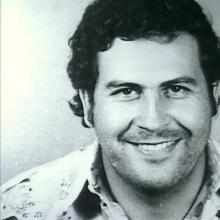
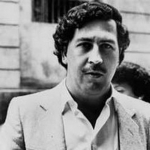
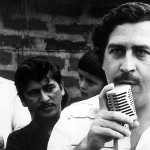
Pablo Emilio Escobar Gaviria was born in 1949 in Rionegro, Antioquia, Colombia. He was the son of a schoolteacher and a farmer and grew up in the Medellín area. His involvement in criminal activity began at an early age, initially through theft, smuggling and the resale of stolen goods.
Education
Escobar and his brother were once sent home from school because the family could not afford shoes for him. He later continued his education in Medellín, attending the Liceo of the University of Antioquia.
Escobar subsequently studied at the Universidad Autónoma Latinoamericana in Medellín. He studied accounting for a period but did not complete a university degree. Accounts of his early education and criminal activities vary, including claims that he was expelled from school at the age of 16. In a 1992 statement to Colombian authorities, however, Escobar described completing his secondary education and attending university for one semester.
Career
While still young, Escobar became involved in the theft and resale of tombstones, which were reportedly sold to smugglers. In the early 1970s, he entered the cocaine trade.
Escobar began building an international trafficking network with several other traffickers from the Medellín area. They became the core of what was later known as the Medellín Cartel. Under his leadership, coca paste was obtained in Bolivia and Peru, processed in Colombia and transported to the United States.
The cartel expanded rapidly during the 1980s, and Escobar became one of the most powerful figures in Colombia's illegal drug trade. His organization combined international cocaine trafficking with bribery, kidnapping and violence. Escobar was linked to assassinations and attacks against government officials, judges, journalists and police officers.
Escobar also pursued a political career. In 1978, he was elected as an alternate member of the Medellín city council. In 1982, he was elected as an alternate representative to the Colombian Congress. His political career ended after his criminal background and connections to drug trafficking were publicly exposed.
Despite his criminal activities, Escobar cultivated considerable support among some residents of Medellín. He financed housing projects, schools, hospitals and sports facilities in poorer neighborhoods and presented himself as a benefactor to people who had received little assistance from government institutions.
In the early 1990s, the Colombian government intensified its efforts to capture Escobar. He surrendered to authorities in 1991 under an arrangement that allowed him to serve his sentence in a specially constructed facility known as La Catedral. In 1992, after authorities attempted to transfer him to a conventional prison, Escobar escaped.
He remained a fugitive while Colombian security forces searched for him. During this period, his organization continued to use violence against police and government officials. Escobar was killed by Colombian security forces in Medellín on December 2, 1993.
Politics
Escobar's political involvement began with his election as an alternate member of the Medellín city council in 1978. In 1982, he became an alternate representative to the Colombian Congress. His political ambitions were eventually ended by public scrutiny of his criminal background and his links to the cocaine trade.
Views
Quotations:
Some of Pablo Escobar's memorable quotations are:
"I prefer to be in the grave in Colombia than in a jail cell in the United States."
"I'm a decent man who exports flowers."
"All empires are created of blood and fire."
"I can replace things, but I could never replace my wife and kids."
"Everyone has a price, the important thing is to find out what it is."
"There can only be one king."
"There are two hundred million idiots, manipulated by a million intelligent men."