(For the majority of men, and for at least thirty years of...)
For the majority of men, and for at least thirty years of their lives, love is the strongest necessity, and governs them like a tyrant with no other curb than the wretched brake of written codes, which they do not read, and of social conventionalities, which they can easily silence by employing hypocrisy’s mask; a hypocrisy, let it be well understood, well dressed, well curled, and well educated. How can one satisfy this greatest of all human needs? By buying love, at so much an hour, so much a month, or so much a year. By gaining it by seduction or violence. By taking a wife. It would seem as if these three ways of loving were totally distinct, one from the other; in fact, that anyone would exclude the others, and that they would stand in direct opposition to each other.
(The Year 3000, first published in 1897 by the Italian neu...)
The Year 3000, first published in 1897 by the Italian neurologist, physiologist, and anthropologist Paolo Mantegazza, and defined by him as a dream, instead of a novel, was considered by many to be the forerunner of many science fiction books. It describes the human society of the year 3000, which is associated with the United States of the world, and which has long forgotten wars. The "dream" that begins as an application of the philosophical principles of equality, social law, and meritocratic progress, unfolds with a dreamlike trend, passing from detailed descriptions of small things to the philosophy of maximum systems, or to the commentary on religion of the year 3000, when the author, not hiding the autobiographical references in the book, expresses his agnostic beliefs. Unfortunately, however, the "dream" also takes on a nightmare tone, when, starting from the aforementioned principles of evolution, it comes to the recommended suppression of fragile newborns and therefore "unfit for life" or "predisposed to crime." Science, when it has the presumption of replacing God, leads to the delirium of omnipotence, and to a severe conflict between reason and heart: significant that only years after the publication of this book.
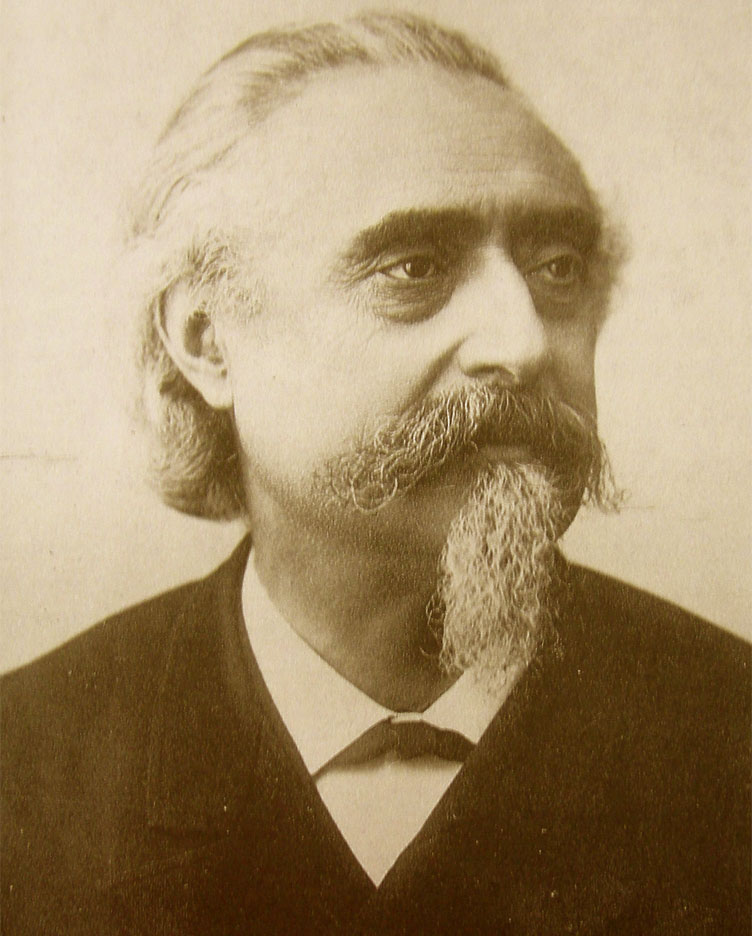
Paolo Mantegazza was an Italian anthropologist, neurologist, and physiologist. He is known for his experimental investigation of coca leaves into its effects on the human psyche. He was also an author of fiction.
Background
Paolo Mantegazza was born on October 31, 1831, in Monza, Lombardia, Italy to the family of Giovan Battista Mantegazza and Laura Solera Mantegazza. His family gave him a liberal and sophisticated upbringing. His mother, to whom he dedicated one of his books, was Laura Solera, herself notably well-educated, and famous for her ardent patriotism. Under her inspiration Mantegazza took part in the “Cinque Giornate” of 1848, in which the Milanese were able, after furious street fighting, to repel the Austrian occupying forces. Since he was sixteen, Mantegazza was allowed to serve only as a courier in the insurrection, but it nevertheless marked his baptism of fire.
Education
Mantegazza attended the universities of Pisa and Pavia, graduating from the latter in 1854 with honors in medicine. He began scientific experimentation while he was still a student, and when he was nineteen presented to the Istituto Lombardo Accademia di Scienze e Lettere a memoir on spontaneous generation - a still somewhat controversial topic - that aroused considerable interest.
After his graduation, Mantegazza traveled extensively in Europe (he knew seven languages), then moved to South America. In 1856 he established a medical practice in Salto, Argentina, where he was engaged in founding an agricultural colony and where. He shortly thereafter abandoned the colonization project and returned with his wife to Italy; in 1858 he became an assistant at the Ospedale Maggiore in Milan. The following year, in spite of his numerous professional commitments, he requested that he be allowed to take part in a competition for the unsalaried post of honorary assistant in the same institution. In 1860 Mantegazza was appointed to the chair of general pathology at the University of Pavia, where he subsequently established the first laboratory of experimental pathology in Europe. Ten years later, in 1870, he went to Florence to fill the first Italian chair of anthropology. Here he built up an important museum of anthropology and ethnology and founded the journal Archivio per l’antropologia e la etnografia.
Mantegazza published a great number of books, both popular and scientific. Among the latter, those that record his researches on the physiology of reproduction and on what are today called opotherapy and endocrinology are particularly important.
Mantegazza's writings are exceedingly numerous and varied. He wrote anthropological memoirs, works on medicine, volumes of travel, monographs upon special races, biographical studies, and romances. Among his more important anthropological works are Physiology of Pleasure, Physiology of Pain, Physiology of Love, Physiology of Hate, Love in Humanity, Hygiene of Love, and Physiognomy and Expression. All these have been translated into the leading languages of Europe and have exerted an immense influence. One or other of his books have been translated into fourteen distinct tongues.
Mantegazza's fiction includes several novels in the lachrymose and romantic style popular at the time.
Paolo Mantegazza died on August 28, 1910.
Achievements
Paolo Mantegazza lived to be nearly eighty. He was much honored for his scientific achievements. He was a member of a number of scientific academies and institutes and was awarded decorations by his own and foreign governments.
Paolo Mantegazza was an atheist and fierce opponent of the Roman Catholic church in the scientific field.
Politics
From 1865 until 1876 Paolo Mantegazza was a deputy for Monza in the Parliament of Italy, being elected subsequently to the Italian Senate.
Views
Taking up Spallanzani’s work of the preceding century, Mantegazza conducted a series of experiments in which he subjected frog sperm to low temperatures to determine its viability. From the data that he compiled he was able to conclude that it should be possible to preserve sperm by this method; and he went on to speculate on the feasibility of artificial insemination, writing that it might be a practice applicable to man. He also made experiments designed to demonstrate that tuberculosis is contagious, and was the first to show that bacteria reproduce by means of spores. He conducted researches on transplanting amphibian testicles and did work on animal organ transplants in general.
The abundance and variety of Mantegazza’s works written for the layman quite overshadowed his scientific works, however. He was an active popularizer, at a time when science was considered to be the preserve of the initiated few. His works on hygiene are particularly significant; he courageously dealt with a number of then-proscribed topics, including sex education. Indeed, there was almost no medical or social problem to which he did not devote a book, pamphlet, or lecture; his books were highly successful, and a few have had modern editions.
During a time when the popular and official science and culture in Italy were still influenced by the Roman Catholic Church, Mantegazza was a staunch liberal and defended the ideas of Darwinism in anthropology, his research having helped to establish it as the "natural history of man". From 1868 to 1875 he maintained a correspondence with Charles Darwin, too. Mantegazza's natural history, however, must be considered to be from a racial or social Darwinist perspective, evident in his "Morphological Tree of Human Races." This tree maps three principles: a single European meta-narrative controls all of the world's many cultures; human history is imagined as progressive, with the European human as the pinnacle of progress and development; lastly, a ranking of different races onto a hierarchical structure. If one envisions a tree, the Aryan race is the topmost branch, followed by Polynesians, Semites, Japanese, and moving downward to the bottom-most branch, the "Negritos." Mantegazza also designed an "Aesthetic Tree of the Human Race" with similar results.
Paolo Mantegazza also believed that drugs and certain foods would change humankind in the future, and defended the experimental investigation and use of cocaine as one of these miracle drugs. When Mantegazza returned from South America, where he had witnessed the use of coca by the natives, he was able to chew a regular amount of coca leaves and then tested on himself in 1859. Afterwards, he wrote a paper titled Sulle Virtù Igieniche e Medicinali della Coca e sugli Alimenti Nervosi in Generale ("On the hygienic and medicinal properties of coca and on nervous nourishment in general"). He noted enthusiastically the powerful stimulating effect of cocaine in coca leaves on cognition.
Quotations:
"I sneered at the poor mortals condemned to live in this valley of tears while I, carried on the wings of two leaves of coca, went flying through the spaces of 77,438 words, each more splendid than the one before...An hour later, I was sufficiently calm to write these words in a steady hand: God is unjust because he made man incapable of sustaining the effect of coca all life long. I would rather have a life span of ten years with coca than one of 10 000 000 000 000 000 000 000 centuries without coca."
Personality
As a fiction writer, Mantegazza was quite original for his time. His writings are characterized by nervous, impetuous style and expressive richness.
Connections
While is South America Paolo Mantegazza married an Argentinian. Following the death of his first wife, he married Maria Fantoni, the daughter of a Florentine aristocrat.