Background
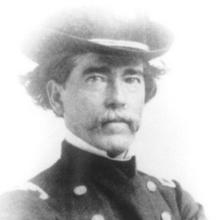
Paul Octave Hebert was born on December 12, 1818, on a plantation on the banks of the Mississippi twelve miles above Bayou Goula, Iberville Parish, Louisiana, United States. He was the son of Paul Gaston and Mary Eugenia Hamilton Hebert.

Paul Octave Hebert was born on December 12, 1818, on a plantation on the banks of the Mississippi twelve miles above Bayou Goula, Iberville Parish, Louisiana, United States. He was the son of Paul Gaston and Mary Eugenia Hamilton Hebert.
After attending elementary schools near his home, Paul was sent to Jefferson College, St. James Parish, Louisiana, where he graduated in 1836 at the head of his class. Four years later he was first in the class of 1840 at the United States Military Academy at West Point, where William T. Sherman and George H. Thomas were his classmates.
Paul Octave Hebert was commissioned a second lieutenant in the Engineer Corps but was shortly appointed assistant professor of engineering at West Point, a position he held until July 21, 1842, when he was ordered to Barataria, Louisiana, to superintend the construction of some Mississippi River defenses.
In 1845 he left the army to accept an appointment from Governor Alexander Mouton as chief engineer of Louisiana but resigned early in 1847. The Mexican War being then in progress, he was commissioned lieutenant-colonel in the 14th Infantry, in the brigade commanded by General Franklin Pierce. He took part in all important battles of the Mexico City campaign and at Molino del Rey so distinguished himself that he was personally complimented by General Scott and brevetted colonel for gallantry.
At the close of the war, Hebert retired to his sugar plantation, but soon afterward, in an attempt to improve his health, he made a tour of Europe. After his return to the United States, he was a member of the Louisiana constitutional convention in 1852 and in the same year was elected governor of the state on the Democratic ticket. He is said to have been the youngest man elected to the office up to that time. Commissioned a brigadier-general in the Confederate army at the outbreak of the Civil War, he was in command in Louisiana during 1861.
After being transferred to the Trans-Mississippi Department he was given command of the Department of Texas, then put in charge of the defenses of Galveston, and finally given command of the sub-district of North Louisiana, where he took part in the battle of Milliken's Bend, the only engagement of consequence in which he participated during the war. After General Lee surrendered, General Kirby-Smith turned his command over to General Magruder, who immediately transferred it to Hebert, and by him, it was surrendered to General Granger of the Union army.
The war over, Hebert resumed business in his native state. His political disabilities were soon removed by President Johnson. In 1873 he was appointed state engineer by Governor W. P. Kellogg, and commissioner and civil engineer of the Mississippi levees by President Grant.
Paul supported Republican Governor Henry C. Warmoth. In the presidential election of 1876, Governor Hebert changed political allegiance back to the Democrats.
Hebert was a Member of the Aztec Club.
Hebert proved unpopular with Texas troops, who considered him aristocratic and imperious.
On August 2, 1842, Paul Hebert was married to Cora Wills Vaughan, daughter of a sugar planter living near Bayou Goula. Hebert's first wife died in 1859 and on August 3, 1861, he had married Penelope Lynch Andrews.