Background
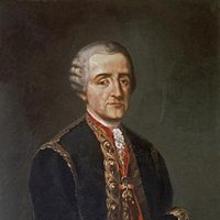
He was born Aug. 1, 1718, at Siétamo, Aragon, Spain, and christened Pedro Pablo Abarco de Bolea.


(The 18th century was a wealth of knowledge, exploration a...)
The 18th century was a wealth of knowledge, exploration and rapidly growing technology and expanding record-keeping made possible by advances in the printing press. In its determination to preserve the century of revolution, Gale initiated a revolution of its own: digitization of epic proportions to preserve these invaluable works in the largest archive of its kind. Now for the first time these high-quality digital copies of original 18th century manuscripts are available in print, making them highly accessible to libraries, undergraduate students, and independent scholars. Rich in titles on English life and social history, this collection spans the world as it was known to eighteenth-century historians and explorers. Titles include a wealth of travel accounts and diaries, histories of nations from throughout the world, and maps and charts of a world that was still being discovered. Students of the War of American Independence will find fascinating accounts from the British side of conflict. ++++ The below data was compiled from various identification fields in the bibliographic record of this title. This data is provided as an additional tool in helping to insure edition identification: ++++ Bodleian Library (Oxford) T209772 Le véritable Figaro = Pedro Pablo Abarca de Bolea, conde de Aranda. With reference to the marquis de Langle's 'Voyage en Espagne'. Probably printed in Paris. Londres i.e. Paris? : se trouve a Paris, chez Fournier le jeune, 1785. viii,184p. ; 12°
http://www.amazon.com/gp/product/1171372914/?tag=2022091-20
He was born Aug. 1, 1718, at Siétamo, Aragon, Spain, and christened Pedro Pablo Abarco de Bolea.
He began ecclesiastical studies in the seminary of Bologna but when he was 18 he changed to the Military School of Parma.
Aranda's early career was spent in a variety of military and diplomatic posts. As a diplomat he served as ambassador to Portugal and Poland. As a soldier he fought in Italy and commanded an invasion of Portugal in 1763. In 1766 Charles III, faced with a popular revolt, appointed him president of the Council of Castile. By a combination of tact and stubbornness, he rapidly reestablished peace and royal prestige. He also executed a royal order of 1767 expelling the Jesuits, who were suspected of undermining the king's authority. Until his resignation in 1773, Aranda supported the progressive policies of Charles III's councilors, including a program to lease vacant lands to deserving peasants. Thereafter until 1787 Aranda was ambassador to France. He urged Spanish intervention beside France against Great Britain in the War of American Independence, a course adopted in April 1779. The results of the war led him to recommend that Spain's colonies on the American continents be reorganized as three monarchies, bound permanently to Spain by dynastic ties. On Feb. 28, 1792, Charles IV appointed the now-aged Aranda first secretary, with a program for relaxing the tensions that had developed between Spain and revolutionary France. The overthrow of the French monarchy discredited Aranda's policy, and he was dismissed on Nov. 15, 1792, but he remained a royal councilor. On Mar. 14, 1794, he bitterly denounced in the Council of State the war against the French Republic that his successor, Manuel de Godoy, had undertaken. Charles IV thereupon banished him from Madrid. Aranda died on his estates at Epila, Aragon, on Jan. 9, 1798.
In 1755 he was appointed an ambassador to Portugal. In 1760, Charles III appointed him ambassador to Poland. In 1763 he was appointed captain general of the Province of Valencia. When the Esquilache Riots happened he was appointed captain general of New Castile and president of the Council of Castile. He promoted many enlightened reforms and he supported the expulsion of the Jesuits in 1767. He was appointed ambassador to France in 1773, where he stayed till 1787.
(The 18th century was a wealth of knowledge, exploration a...)