

Background
Alan Seeger was born on June 22, 1888, in New York. He was the son of Charles Louis Seeger, a businessman, and Elise Simmons (Adams) Seeger. His sister, Elizabeth, and brother, Charles (who became a noted musicologist), were close in age.


715 Todt Hill Road, Staten Island, NY 10304
Seeger attended the Staten Island Academy.

231 West 246th Street, Bronx, NY 10471
Seeger attended the Horace Mann School in Manhattan.

Massachusetts Hall, Cambridge, MA 02138
In 1910, Alan Seeger received a Bachelor of Arts from Harvard University.
Massachusetts Hall, Cambridge, MA 02138
In 1910, Alan Seeger received a Bachelor of Arts from Harvard University.
715 Todt Hill Road, Staten Island, NY 10304
Seeger attended the Staten Island Academy.
231 West 246th Street, Bronx, NY 10471
Seeger attended the Horace Mann School in Manhattan.


https://www.amazon.com/Poetry-Alan-Seeger-rendezvous-death-ebook/dp/B00IHKLRTS/?tag=2022091-20
1916

(“I HAVE a rendezvous with Death At some disputed barrica...)
“I HAVE a rendezvous with Death At some disputed barricade, When Spring comes back with rustling shade And apple-blossoms fill the air I have a rendezvous with Death When Spring brings back blue days and fair” The above unfortunately prophetic lines were written by the famed war poet Alan Seeger months before his death at the hands of German fire during the infamous slaughter of the battle of the Somme whilst serving in the French Foreign Legion. He saw a great deal of fighting in his two years with the French, indeed some of the worst of it as the Legion was posted many times to the most exposed parts of the lines. His diary entries are a strange mixture of his service under heavy fire with his common fellow poilus, which he faced so stoically despite having a heavy premonition of his own death, and his poetic insights into daily life.
https://www.amazon.com/Letters-Diary-Alan-Seeger-ebook/dp/B06XGNZ2JC/?tag=2022091-20
1917
Alan Seeger was born on June 22, 1888, in New York. He was the son of Charles Louis Seeger, a businessman, and Elise Simmons (Adams) Seeger. His sister, Elizabeth, and brother, Charles (who became a noted musicologist), were close in age.
Seeger attended the Staten Island Academy and then the Horace Mann School in Manhattan until the age of twelve. His family then moved to Mexico City; in 1902 Alan returned with his brother Charles to New York to attend the Hackley School, in Tarrytown. Following his graduation from the Hackley School, Seeger attended Harvard University, where, as a budding poet, he was influenced by the Romantic poets while other poets at Harvard, such as T. S. Eliot, were experimenting with more modem verse. He also translated Dante and Ariosto and helped edit the Harvard Monthly, where he published many of his poems. He graduated from Harvard with a Bachelor of Arts in 1910.
After graduating, Seeger moved to Greenwich Village in New York City. There he attempted to live out his romanticized notion of bohemian life, living wholly through the senses (as opposed to the mind). His father was not pleased with his decision to evade the pursuit of a responsible career in favor of the pursuit of beauty. Still, Seeger continued writing poetry and slept on the couch of his classmate and notorious revolutionary, John Reed. After two years Seeger decided New York did not live up to his ideals so, with funding from admiring friends, he left for Paris.
In Paris, Seeger reveled in his new friendships among the artists in the Latin Quarter. He found his ideals of beauty embodied by the city. There is also evidence that he fell in love in the poems “Do You Remember Once” and “The Rendezvous,” and also in a telegram to his father. When war broke out between France and Germany in 1914, Seeger enlisted in the French Foreign Legion to defend his beloved France. Apparently seeking the utmost of excitement in life, Seeger also had a fatalistic streak and seemed attracted to the possibility of his death. In 1916, Seeger died (ironically on July 4th) in the attack on Belloy-en-Santerre, where he was shot in the stomach. He was buried in a mass grave. Seeger’s collected Poems were published in 1917 to mixed reviews. Still, Seeger’s poetry remained popular throughout the war with soldiers in the trenches and with supporters at home.
Alan Seeger is best known for his war poem, “I Have a Rendezvous with Death,” and has often been compared with Rupert Brooke, a contemporary English soldier-poet who also died in World War I. Following his death, the French military awarded him the Croix de Guerre and the Medaille Militaire.
The French have particularly honored Seeger as a poet who memorialized the fighting that took place in their country during World War I, and they have published numerous tributes to him since his death. A street in Biarritz, France, was named after Seeger in the 1970s.
(“I HAVE a rendezvous with Death At some disputed barrica...)
1917In his letters, Seeger told of crowded quarters, filth, cold and misery; but only his romantic views of the war make their way into his poetry, unlike that of more realistic and anti-war poets such as Wilfred Owen and Siegfried Sassoon. His admiration for Sir Philip Sidney and familiarity with the age of chivalry caused him to cast his comrades as medieval crusaders. Ever a fatalist, the outcome of the war was of less interest to Seeger than the glory of comradeship and adventure.
Seeger has been criticized for his impersonal, conventional, and idealizing verses, but critics acknowledge these as being the weaknesses of youth.
Quotes from others about the person
“Seeger was an appalling wreck before the war.” - Victor Chapman
"Although many of Seeger’s poems are now, with justice, labeled second rate, they are still valuable, as a manifestation of the idealism that swept over his generation.”

December 14, 1886 – February 7, 1979
Charles Louis Seeger, Jr. was an American musicologist, composer, teacher, and folklorist.
May 3, 1919 – January 27, 2014
Peter Seeger was an American folk singer and social activist.
August 15, 1933 – August 7, 2009
Mike Seeger was an American folk musician and folklorist.

Born on June 17, 1935.
Margaret "Peggy" Seeger is an American folksinger.

October 22, 1887 – October 17, 1920
John Silas Reed was an American journalist, poet, and socialist activist, best remembered for Ten Days That Shook the World, his firsthand account of the November 1917 Bolshevik Revolution, when Lenin and the Bolsheviks seized power in Russia.
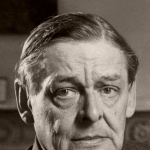
26 September 1888 – 4 January 1965
Thomas Stearns Eliot "one of the twentieth century's major poets", was also an essayist, publisher, playwright, and literary and social critic.

September 23, 1889 – December 14, 1974
Walter Lippmann was an American writer, reporter, and political commentator famous for being among the first to introduce the concept of Cold War, coining the term "stereotype" in the modern psychological meaning, and critiquing media and democracy in his newspaper column and several books, most notably his 1922 book Public Opinion.




