Background
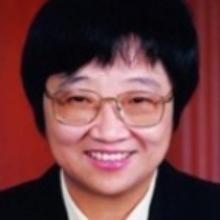
Xie Qihua lives in Shanghai, the largest commercial metropolis in China, where she was born in 1943.

企华 谢
Xie Qihua lives in Shanghai, the largest commercial metropolis in China, where she was born in 1943.
After graduation from Tsinghua University in 1968, she worked as a technician at the Shaanxi Steel Plant.
In October 1978, Xie joined Baosteel when it was still under construction, heading up the technical division, and gradually rising through the ranks to become company president in 1994 and chair of the board of Baoshan Iron and Steel in 2000. A role model for many Chinese women, in February 2003 Xie became chair of the board of directors and general manager of Baosteel Group, and board chairwoman of Baoshan Iron and Steel Co.
Since 1978, Xie has dedicated most of her energy to the development of the Baosteel Group. After receiving authorization from the State Council to acquire the Shanghai Iron and Steel Plant and Meishan Iron and Steel Company, she transformed the Shanghai Baosteel Group Corporation into the largest iron and steel conglomerate in China. Throughout her career, Xie successfully implemented expansion through a strategy of acquisitions and mergers.
In April 2001, after working diligently to improve the industrial concentration of Baosteel, Xie turned her attention to the strategic alliance between the Baosteel Group, the Capital Iron and Steel Company, and the Wuhan Iron and Steel Company, which propelled Baosteel Group into the world’s top 12 steel corporations with over 10-million ton yearly output. In January 2004, the Baosteel Group signed a cooperation framework agreement with France’s Arcelor, an international steel-maker, and Brazil’s Companhia Vale do Rio Doce (CVRD), to jointly build a steel plant in Brazil. This was regarded as China’s largest direct investment in an overseas project at the time and became the entry point of Baosteel into the international market.
Before her retirement Xie developed grand plans for Baosteel during the ’11th Five-Year Plan’ period (2007–12): ‘We will form the framework of our comprehensive operation system by the end of 2005 and realize our integrated operation by 2010, entering the ranks of the world’s top three steel corporations’ (China Daily, 2006). Since Chinese regulations set the mandatory retirement age for senior executives in state-owned enterprises at 60, Xie stepped down from her general manager position at Baosteel in 2005, then as chairwoman of Baoshan Iron and Steel Co. in 2006, and finally at age 64, she resigned the chairmanship of Baosteel Group Corp. in 2007, marking a full exit from China’s biggest steel-mill. Still regarded among the most powerful women in the nation’s corporate world as well as in the steel industry, Xie boasts a string of other titles, including alternate member of the 16th Central Committee of the Chinese Communist Party, President of the China Iron and Steel Association, and board member of the China Business Council for Sustainable Development.
On 12 July 2004, when Fortune published the 2003 rankings of the top 500 companies in the world, Baosteel Group was ranked 372nd with a 120.4 billion yuan ($14.548 billion) income, becoming the first Chinese manufacturer to enter the list; in 2005, Baosteel’s ranking leapt to 309th, advancing 63 places; in 2006, Baosteel Group Corp. was at 296 in the top 500 companies of the world. ‘Xie led the Shanghai Baosteel Group Corporation in setting record earnings and revenue, and successfully pioneered a path in the trades traditionally dominated by men’ (China Daily, 2006). In addition, each year Fortune lists the 50 most powerful women outside the USA, and Xie’s rank jumped from 16th in 2004 to 2nd in 2005, and in 2006 she was ranked 6th. ‘Although she has passed the retirement age and has given up her chief executive title at China’s largest steel company, Xie is still in charge’ (Forbes, 2006). In Forbes magazine’s 2005 list of the Top 50 Businesswomen in the World Xie Qihua broke into the top ten rankings. As if to confirm her power status, Xie was simultaneously listed by the Wall Street Journal among its Top 50 Businesswomen to Watch, an honor of significant prestige. Clearly her able leadership and dynamic efforts have been recognized not only in China, but also in the world.