(The authors bridge the gap between strategies of business...)
The authors bridge the gap between strategies of businesses and the actions of governments in international environments. They use economic concepts to help explain the international environment to students and executives.
Two Hungry Giants: The United States and Japan in the Quest for Oil and Ores
(This is the first book that explores the relationship bet...)
This is the first book that explores the relationship between the United States and Japan in terms of the competition for industrial raw materials. With startling consistency, their responses to similar problems appear to stem from each country's history and culture, almost as if the country had no choice but to pursue the policy selected. Vernon suggests that in this field of policy, political leaders are prisoners of their national environment more than anyone-including the leaders themselves-has been prepared to recognize.
(This wide-ranging collection of previously published arti...)
This wide-ranging collection of previously published articles by Raymond Vernon reflects a portion of the diverse subjects on which he has worked during his career. In the past 20 years, the author has pioneered the study of two major economic institutions which have played important roles in today's global economy: the multinational corporation and the state-owned enterprise. His recent thoughts on these subjects are well-represented in this volume. Co-published with the Harvard Center for International Affairs.
Beyond Globalism: Remaking American Foreign Economic Policy
(Vernon, the acknowledged authority in international econo...)
Vernon, the acknowledged authority in international economics, analyzes the past, present and dangerous future of American trade politics and policymaking. He recommends giving up on comprehensive global agreements, and urges narrow agreements between a small number of countries.
Iron Triangles and Revolving Doors: Cases in U.S. Foreign Economic Policymaking
(In a rapidly shrinking world, governments everywhere find...)
In a rapidly shrinking world, governments everywhere find themselves increasingly obliged to deal with international economic issues. When dealing with such issues, their processes of decision-making prove strikingly different from those employed in the handling of political or strategic problems.
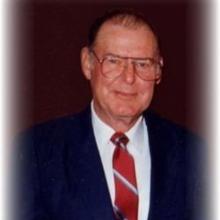
Raymond Vernon was an American economist, educator and author. He was a member of the group that developed the Marshall Plan after World War II.
Background
Ethnicity:
Vernon was one of four children of Russian Jewish immigrants whose last name was Visotsky.
Raymond Vernon was born on September 1, 1913, in New York City, New York, United States. He was the son of Hyman and Lillian (Sonnenberg) Vernon.
Education
Vernon earned a Bachelor of Arts cum laude from the College of the City of New York in 1933 and a Ph.D. in economics from Columbia University in 1941. He also received an honorary degree of Master of Arts from Harvard University in 1959.
During the mid-1930s to 1940s Vernon worked for the Securities and Exchange Commission in a variety of positions. He was part of the Marshall Plan committee that helped design Europe’s resurgence following the second World War. He later joined the U.S. Department of State and was actively involved in the General Agreement on Tariffs and Trade (GATT), helping to bring Japan into the agreement. In addition, Vernon also helped organize trade with Soviet-bloc countries. From 1946 to 1948, he was a lecturer at American University in Washington. From 1954 to 1955, he was a lecturer at Princeton University in New Jersey, and planning and control director at Hawley and Hoops, Inc. From 1954 to 1956, Vernon was responsible for overseeing new products, one of which was peanut M & M’s. From 1955 to 1956, Vernon was also a lecturer at Swarthmore College in Pennsylvania.
From 1959 to 1978, Vernon was a professor of Harvard University in Boston, Massachusetts, and then from 1962 to 1965, he was a director at Harvard Development Advisory Service in Cambridge, Massachusetts. From 1973 to 1978, Vernon became a director at Center for International Affairs in Cleveland, Ohio, and from 1979 to 1981, he was an adjunct professor at Fletcher School Law and Diplomacy in Medford, Massachusetts.
During his Harvard tenure Vernon served at various times as the Herbert F. Johnson Professor of International Business Management and the Clarence Dillon Professor of International Affairs. He also directed the Development Advisory Service and the Center for International Affairs. He began studying multinational corporations in the mid-1960s and wrote several books on the topic including Sovereignty at Bay: The Multinational Spread of U.S. Enterprise and The Economic and Political Consequences of Multinational Enterprise: An Anthology. Other books include Storm over the Multinationals: The Real Issues and Exploring the Global Economy: Emerging Issues in Trade and Investment. Vernon edited numerous books and contributed writings to more than forty-five others.
Although actively involved in the government or scholarly research for the bulk of his career, Vernon did complete a two-year stint working for Forrest Mars Sr., owner of the Mars candy company.
Achievements
Raymond Vernon is known for the development of The Product Life Cycle Theory. That is is an economic theory, that was developed in response to the failure of the Heckscher-Ohlin model to explain the observed pattern of international trade. Raymond Vernon also published a model that described internationalization patterns of organizations. He looked at how U.S. companies developed into multinational corporations (MNCs) at a time when these firms dominated global trade, and per capita income in the U.S. was, by far, the highest of all the developed countries.
Raymond Vernon played a central role in the post-world war development of the IMF and GATT organization. He became a professor at Harvard Business School from 1959 to 1981 and continued his career at the John F. Kennedy School of Government.
Vernon had an impact on the world in many ways, from studying globalization before the term existed to putting the peanut in M & M candies. He was considered one of the most influential scholars in his field. Vernon also became known in the candy business as “the man who put the crunch in M&M’s.”
The Association for Public Policy Analysis and Management instituted the Raymond Vernon Prize in 1984 in honor of Vernon, who was the founder editor of their journal, the Journal of Policy Analysis and Management, and renamed it the Raymond Vernon Memorial Award following his death.
Vernon believed that state-owned corporations could not successfully compete against privately owned multinational companies and his research helped fuel the surge in privatization that took place in the 1980s.
Membership
Vernon was a fellow of the American Academy Arts and Sciences and of the Academy of International Business. He also was a member of the Council on Foreign Relations, the United States/United Nations Association and Phi Beta Kappa.
Personality
Vernon was an excellent rower; he competed for many years in crew in the Head of the Charles Regatta and in his 80s broke the world record in CRASH-B Sprints. He was a member of the Cambridge Boat Club for 40 years, and he and his wife, Josephine, donated a weathervane to the club.
Quotes from others about the person
''Ray Vernon was the father of globalization long before people used that term. His work has had a phenomenal effect on several generations of thinking about how the global economy works.'' - Daniel Yergin, an author and business consultant.
Connections
On August 9, 1935, Vernon married Josephine Stone. The couple had two children: Heidi and Susan Patricia.