Yale University, where Richard Flint studied (A.M. (honorary), until 1945). Photo: Pradipta Mitra
Gallery of Richard Flint
University of Wrocław, where Richard Flint studied (Doctor of Science (honorary), until 1966). Photo: Jar.ciurus
Career
Gallery of Richard Flint
United States Geological Survey, where Richard Flint worked as senior geologist (1946). Photo: No machine-readable author provided. Joshuadavisphotography assumed (based on copyright claims)
United States Geological Survey, where Richard Flint worked as senior geologist (1946). Photo: No machine-readable author provided. Joshuadavisphotography assumed (based on copyright claims)
Richard Foster Flint was an American geologist and educator whose research on glaciation and the Quaternary helped shape modern understanding of ice ages. A Yale professor and field geologist, he studied glacial deposits across North America and abroad, helped advance radiocarbon dating in glacial research, and wrote influential syntheses of Quaternary geology.
Background
Flint was born in Chicago, Illinois, to Natt William Flint and Edith Burnham Foster Flint, both professors at the University of Chicago. His parents’ academic work connected his family life with the university community in which he later studied.
Education
Flint attended the University School before entering the University of Chicago. At university he edited his class yearbook, served as student head marshal, played water polo, and earned a major letter in swimming.
He undertook three years of graduate study in geology at Chicago under T. C. Chamberlin, R. C. Chamberlin, and R. D. Salisbury, receiving his doctorate in 1925, summa cum laude. His later honorary degrees included an A.M. from Yale in 1945 and Doctor of Science degrees from the University of Dublin in 1963 and the University of Wrocław in 1966.
He graduated in 1922 with a Bachelor of Science degree and was elected to Phi Beta Kappa.
Flint joined Yale University’s geology faculty in 1925. His early field research focused on Connecticut, where he mapped glacial deposits during the summers of 1927, 1928, and 1929. His 1930 state-wide report and map set out evidence for stagnation and downwasting of the Laurentide Ice Sheet, challenging the prevailing account of steady ice-margin retreat. He continued mapping Connecticut through detailed quadrangle studies, advised the state survey, reviewed other geologists’ manuscripts, and mapped the surficial geology of ten quadrangles.
During several field seasons in the early 1930s, Flint studied glaciation in the Okanogan Highlands and the adjacent Columbia Plateau. He disputed J Harlen Bretz’s explanation of the Channeled Scabland as the result of catastrophic flooding and argued for a more gradual glacial-meltwater explanation. The resulting controversy continued for decades, until regional evidence for sudden releases of water from ice-dammed Lake Missoula led to broad acceptance of Bretz’s interpretation. Flint also investigated marine terraces on the eastern seaboard and glaciation in Labrador and Newfoundland. In 1937 he served as senior scientist on the Louise Arner Boyd Arctic Expedition to northeast Greenland.
During the Second World War, Flint served as a major in the United States Army Air Forces and headed the Arctic Section of its Arctic, Desert, and Tropic Information Center. He returned to Yale and, beginning in 1945, became professor of geology. He was appointed Henry Barnard Davis Professor in 1957, served as director of graduate studies from 1951 to 1957, and chaired the Department of Geology and Geophysics for the following seven years. He retired from active teaching in 1969 and from his named professorship in 1970.
In 1945, Flint chaired the National Academy of Sciences committee that compiled the Glacial Map of North America. He became a senior geologist with the United States Geological Survey in 1946 and undertook four successive field seasons of mapping and stratigraphic study of glacial deposits in eastern South Dakota. He also served on the geological surveys of Missouri, Kentucky, Illinois, and Connecticut. His research helped establish a conceptual model for the growth of the Laurentide Ice Sheet and contributed to the study of Pleistocene glaciation across North America.
As radiocarbon dating emerged in the late 1940s, Flint helped apply the method to glacial deposits and helped establish Yale’s Geochronometric Laboratory, which he chaired from 1950. He also helped establish the journal Radiocarbon and remained an editor until his death. His later research included stratigraphic and chronological work at Searles Lake, where he established connections between pluvial episodes in the western Great Basin and late-Pleistocene glacial fluctuations. He led the compilation of the Glacial Map of the United States East of the Rocky Mountains and revised his major glacial-geology text in 1957.
From the late 1950s, Flint undertook research in eastern and southern Africa, critically examining the evidence behind established regional stratigraphic and paleoclimatic interpretations. Beginning in 1963, he worked with South American colleagues on geological mapping and stratigraphic studies in glaciated parts of Colombia, Argentina, and Chile, where the number and extent of drift sheets were often poorly known. His Chilean research established stratigraphic sequences on both sides of the Andes and was continuing shortly before his death; he returned from a field season in southern Chile only months before he died. Flint died of a stroke in New Haven, Connecticut, on June 6, 1976.
His mapping and analysis of Connecticut’s glacial deposits advanced understanding of ice stagnation and downwasting and produced maps useful to geologists, highway planners, and those assessing sand, gravel, and clay resources.
He chaired the committee that compiled the Glacial Map of North America, published in 1945, and headed the group responsible for the Glacial Map of the United States East of the Rocky Mountains.
He helped establish Yale’s Geochronometric Laboratory and advanced the use of radiocarbon dating to determine the ages of glacial deposits.
His field research and syntheses helped shape Quaternary geology, including studies of the Laurentide Ice Sheet, eastern South Dakota glacial deposits, Searles Lake chronology, and glaciated regions of Africa and South America.
He helped establish the journal Radiocarbon and edited it until his death.
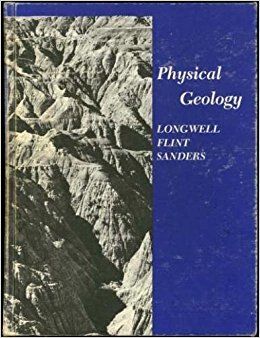
(A physical-geology textbook associated with the Longwell,...)
Views
Flint’s approach to science emphasized reasoned skepticism and careful evaluation of evidence. In discussing teaching, he argued that an educator should recognize the possibility that a student may be more naturally gifted and consider how best to support that student’s development. He valued the creative process, whether it produced an idea or a work of art, and urged students to read not merely to contradict or believe, but to weigh and consider.
Membership
Flint’s professional affiliations connected him with geological, geophysical, glaciological, and Quaternary-science communities in North America and abroad. He was a fellow of the Geological Society of America and chaired its Quaternary Geology and Geomorphology Division. In 1945 he helped found the Arctic Institute of North America, later serving on its board of governors and chairing its executive committee. He was also a fellow of the American Association for the Advancement of Science and the American Academy of Arts and Sciences, and belonged to the American Geophysical Union, the Glaciological Society, Phi Beta Kappa, Sigma Xi, and the International Union for Quaternary Research. He held honorary membership in geological societies in London, Edinburgh, Stockholm, Finland, and Argentina.
Fellow
American Association for the Advancement of Science
,
United States
Fellow; chaired its Quaternary Geology and Geomorphology Division.
Geological Society of America
,
United States
Founding participant; member of the board of governors and chair of its executive committee.
Arctic Institute of North America
,
Canada
1945
Fellow
American Academy of Arts and Sciences
,
United States
1960
American Geophysical Union
,
United States
Glaciological Society
,
United Kingdom
Elected while an undergraduate at the University of Chicago.
Phi Beta Kappa
,
United States
1922
Sigma Xi
,
United States
Member; elected president of the Seventh Congress and named an honorary member in 1973.
International Union for Quaternary Research
Honorary member
Geological Society of London
,
United Kingdom
Honorary member
Geological Society of Edinburgh
,
United Kingdom
Honorary member
Geological Society of Stockholm
,
Sweden
Honorary member
Geological Society of Finland
,
Finland
Honorary member
Geological Society of Argentina
,
Argentina
Personality
Flint was regarded as a thoughtful and dedicated field geologist. His mapping and stratigraphic work were precise, and he expected scientific claims to be supported by evidence. In his teaching, he encouraged students to reason carefully, remain skeptical, and weigh evidence rather than simply contradict or accept an argument.
Quotes from others about the person
Geologist Stephen C. Porter described Flint as a leading Quaternary scholar whose carefully researched books offered authoritative syntheses of Quaternary processes and events. Connecticut state geologist Joe Webb Peoples praised Flint’s contributions to Connecticut geology and his work with the state survey.
Connections
Flint married Margaret Cecil Haggott on December 29, 1926. Known as Peggy, she accompanied him on many field excursions and travels while pursuing her own interests in interior design and historic preservation. She developed substantial knowledge of Quaternary science and outlived him by about six months.
Father:
Nott William Flint
A professor at the University of Chicago.
Mother:
Edith Burnham (Foster) Flint
A professor at the University of Chicago.
Wife:
Margaret Cecil Haggott
Interior-design and historic-preservation interests; accompanied Flint on field excursions and travels.
References
Memorial to Richard Foster Flint
Stephen C. Porter’s memorial discusses Flint’s education, Yale career, military service, geological research, honors, professional affiliations, teaching, and selected bibliography.
The Surficial Geology of the Naugatuck Quadrangle
The Connecticut Geological and Natural History Survey report includes a foreword on Flint’s Connecticut fieldwork, mapping, and contributions to the state’s geological survey.
1978
Richard Foster Flint
The American Academy of Arts and Sciences profile identifies Flint as a geologist, glaciologist, educator, and Yale-affiliated member elected in 1960.