(Many of the earliest books, particularly those dating bac...)
Many of the earliest books, particularly those dating back to the 1900s and before, are now extremely scarce and increasingly expensive. We are republishing these classic works in affordable, high quality, modern editions, using the original text and artwork.
(Leopold is delighted to publish this classic book as part...)
Leopold is delighted to publish this classic book as part of our extensive Classic Library collection. Many of the books in our collection have been out of print for decades, and therefore have not been accessible to the general public. The aim of our publishing program is to facilitate rapid access to this vast reservoir of literature, and our view is that this is a significant literary work, which deserves to be brought back into print after many decades. The contents of the vast majority of titles in the Classic Library have been scanned from the original works. To ensure a high quality product, each title has been meticulously hand curated by our staff. This means that we have checked every single page in every title, making it highly unlikely that any material imperfections – such as poor picture quality, blurred or missing text - remain. When our staff observed such imperfections in the original work, these have either been repaired, or the title has been excluded from the Leopold Classic Library catalogue. As part of our on-going commitment to delivering value to the reader, within the book we have also provided you with a link to a website, where you may download a digital version of this work for free. Our philosophy has been guided by a desire to provide the reader with a book that is as close as possible to ownership of the original work. We hope that you will enjoy this wonderful classic work, and that for you it becomes an enriching experience. If you would like to learn more about the Leopold Classic Library collection please visit our website at www.leopoldclassiclibrary.com
(Leopold Classic Library is delighted to publish this clas...)
Leopold Classic Library is delighted to publish this classic book as part of our extensive collection. As part of our on-going commitment to delivering value to the reader, we have also provided you with a link to a website, where you may download a digital version of this work for free. Many of the books in our collection have been out of print for decades, and therefore have not been accessible to the general public. Whilst the books in this collection have not been hand curated, an aim of our publishing program is to facilitate rapid access to this vast reservoir of literature. As a result of this book being first published many decades ago, it may have occasional imperfections. These imperfections may include poor picture quality, blurred or missing text. While some of these imperfections may have appeared in the original work, others may have resulted from the scanning process that has been applied. However, our view is that this is a significant literary work, which deserves to be brought back into print after many decades. While some publishers have applied optical character recognition (OCR), this approach has its own drawbacks, which include formatting errors, misspelt words, or the presence of inappropriate characters. Our philosophy has been guided by a desire to provide the reader with an experience that is as close as possible to ownership of the original work. We hope that you will enjoy this wonderful classic book, and that the occasional imperfection that it might contain will not detract from the experience.
Dukesborough Tales: the chronicles of Mr. Bill Williams
(Dukesborough Tales - the chronicles of Mr. Bill Williams ...)
Dukesborough Tales - the chronicles of Mr. Bill Williams is an unchanged, high-quality reprint of the original edition of 1892. Hansebooks is editor of the literature on different topic areas such as research and science, travel and expeditions, cooking and nutrition, medicine, and other genres. As a publisher we focus on the preservation of historical literature. Many works of historical writers and scientists are available today as antiques only. Hansebooks newly publishes these books and contributes to the preservation of literature which has become rare and historical knowledge for the future.
Two gray tourists From papers of Mr. Philemon Perch
(Two gray tourists. From papers of Mr. Philemon Perch This...)
Two gray tourists. From papers of Mr. Philemon Perch This book, "Two gray tourists From papers of Mr. Philemon Perch", by Richard Malcolm Johnston, is a replication of a book originally published before 1893. It has been restored by human beings, page by page, so that you may enjoy it in a form as close to the original as possible.
(Unlike some other reproductions of classic texts (1) We h...)
Unlike some other reproductions of classic texts (1) We have not used OCR(Optical Character Recognition), as this leads to bad quality books with introduced typos. (2) In books where there are images such as portraits, maps, sketches etc We have endeavoured to keep the quality of these images, so they represent accurately the original artefact. Although occasionally there may be certain imperfections with these old texts, we feel they deserve to be made available for future generations to enjoy.
(Excerpt from Studies, Literary and Social
But what shall...)
Excerpt from Studies, Literary and Social
But what shall we think of such disregard among Christian peoples, among a people who were not only Christian, but who had taken upon themselves to reform the whole Christian Church with allega tions that it had dishonored its Founder; among a people who had been unmolested in' their work of reformation for one hundred and fifty years, in the last twenty of which those who had been most pro nounced in their denunciations of Christian con duct of every kind, in high places, had slain a wicked king and in the coinmonwealth built upon his rum made laws for the suppression of every species of Iniqulty, and then, as if fatigued with their own work and responsibilities, called back the exiled son of their deceased ruler with invocations of the blessings, of God?
About the Publisher
Forgotten Books publishes hundreds of thousands of rare and classic books. Find more at www.forgottenbooks.com
This book is a reproduction of an important historical work. Forgotten Books uses state-of-the-art technology to digitally reconstruct the work, preserving the original format whilst repairing imperfections present in the aged copy. In rare cases, an imperfection in the original, such as a blemish or missing page, may be replicated in our edition. We do, however, repair the vast majority of imperfections successfully; any imperfections that remain are intentionally left to preserve the state of such historical works.
Georgia Sketches Containing: Mr. Israel Meadows and his School ; Judge Mike and his Court ; How Bill Williams Took the Responsibility ; Miss Pea, Miss Spouter, and the Yankee
(
This work has been selected by scholars as being cultur...)
This work has been selected by scholars as being culturally important, and is part of the knowledge base of civilization as we know it. This work was reproduced from the original artifact, and remains as true to the original work as possible. Therefore, you will see the original copyright references, library stamps (as most of these works have been housed in our most important libraries around the world), and other notations in the work.
This work is in the public domain in the United States of America, and possibly other nations. Within the United States, you may freely copy and distribute this work, as no entity (individual or corporate) has a copyright on the body of the work.
As a reproduction of a historical artifact, this work may contain missing or blurred pages, poor pictures, errant marks, etc. Scholars believe, and we concur, that this work is important enough to be preserved, reproduced, and made generally available to the public. We appreciate your support of the preservation process, and thank you for being an important part of keeping this knowledge alive and relevant.
(
This work has been selected by scholars as being cultur...)
This work has been selected by scholars as being culturally important, and is part of the knowledge base of civilization as we know it. This work was reproduced from the original artifact, and remains as true to the original work as possible. Therefore, you will see the original copyright references, library stamps (as most of these works have been housed in our most important libraries around the world), and other notations in the work.
This work is in the public domain in the United States of America, and possibly other nations. Within the United States, you may freely copy and distribute this work, as no entity (individual or corporate) has a copyright on the body of the work.
As a reproduction of a historical artifact, this work may contain missing or blurred pages, poor pictures, errant marks, etc. Scholars believe, and we concur, that this work is important enough to be preserved, reproduced, and made generally available to the public. We appreciate your support of the preservation process, and thank you for being an important part of keeping this knowledge alive and relevant.
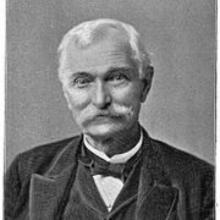
Richard Malcolm Johnston was an American author and educator.
Background
Richard Malcolm Johnston was born on March 8, 1822 on the family plantation, "Oak Grove, " near Powelton, Georgia. He was the son of Malcolm and Catherine (Davenport) Johnston, and the great-grandson of Thomas Johnston who emigrated from Scotland and settled in Pennsylvania, later moving to Charlotte County, Virginia; his father was a planter and ordained Baptist preacher.
Education
Johnston graduated from Mercer University, Penfield (now at Macon), in 1841.
Career
After his graduation from Mercer University, Penfield (now at Macon), in 1841, Richard taught for a year in the village of Mount Zion, Hancock County. He then read law in the office of Henry Cumming, Augusta, was admitted to the bar, and became the partner of Eli W. Baxter of Sparta, Georgia.
His law practice from 1844 to 1851 was interrupted by two periods of teaching; in the latter year he formed a partnership with Linton Stephens, brother of Alexander H. Stephens. The opportunity was offered him in 1857 of accepting the judgeship of the northern circuit court of Georgia, the presidency of Mercer University, or the chair of rhetoric and belles-lettres in the University of Georgia. He chose the professorship and remained in Athens until 1861.
From 1862 to 1867 he conducted a school for boys at Rockby, near Sparta, Georgia, which became one of the most widely known and generously patronized in the state. Its discipline included distinct elements of the "honor system, " with none of the espionage and flogging then so widespread. A victim of the Civil War and Reconstruction, he continued this school in Baltimore for several years under the name of Pen Lucy School.
While a clerk in the bureau of education at Washington, 1896-98, he compiled at the request of Commissioner W. T. Harris what is probably the most complete record extant of the picturesque old field schools of his boyhood in Georgia.
He took up fiction writing almost by chance and largely because of the encouragement of Henry C. Turnbull, Jr. , a Baltimore publisher, and Sidney Lanier, who was his most loyal friend and earliest critic. His first, most popular, and most characteristic volume of local-color fiction was Dukesboro Tales (1871).
He lectured with several contemporary humorists - once, in 1889, with Mark Twain, who was the guest of the Johnstons in Baltimore. It is related that Twain, with characteristic generosity, refused to accept any of the receipts for the evening's lecture, leaving the entire proceeds to Johnston and his family, then in rather needy circumstances.
Richard Malcolm Johnston died in Baltimore, Maryland.
Achievements
Richard Johnston was a distinguished author, who devoted himself entirely to literature and produced a vast number of written works, which greatly contributed to the area of education as some of them became textbooks for advanced students.
Another Johnston's achievement was in becoming a head of a school for boys at Rockby, near Sparta, Georgia, which became one of the most widely known and generously patronized in the state.
Johnston was successful as a lecturer and delivered numerous lectures.
(Two gray tourists. From papers of Mr. Philemon Perch This...)
Religion
In 1875 he was received into the Roman Catholic Church, in joining which his wife and younger children had preceded him. At his request, there was published posthumously his detailed statement of how and why he had embraced the Catholic faith, the reasons assigned being the historical precedence and infallible authority claimed by that church.
Connections
In 1844 Richard Malcolm Johnston was married to Mary Frances, daughter of Eli Mansfield, a native of New Haven, Connecticut.