

Background
Betts, Richard Kevin was born on August 15, 1947 in Easton, Pennsylvania, United States. Son of John Rickards and Cecelia Agnes (Fitzpatrick) Betts.

( Soldiers, Statesmen, and Cold War Crisis explores, in f...)
Soldiers, Statesmen, and Cold War Crisis explores, in fascinating depth, the nature, direction, and impact of military and civilian influence on violence. Richard K. Betts discusses the post-war involvement of U.S. military and nonmilitary leaders in decisions on the use of force in foreign affairs, and the variety of advice from the different military services. Twenty intervention decisions and ten escalation desicions in crises are examined, including Korea, Berlin, Cuba, and Vietnam. To update this edition Betts has written a preface analyzing the significance of the issues in light of the evolution of events and information declassified since the book's original publication. He has also written an epilogue discussing several recent cases.
http://www.amazon.com/gp/product/0231074697/?tag=2022091-20

(a)
a
http://www.amazon.com/gp/product/B00A28SFCK/?tag=2022091-20

(Book by Betts, Richard)
Book by Betts, Richard
http://www.amazon.com/gp/product/0815709293/?tag=2022091-20

(In numerous crises after World War II--Berlin, Korea, the...)
In numerous crises after World War II--Berlin, Korea, the Taiwan Straits, and the Middle East--the United States resorted to vague threats to use nuclear weapons in order to deter Soviet or Chinese military action. On a few occasions the Soviet Union also engaged in nuclear saber-ratling. Using declassified documents and other sources, this volume examines those crises and compares the decisionmaking processes of leaders who considered nuclear threats with the commonly accepted logic of nuclear deterrence and coercion. Rejecting standard explanations of our leader's logic in these cases, Betts suggests that U.S. presidents were neither consciously blufffing when they made nuclear threats, nor prepared to face the consequences if their threats failed. The author also challenges the myth that the 1950s was a golden age of low vulberability for the nted Stateas and details how nuclear parity has, and has not, altered conditions that gave rise to nuclear blackmail in the past.
http://www.amazon.com/gp/product/0815709366/?tag=2022091-20

(Throughout most of American history, US military forces p...)
Throughout most of American history, US military forces proved unready for the wars that were thrust upon them and suffered costly reverses in early battles. During the Cold War, for the first time, US defence policy tried to maintain high readiness in peacetime. But now, with the Cold War over and defence budgets falling, what will happwn to US military forces? Will they revert to a state of unpreparedness or find their balance? Politicians and military planners alike have found this crucial issue especially difficult to deal with because they have often misunderstood what unreadiness really means. In this book, security expert, Ricahrd Betts analyzes why attempts to maximize combat readiness often have counterproductive effects, and how confusions in technical concepts cause political controversy. The book explores conflicts between two objectives that are both vital but work against each other because they compete for resources: operational readiness to fight immediately, and structural readiness - the number of organized units that increase military power, but require time during a crisis to gear up for combat. Betts also discusses the problem brought on by the Cold War and plunging defence budgets: mobilization readiness - the plans and arrangements needed to shorten the time for recreating a large military if it once again becomes necessary. Betts offers new ideas for understanding the dilemmas and tradeoffs that underlie debates on how readiness should be maintained in peacetime, and he explores the strategic consequences of different choices.
http://www.amazon.com/gp/product/0815709056/?tag=2022091-20

( Combining study with experience, Richard K. Betts draws...)
Combining study with experience, Richard K. Betts draws on three decades of work within the U.S. intelligence community to illuminate the paradoxes and problems that frustrate the intelligence process. Unlike America's efforts to improve its defenses against natural disasters, strengthening its strategic assessment capabilities means outwitting crafty enemies who operate beyond U.S. borders. It also requires looking within to the organizational and political dynamics of collecting information and determining its implications for policy. Betts outlines key strategies for better intelligence gathering and assessment. He describes how fixing one malfunction can create another; in what ways expertise can be both a vital tool and a source of error and misjudgment; the pitfalls of always striving for accuracy in intelligence, which in some cases can render it worthless; the danger, though unavoidable, of "politicizing" intelligence; and the issue of secrecy& mdash;when it is excessive, when it is insufficient, and how limiting privacy can in fact protect civil liberties. Grounding his arguments in extensive theory and policy analysis, Betts takes a comprehensive and realistic look at the convergence of knowledge and power in facing the intelligence challenges of the twenty-first century.
http://www.amazon.com/gp/product/023113889X/?tag=2022091-20

( Edited by one of the most renowned scholars in the fiel...)
Edited by one of the most renowned scholars in the field, Richard Betts' Conflict After the Cold War assembles classic and contemporary readings on enduring problems of international security. Offering broad historical and philosophical breadth, the carefully chosen and excerpted selections in this popular reader help students engage key debates over the future of war and the new forms that violent conflict will take. Conflict After the Cold War encourages closer scrutiny of the political, economic, social, and military factors that drive war and peace.
http://www.amazon.com/gp/product/0205851754/?tag=2022091-20

(Edited by one of the most renowned scholars in the field,...)
Edited by one of the most renowned scholars in the field, Richard Betts’ Conflict After the Cold War assembles classic and contemporary readings that argue about the shape of international conflict in this post-Cold War and post-9/11 era. Contextualized within a broader philosophical and historical context, the carefully chosen and excerpted selections in this popular reader introduce students to the core debates about the causes and the future of war and peace. Through the precision of its approach and attention to new issues, this reader challenges conventional wisdom and encourages more critical examination of the political, economic, social, and military factors that underlie political violence.
http://www.amazon.com/gp/product/0205583520/?tag=2022091-20

http://www.amazon.com/gp/product/B00LMT4PRW/?tag=2022091-20

http://www.amazon.com/gp/product/B006PW3IQ0/?tag=2022091-20

(Edited by one of the most renowned experts in the field, ...)
Edited by one of the most renowned experts in the field, this collection helps readers understand the causes of wars and examines the question: can we make war obsolete? With new readings on terrorism and unconventional warfare, this volume introduces readers to the types of political violence that have come back with such horrifying force in the beginning of the 21st Century. DOES WAR HAVE A FUTURE?; ANARCHY AND POWER; INTERNATIONAL INSTITUTIONS AND COOPERATION; PSYCHOLOGY AND CULTURE; ECONOMIC INTERESTS AND INTERDEPENDENCE; POLITICAL IDEOLOGY AND IDENTITY; MILITARY TECHNOLOGY; TERRORISM AND UNCONVENTIONAL WARFARE. Anyone interested in understanding why political violence—terrorism, warfare, unconventional warfare—happens and if it can be stopped.
http://www.amazon.com/gp/product/032120946X/?tag=2022091-20

(High proportions of young adults, rapidly growing cities,...)
High proportions of young adults, rapidly growing cities, scarcities of cropland and water, and HIV/AIDS prevalence may contribute significantly to the risk of deadly civil conflict. Sound population policies, centered around provision of reproductive health services for all who want them, can play an important role in advancing global security
http://www.amazon.com/gp/product/1889735485/?tag=2022091-20
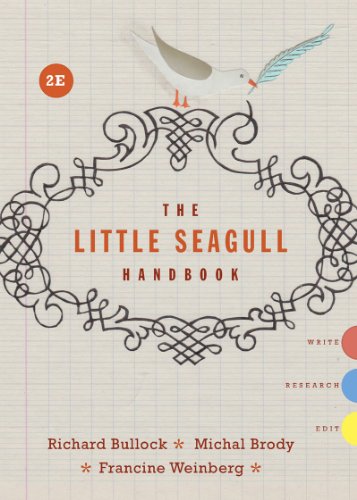
( A pocket-sized handbook that's easy to use and covers t...)
A pocket-sized handbook that's easy to use and covers the kinds of writing college students need to do. The Little Seagull Handbook offers the kind of succinct advice students need about grammar, punctuation, documentation, and the writing process―an in addition, it covers the kinds of writing they are most often assigned―reports, analyses, narratives, and more. The second edition includes unique help for students whose primary language is not English. Available in two versions―with and without exercises.
http://www.amazon.com/gp/product/0393935809/?tag=2022091-20
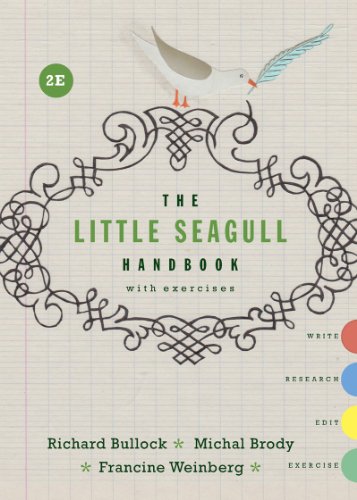
( A pocket-sized handbook that's easy to use and covers t...)
A pocket-sized handbook that's easy to use and covers the kinds of writing college students need to do. The Little Seagull Handbook offers the kind of succinct advice students need about grammar, punctuation, documentation, and the writing process―an in addition, it covers the kinds of writing they are most often assigned―reports, analyses, narratives, and more. The second edition includes unique help for students whose primary language is not English. Available in two versions―with and without exercises.
http://www.amazon.com/gp/product/0393935817/?tag=2022091-20

http://www.amazon.com/gp/product/B013PRGD3C/?tag=2022091-20

(An attacker's missile-borne countermeasures to cruise mis...)
An attacker's missile-borne countermeasures to cruise missile defenses are known as penetration aids, or penaids. To support efforts to prevent the proliferation of penaid-related items, this research recommends controls on potential exports according to the structure of the international Missile Technology Control Regime.
http://www.amazon.com/gp/product/0833087703/?tag=2022091-20

( MySearchLab provides students with a complete understan...)
MySearchLab provides students with a complete understanding of the research process so they can complete research projects confidently and efficiently. Students and instructors with an internet connection can visit www.MySearchLab.com and receive immediate access to thousands of full articles from the EBSCO ContentSelect database. In addition, MySearchLab offers extensive content on the research process itself—including tips on how to navigate and maximize time in the campus library, a step-by-step guide on writing a research paper, and instructions on how to finish an academic assignment with endnotes and bibliography. Edited by one of the most renowned scholars in the field, Richard Betts’ Conflict After the Cold War assembles classic and contemporary readings that argue about the shape of international conflict in this post-Cold War and post-9/11 era. Contextualized within a broader philosophical and historical context, the carefully chosen and excerpted selections in this popular reader introduce students to the core debates about the causes and the future of war and peace. Through the precision of its approach and attention to new issues, this reader challenges conventional wisdom and encourages more critical examination of the political, economic, social, and military factors that underlie political violence.
http://www.amazon.com/gp/product/0205700519/?tag=2022091-20

http://www.amazon.com/gp/product/B001RVBPGE/?tag=2022091-20

http://www.amazon.com/gp/product/B011DATQLY/?tag=2022091-20

(Conflict After the Cold War: Arguments on Causes of War a...)
Conflict After the Cold War: Arguments on Causes of War and Peace [ Conflict After the Cold War: Arguments on Causes of War and Peace by Richard K Betts ( Author ) Paperback Feb- 2012 ] Paperback Feb- 24- 2012
http://www.amazon.com/gp/product/B0092J4132/?tag=2022091-20

http://www.amazon.com/gp/product/B010WHU1YA/?tag=2022091-20

http://www.amazon.com/gp/product/B00I2TV7U8/?tag=2022091-20

http://www.amazon.com/gp/product/B010WHR4IG/?tag=2022091-20

http://www.amazon.com/gp/product/B010EV7W6Y/?tag=2022091-20

(NY 1941 1st Longmans, Green. True tales of espionage. 8vo...)
NY 1941 1st Longmans, Green. True tales of espionage. 8vo., 438pp., index, hardcover. Good, spine mottled, no DJ.
http://www.amazon.com/gp/product/B000NP0SNG/?tag=2022091-20

(This is a reproduction of a book published before 1923. T...)
This is a reproduction of a book published before 1923. This book may have occasional imperfections such as missing or blurred pages, poor pictures, errant marks, etc. that were either part of the original artifact, or were introduced by the scanning process. We believe this work is culturally important, and despite the imperfections, have elected to bring it back into print as part of our continuing commitment to the preservation of printed works worldwide. We appreciate your understanding of the imperfections in the preservation process, and hope you enjoy this valuable book.
http://www.amazon.com/gp/product/124517665X/?tag=2022091-20

(This is a reproduction of a book published before 1923. T...)
This is a reproduction of a book published before 1923. This book may have occasional imperfections such as missing or blurred pages, poor pictures, errant marks, etc. that were either part of the original artifact, or were introduced by the scanning process. We believe this work is culturally important, and despite the imperfections, have elected to bring it back into print as part of our continuing commitment to the preservation of printed works worldwide. We appreciate your understanding of the imperfections in the preservation process, and hope you enjoy this valuable book.
http://www.amazon.com/gp/product/1294058118/?tag=2022091-20
Betts, Richard Kevin was born on August 15, 1947 in Easton, Pennsylvania, United States. Son of John Rickards and Cecelia Agnes (Fitzpatrick) Betts.
Bachelor, Harvard University, Cambridge, Massachusetts, 1969. Master of Arts, Harvard University, Cambridge, Massachusetts, 1971. Doctor of Philosophy, Harvard University, Cambridge, Massachusetts, 1975.
Lecturer in government, Harvard University, Cambridge, Massachusetts, 1975-1976;
visiting professor, Harvard University, Cambridge, 1985-1988;
research associate, Brookings Institution, Washington, 1976-1981;
senior fellow, Brookings Institution, Washington, 1981-1990;
Shifrin professor political scientific, director Institute War and Peace Studies, Columbia University, New York City, since 1990;
director national securities studies, Council on Foreign Rels., since 1996. Member of staff Senate Select Committee on Intelligence, Washington, 1975-1976, National Security Council, Washington, 1977. Adjunct Professor Johns Hopkins University, Washington, 1978-1985, 88-90.
Military advisory panel Director Center Intelligence, since 1993. Consultant Central Intelligence Agency, 1980-1991, 93-, commission roles and capabilities United States Intelligence Cmty., 1995-1996. Occasion lecturer National War College, Foreign Superior vena cava syndrome Institute, United States Military Academy.
(Edited by one of the most renowned experts in the field, ...)
(Edited by one of the most renowned scholars in the field,...)
(In numerous crises after World War II--Berlin, Korea, the...)
(Conflict After the Cold War: Arguments on Causes of War a...)
( Edited by one of the most renowned scholars in the fiel...)
(High proportions of young adults, rapidly growing cities,...)
(Throughout most of American history, US military forces p...)
( Soldiers, Statesmen, and Cold War Crisis explores, in f...)
( MySearchLab provides students with a complete understan...)
(An attacker's missile-borne countermeasures to cruise mis...)
( A pocket-sized handbook that's easy to use and covers t...)
( A pocket-sized handbook that's easy to use and covers t...)
(This is a reproduction of a book published before 1923. T...)
(This is a reproduction of a book published before 1923. T...)
( Combining study with experience, Richard K. Betts draws...)
(NY 1941 1st Longmans, Green. True tales of espionage. 8vo...)
(Lang:- eng, Pages 458 . Reprinted in 2015 with the help o...)
(Book by Betts, Richard)
(a)
Author: Soldiers, Statesmen and Cold War Crises, 1977 (second edition 1991, Lasswell award 1979), Surprise Attack, 1982, Nuclear Blackmail and Nuclear Balance, 1987, Military Readiness, 1995, Enemies of Intelligence, 2007. Co-author: The Irony of Vietnam, 1979 (Woodrow Wilson award 1980), Nonproliferation and United States Foreign Policy, 1980. Editor: Cruise Missiles, 1981, Conflict After the Cold War, 1994, second edition, 2001, Paradoxes of Strategic Intelligence, 2003.
Member foreign policy staff Mondale Presidential Campaign, Washington, 1984. Member Association for Retarded Citizens, Bergen County, New Jersey, since 1990. Member Council on Foreign Rels., International Institute for Strategic Studies, American Political Science Association, International Studies Association, Society for Historians American Foreign Rels., Consortium for Study Intelligence, Council Foreign Rels.
(director national security studies since 1996).
Married Adela Maria Bolet, July 25, 1987. Children: Elena, Michael, Diego.
