Background
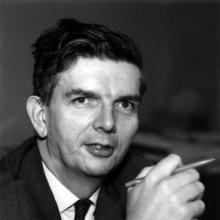
Robert Dicke was born on May 6, 1916, in St. Louis, Missouri, United States. He was the son of Theodor Emanuel, a postal employee, and Hedwig Rosa (Baumann) Diener, an accountant.


http://www.amazon.com/gp/product/B0006BMDLC/?tag=2022091-20
1964

http://www.amazon.com/gp/product/0201015102/?tag=2022091-20

http://www.amazon.com/gp/product/0871690780/?tag=2022091-20
Robert Dicke was born on May 6, 1916, in St. Louis, Missouri, United States. He was the son of Theodor Emanuel, a postal employee, and Hedwig Rosa (Baumann) Diener, an accountant.
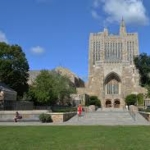
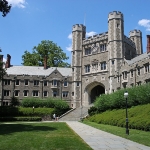
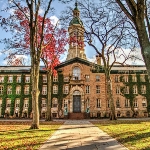
Dicke completed his bachelor's degree at Princeton University in 1939. He received his Doctor of Science degree in 1941 from the University of Rochester in nuclear physics.
During the Second World War Dicke served in the Radiation Laboratory at the Massachusetts Institute of Technology where he worked on the development of radar and designed the Dicke radiometer, a microwave receiver. He used this to set a limit on the temperature of the microwave background radiation, from the roof of the Radiation Laboratory, of less than 20 kelvins.
In 1946, Robert returned to Princeton University, where he remained for the rest of his career. In 1975 he was appointed Albert Einstein professor of science, becoming emeritus professor in 1984.
Dicke did some work in atomic physics, particularly on the laser and measuring the gyromagnetic ratio of the electron. He spent the remainder of his career developing a program of precision tests of general relativity using the framework of the equivalence principle.
A great contribution to the field of spectroscopy and radiative transfer was Dicke;s prediction of the phenomenon called him narrowing: When the mean free path of an atom is much smaller than the wavelength of one of its radiation transitions, the atom changes velocity and direction many times during the emission or absorption of a photon.
Dicke was also responsible for developing the lock-in amplifier, which is an indispensable tool in the area of applied science and engineering. Some say that Robert Dicke deserved a Nobel Prize just for that invention of such a powerful and ubiquitous device.
In 1944 Robert developed a microwave radiometer that has become an integral component of most modern radio telescopes.
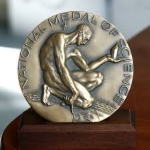
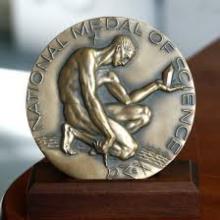
In 1970, Dicke was awarded the National Medal of Science. In 1973 he was awarded the Comstock Prize in Physics from the National Academy of Sciences.
Dicke married Annie Currie in 1942. The couple had one daughter, Nancy born in 1945, and two sons, John born in 1946 and James born in 1953.