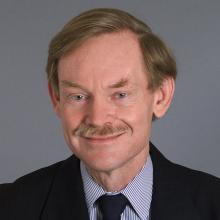
Robert Bruce Zoellick is an American lawyer, diplomat, government official, business executive, scholar, and author who served as the 11th president of the World Bank Group from 2007 to 2012. He previously served as U.S. trade representative, deputy secretary of state, senior Treasury and White House official, Goldman Sachs executive, and Fannie Mae executive vice president.
Background
Robert Bruce Zoellick was born on July 25, 1953, in Naperville, Illinois, and grew up there. He is the son of Gladys and William Zoellick. His formative interests included history, international affairs, economic development, and the political and economic relationships among the United States, Europe, and Asia. In 1980 he lived in Hong Kong on a fellowship while completing his Harvard graduate studies. Zoellick married Sherry Ferguson in 1980.
Education
Zoellick graduated from Naperville Central High School in 1971. He attended Swarthmore College, where he studied history and graduated in 1975 with honors and membership in Phi Beta Kappa. He then pursued a joint graduate course of study at Harvard, receiving a Juris Doctor degree magna cum laude from Harvard Law School and a Master of Public Policy degree from Harvard's John F. Kennedy School of Government in 1981. His public-policy training emphasized public management and international issues, particularly economics. After law school he clerked for Judge Patricia M. Wald of the United States Court of Appeals for the District of Columbia Circuit.
Career
Zoellick began his professional career as a law clerk to Judge Patricia M. Wald on the United States Court of Appeals for the District of Columbia Circuit from 1982 to 1983. He then entered the private sector at Fannie Mae, serving as vice president and assistant to the chairman and chief executive officer from 1983 to 1985 and later as executive vice president from 1993 to 1997. In the latter role he supervised affordable housing, legal, regulatory, government and industry relations, and international services, and worked with public officials, housing organizations, financial institutions, and governments seeking to develop mortgage markets.
From 1985 to 1993 Zoellick held a succession of senior government positions connected with Treasury Secretary James A. Baker III. At the Treasury Department he worked on financial institutions policy, domestic financial-market issues, the debt crises of the 1980s, Farm Credit System restructuring, savings-and-loan recapitalization, and international financial institutions. He subsequently served at the Department of State as counselor and, from 1991 to 1992, as under secretary for economic and agricultural affairs. He was the U.S. government's lead official in the Two-Plus-Four negotiations on German reunification, served as the president's personal representative, or sherpa, for the 1991 and 1992 G7 Economic Summits, and participated in diplomacy involving Central America, NATO, arms control, post-Communist Europe, and international economic cooperation. In 1992 he briefly served as deputy chief of staff at the White House and assistant to the president.
After Fannie Mae, Zoellick held academic and policy positions, including Olin Visiting Professor of National Security Affairs at the United States Naval Academy from 1997 to 1998 and research scholar at Harvard University's Belfer Center for Science and International Affairs from 1999 to 2001. He returned to government in 2001 as the 13th United States trade representative, serving until 2005. In that role he helped launch the Doha Development Agenda, supported the accession of China and Chinese Taipei to the World Trade Organization, and negotiated or advanced free-trade agreements with several countries, including Singapore and Australia. From 2005 to 2006 he was deputy secretary of state, serving as the department's chief operating officer and focusing on economic, environmental, transnational, regional, and development issues.
Zoellick joined Goldman Sachs in 2006 as vice chairman, international, managing director, and chairman of the firm's Board of International Advisors. He left Goldman Sachs to become president of the World Bank Group, serving from July 1, 2007, through June 30, 2012. During his presidency the Bank responded to the global financial crisis, increased its capital resources, expanded attention to anti-corruption and transparency, supported climate and development funds, and pursued reforms intended to strengthen the voice of developing countries and public accountability. After leaving the World Bank, he became a senior fellow at Harvard's Belfer Center, served in senior advisory and board roles in international finance and business, and continued writing and speaking on foreign policy, trade, development, and global economic affairs. He has served as senior counselor at Brunswick Geopolitical, chairman of the Americas advisory activities of Temasek, and chairman of AllianceBernstein's board.
Achievements
Served as the 11th president of the World Bank Group from July 1, 2007, through June 30, 2012, during the global financial crisis and a major expansion of the Bank's capital resources.
Led the U.S. delegation in the Two-Plus-Four negotiations that contributed to German reunification.
As U.S. trade representative, helped launch the Doha Development Agenda, supported China's and Chinese Taipei's accession to the World Trade Organization, and advanced multiple free-trade agreements.
Helped shape U.S. policy on international debt, financial institutions, post-Communist economic transition, arms reduction, NATO transformation, and development finance.
At Fannie Mae, supervised affordable housing, government and industry relations, regulatory affairs, and international services.
Zoellick is affiliated with the Republican Party and has served in Republican presidential administrations, including those of George H. W. Bush and George W. Bush.
Views
Zoellick's documented policy views emphasize pragmatic diplomacy, international economic cooperation, open trade, alliances, institutional reform, and a multilateral system adapted to a more plural and interconnected world. He has argued that American foreign policy should combine national interests with broader international purposes and that major powers should contribute constructively to the institutions from which they benefit.
Membership
Zoellick has been a member of the Council on Foreign Relations and served on its board of directors from 1994 to 2001. He has also been associated with the German Marshall Fund of the United States, the American Council on Germany, the American Institute of Contemporary German Studies, the National Bureau of Asian Research, the Overseas Development Council, the Institute for International Economics, and other foreign-policy, economic, nonprofit, and advisory organizations. He is a member of Phi Beta Kappa.
Served on the board of directors from 1994 to 2001 and has remained associated with the organization.
Council on Foreign Relations
,
United States
1994 - 2001
Elected as a student at Swarthmore College.
Phi Beta Kappa
,
United States
1975 - present
Personality
Zoellick has been described in professional biographies as a pragmatic, coalition-building public official who emphasizes strategy, negotiation, institutional cooperation, and practical results. His career across government, business, academia, and international organizations reflects a sustained preference for combining economic policy with diplomacy and multilateral engagement.
Quotes from others about the person
James A. Baker III described Zoellick as a trusted senior aide and a principal adviser on trade and international diplomacy. U.S. and international institutions have recognized his work in public service, German reunification, free trade, development, and international economic cooperation.
Interests
History, international affairs, economic development, diplomacy, trade policy, global finance, and the political and economic relations among the United States, Europe, and Asia.
Politicians
James A. Baker III
Connections
Zoellick worked closely with James A. Baker III in senior Treasury, State Department, White House, and international economic roles during the administrations of George H. W. Bush and George W. Bush. His professional connections have also included Judge Patricia M. Wald, whom he served as a law clerk, and senior officials and institutions involved in German reunification, international trade, global finance, and multilateral development. He married Sherry Ferguson in 1980.
Father:
William
Father of Robert Zoellick.
Mother:
Gladys
Mother of Robert Zoellick.
Spouse:
Sherry Ferguson
Married Robert Zoellick in 1980.
Collegue :
James A. Baker III
Zoellick served as a senior Treasury, State Department, and White House aide during Baker's government service and worked closely with him on international economic and diplomatic matters.
Collegue :
Patricia M. Wald
Zoellick served as Wald's law clerk at the United States Court of Appeals for the District of Columbia Circuit from 1982 to 1983.