Background
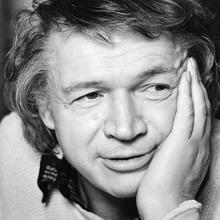
Rudolf Bahro was born November 18, 1935, in Bad Flinsberg in Lower Silesia (now Poland). As a child refugee at the end of World War II (1939-1945), fleeing the advance of the Soviet armies, Bahro lost his mother and both his sisters.

Rudolf Bahro

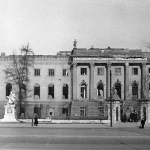
Unter den Linden 6, 10117 Berlin, Germany
Bahro studied philosophy at Humboldt University in Berlin from 1954 to 1959, during which time he joined the East German Communist Party.

1979
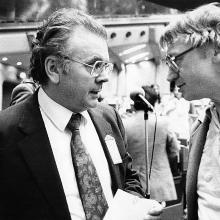
Rudolf Bahro (r), who is amnestied in the GDR, receiving the document of the awarding of 'Carl von Ossietzky Medal' by Erwin Beck from the 'International League of Human Rights' on 22nd October 1979.

1992
Rudolf Bahro

Rudolf Bahro

Rudolf Bahro

Rudolf Bahro

Rudolf Bahro

Rudolf Bahro

Rudolf Bahro

Rudolf Bahro

Rudolf Bahro

Rudolf Bahro

Rudolf Bahro

Rudolf Bahro

Rudolf Bahro

Rudolf Bahro

Rudolf Bahro

Rudolf Bahro

Rudolf Bahro
1979
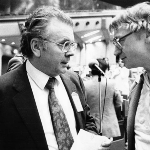
Rudolf Bahro (r), who is amnestied in the GDR, receiving the document of the awarding of 'Carl von Ossietzky Medal' by Erwin Beck from the 'International League of Human Rights' on 22nd October 1979.
1979
Rudolf Bahro (r), who is amnestied in the GDR, receiving the document of the awarding of 'Carl von Ossietzky Medal' by Erwin Beck from the 'International League of Human Rights' on 22nd October 1979.
1992
Rudolf Bahro
Unter den Linden 6, 10117 Berlin, Germany
Bahro studied philosophy at Humboldt University in Berlin from 1954 to 1959, during which time he joined the East German Communist Party.
Rudolf Bahro
Rudolf Bahro
Rudolf Bahro
Rudolf Bahro
Rudolf Bahro
Rudolf Bahro
Rudolf Bahro
Rudolf Bahro
Rudolf Bahro
Rudolf Bahro
Rudolf Bahro
Rudolf Bahro
Rudolf Bahro
Rudolf Bahro
Rudolf Bahro
Rudolf Bahro

https://www.amazon.com/gp/product/B0069A412I/?tag=2022091-20
1978

https://www.amazon.com/gp/product/094609702X/?tag=2022091-20
1982

https://www.amazon.com/gp/product/0860910601/?tag=2022091-20
1984

https://www.amazon.com/gp/product/0946097178/?tag=2022091-20
1986
Rudolf Bahro was born November 18, 1935, in Bad Flinsberg in Lower Silesia (now Poland). As a child refugee at the end of World War II (1939-1945), fleeing the advance of the Soviet armies, Bahro lost his mother and both his sisters.
From 1950 to 1954, Bahro attended high school in Fürstenberg (now part of Eisenhüttenstadt). Since it was assumed that all high-school students would join the Free German Youth (FDJ), Bahro reluctantly joined in 1950. This was, as he later commented, the only time he did something against his will under pressure. Bahro studied philosophy at Humboldt University in Berlin from 1954 to 1959, during which time he joined the East German Communist Party.
Bahro worked as an editor for municipal and party papers and later became a consultant to the presiding board of directors at the only trade union academy in East Germany. In 1965 Bahro took over the post of acting head editor for the newspaper Forum. The unauthorized publication of a critical piece, Volker Braun’s “Kipper Paul Bauch,” led to his resignation in 1967. Afterward, he worked at the paper as a production supervisor.
By the 1970s Bahro had emerged as a prominent critic of the East German Communist Party (Sozialistische Einheitspartei Deutschlands, abbreviated SED). It was entirely clear, however, that the leadership of the SED had absolutely no intention of entering into a dialogue with Bahro on the issue of basic reform in late-Stalinist East Germany. Robert Havemann, the other prominent critic of the East German regime, was under house arrest in Grünheide near Berlin, guarded by operatives of the East German security police (the Stasi).
When Bahro published his first book, his ideas were more than controversial, they were treasonous. Having been a member of the Communist Party for twenty-five years, Bahro critiqued what he called “existing socialism” in a book first published in West Germany called The Alternative in Eastern Europe (1977). Alarmed by the vast bureaucracies and culture of industrialism and materialism, he concluded that communism in Eastern Europe did not approach the Marxist ideals it sprang from. He called for a federation of Communist states and the eventual creation of independent communes. The book was neatly summarized by Rankin, who said, “He exposed the desolate inhumanity of their oppressive, centralized state and did so from the perspective of democratic socialism.” On August 23, 1977 - shortly after publishing “Against Oneself and against One’s People” in the West German news magazine Der Spiegel and discussing his forthcoming book, The Alternative, in several television interviews - Bahro was arrested by the Stasi.
Bahro, who developed his critique within a Marxist framework, accused the Communist Party leadership of betraying socialist ideals. Characterizing the states of Eastern Europe as systems of organized irresponsibility, he analyzed their political economy and aspects of their industrial production. He recommended far-reaching reforms of the administrative apparatus - indeed, an overhaul of the entire political structure. In Bahro’s view, the Eastern Bloc was not merely an example of deformed socialism, but rather a social reality based on entirely different principles. He accused the Soviet leadership of having, through its invasion of Czechoslovakia in 1968, robbed itself and the peoples of Eastern Europe of the experience of socialism with a human face. He demanded true economic democracy, without wage privileges for tiny elites, and also the elimination of the existing division of labor. Genuine institutional self-rule, Bahro declared, must gradually develop from below, with freedom of personal development a necessary condition. He believed that a coalition drawing from all political tendencies could lead the way out of self-imposed imprisonment. All this was conceived as a new vision of communism.
Soon, Bahro became a founding member of the Green Party. He was elected in 1980 as the party’s federal executive, but he would resign from the party in 1985 because he felt the Greens were not committed to deindustrialization and because he disagreed with the party’s justification of animal experimentation. Not long after this disassociation, Bahro published Building the Green Movement (1986), a collection of essays, unedited speeches, and interviews. Including work done by the author over the course of two years, the material reflected Bahro’s interest in disarmament, deindustrialization, and the extinction of the labor force and its organizations.
One of the author’s last books to be translated into English during his lifetime was Avoiding Social and Ecological Disaster (1994), from a text originally published in 1987. In it, he expands on his analysis of the evils of modern society and the kind of order that should replace it.
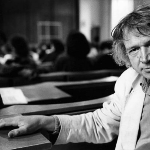
In 1990 Bahro returned to East Germany. Between 1990 and 1997, he gave well-attended lectures at Humboldt University, in which he addressed questions of spirituality and communal action in a socio-ecological context, drawing on influential thinkers from Lao-Tse to Martin Heidegger to Erich Fromm. His lectures and interviews were published in several books: Rückkehr (The return, 1991), Apokalypse oder Geist einer neuen Zeit (Apocalypse or the spirit of a new age, 1995), and Wege zur ökologischen Zeitenwende (Means of the end of an ecological era, 2002). In another book that remains unpublished, he set out his views and asked which elements of Marxism and of the collapsed East German state ought to be maintained.
Bahro was a prominent politician, writer, and critic, who was well-known and respected. He had lots of supporters not only of his political ideas but also of his writing. Altogether some 300,000 copies of The Alternative were sold, and the book was translated into numerous other languages.
Bahro was awarded the Carl von Ossietzky Medal by the International League for Human Rights and made a member of the Swedish and Danish chapters of PEN International.
Rudolf Bahro believed that an industrial, commercial, and political “machine” is the driving force behind modern society and that it puts the earth on a path to certain doom. Bahro was a member of the East German Communist Party from 1952 to 1977. A student of philosophy and communism in East Germany during the Cold War era, he became a radical environmentalist after being deported to West Germany, where he helped to found the Green Party (die Griinen) in the early 1980s. His proposals for change were controversial, and his position was always extreme and unbending. At the same time, Bahro was an influential figure because his ideas sparked debate over environmental issues.
Bahro’s ideas for escaping economic and environmental catastrophe included the creation of small, self-governed cooperatives, a subsistence economy to replace industrialism and capitalism, and an intellectual elite to replace a centralized government. His goal was to reduce human impact on the environment to one-tenth of existing levels. Bahro’s belief in truly radical changes led to his resignation from the Green Party, which he criticized for making compromises with the government
Bahro was the leader of the German Green Party (Die Griinen) in West Germany in 1980-1985, but became disenchanted with its political organization, left the party and explored spiritual approaches to sustainability.
Quotations:
"When the forms of an old culture are dying, the new culture is created by a few people who are not afraid to be insecure."
"Animal experiments occupy a central place in the material and spiritual edifice of our whole civilization. We are speaking here of one of those foundation stones whose removal could cause the whole house to collapse."
In 1986, Bahro held "learning workshops" at his home in Worms, which featured a discussion of his ideas and meditation. He met Beatrice Ingermann, who had been conducting a similar project since 1983 that was also a community in the Eifel. Bahro joined her group; they married in 1988 and had a daughter.
In September 1993, Bahro's wife Beatrice committed suicide. In May 1995, on his sickbed, he married his girlfriend and companion Marina Lehnert, who had been caring for his daughter for some time.