Background
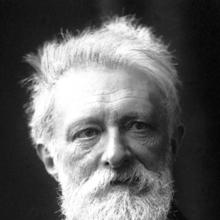
Eucken, Rudolf Christoph was born on January 5, 1846 in Aurich. East Friesland, Germany.

Eucken, Rudolf Christoph was born on January 5, 1846 in Aurich. East Friesland, Germany.
He was educated at the universities of Göttingen and Berlin.
From 1871 to 1874 he taught philosophy at Basel, and in the latter year was appointed to the chair of philosophy at the University of Jena, a post which he held until 1920. He was awarded the Nobel prize for literature in 1908, and in 1912 was exchange professor at Harvard University. In 1914 he was visiting professor at Tokyo University. Among his earlier works was Die Methode der aristotelischen Forschung (1872; "The Method of Aristotelian Logic"), but he later became interested in ethics, and books such as Einführung in die Philosophie des Geisteslebens (1908; "Introduction to the Life of the Spirit") contained his rejection of naturalism and his insistence that man is the meeting place for nature and spirit and that he can achieve good only by his own untiring efforts. Eucken was a strong supporter of the position that no blame attached to Germany for World War I.
Main publications:(1878) Geschichte und Kritik der Grundbegriffe den Gegenwari, Leipzig.(1888) Die Einheit des Geisteslebens in Bewusstsein und Tat der Menschheit, Leipzig.(1909) Christianity and the New Idealism, New York: Harper.(1909) Life in the Spirit. London: Williams & Norgate.(1909) 77)f> Meaning and Value of Life. London: A. & C. Black.(1911) Can We Still Be Christians?, London: A. & C. Black.(1911) The Truth of Religion, London: Williams & Norgate.(1913) Knowledge and Life, London.(1918) Life’s Basis and Life’s Ideal, London: A. & C. Black.(1921) Socialism: An Analysis, London: T. Fisher Unwin.(1921) Rudolf Eucken: His Life, Work and Travels, London: T. Fisher Unwin.(1923 The Individual and Society, London: Faith Press.Secondary literature:Booth, Meyrick (1913) Rudolf Eucken: His Philosophy and Influence. London: T. Fisher Unwin. Gibson, W. R. Boyce (1907) Rudolf Eucken s Philosophy of Life, London.Jones, W. Tudor (1912) An Interpretation of Rudolf Eucken s Philosophy, London: Williams & Norgate. MacGowan, W. S. (1914) The Religious Philosophy of Rudolf Eucken, London: David Nutt.
Eucken was a leading representative of that spiritual brand of philosophy which, rejecting ■ntellectualism and abstruse speculation, sought a Philosophy of the whole of life. He labelled his result ‘activism’, and distinguished it from pragmatism, the ends of which were mundane. With natural existence, deemed to be ultimately mean- 'ngless and self-frustrating, he contrasted spiritual existence—personal relationship with the supreme reality, Spirit, which, though immanent m nature, transcends it.
Only in such a relationship are human interests truly fulfilled, and this in a universal religion. The necessary Prelude to this relationship is conversion from the sensory realm to the spiritual. This entails constant striving.
Christianity is the highest— though, because of the truth grasped by other faiths, not the absolute—religion.
The spiritual quest on which, if we are wise, we are embarked is not pursued in solitariness. Our choosing of one ‘system of life’ in preference to others, and on the basis of its anticipated benefits, inevitably involves those to whom we are related in society. Through their persistent questioning, human beings, though part of the natural order, rise above it: their souls transcend the spatiotemporal sphere.
It is important to note that for all his emphasis upon spirit, Eucken welcomed the positive contributions of modern science.
Science, however, could not introduce us to the realm of spirit. And he lamented that our technical achievements have not ‘been accompanied by a corresponding growth in the content of life and the soul of man’. The remedy does not lie in the aesthetic transformation of existence into pleasure or enjoyment.
Rather, we must develop the life of the spirit, and do this in opposition to naturalism's constricted view of human nature. Earthbound as it is, naturalism offers no guidance as to how new knowledge and human freedom are to be used, or how a better world of peace and freedom may be established. Hence Eucken’s trenchant criticism of socialism, which he regarded as the political expression of naturalism.
Eucken’s views were widely disseminated.
Windelband hailed him as ‘the creator of a new metaphysic’. However, some questioned his optimism concerning the ongoing evolution of the spirit: his understanding of the heart of Christianity as a matter of world-denial and worldrenewal was deemed reductionist by some. His view that such metaphysical concepts as the Trinity have been superseded by improved understandings of existence has been contested.
His Christology—Jesus is not God but ‘merely an incomparable individuality which cannot be directly imitated’—has been repudiated by many, and has been branded a deficiency which deprives his activism of that expemplification of the union of humanity with divinity of which the Incarnation is the supreme instance. He has been faulted for not allowing the miraculous as traditionally conceived, and for not giving due weight to the idea of redemption wrought in one historic act. And his lack of attention to the experiential aspects of faith has been deemed an unfortunate relapse into intellectualism.
Widely read though he was, Eucken’s fame was short-lived. His approach and proposals have not commanded the attention of many professional philosophers since his death. By itself this does not show that, or how, he was mistaken.
It may, however, suggest that in philosophy as elsewhere, those who today are among the arbiters of fashion may, tomorrow, become the victims of it.