Background
Samuel Butler was born in Strensham, Worcestershire, and was the son of a farmer and churchwarden, also named Samuel. His date of birth is unknown, but there is documentary evidence for the date of his baptism of 14 February. The date of Butler's baptism is given as 8 February by Treadway Russell Nash in his 1793 edition of Hudibras.
Education
He had little formal education, but increased his learning while in the employ of several important families.
Career
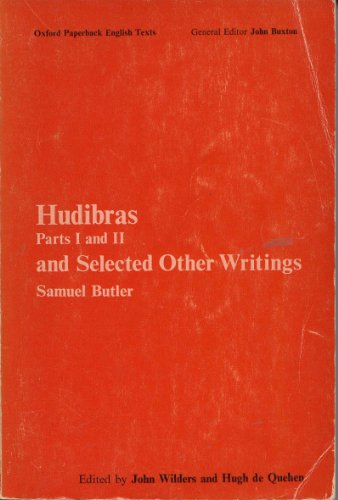
After the Restoration he became secretary to the Earl of Carbery, and in 1661 steward of Ludlow Castle. Soon after, he married and moved to London. In 1663 he published the first authorized edition of Hudibras, Part I. The second part appeared in the following year, and the third in 1678. The poem was very popular, and Butler is said to have received some temporary recognition from the court. He died Sept. 25, 1680, and was buried in the churchyard of St. Paul's, Covent Garden, London. Much of Butler's writing remained in manuscript until the publication in 1759 of The Genuine Remains in Verse and Prose, which contained The Elephant in the Moon, a satire on the Royal Society, and a series of biting Characters in prose. Hudibras remains, however, his most important work. It is a burlesque heroic poem ridiculing the Puritans, as represented in the characters of Hudibras, a quixotic, hypocritical knight, and his squire, Ralph. Disconnected episodes also satirize astrology, lawyers, and chivalric love. For his impudent verse Butler developed a distinctive treatment of the iambic tetrameter couplet, ever since known as Hudibrastic style.