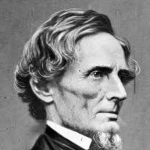
Samuel Preston Moore was an American military physician. He served in the medical corps of the United States Army during the Mexican-American War and later as the Confederate Surgeon General.
Background
Samuel Moore was born on September 16, 1813, in Charleston, South Carolina, United States. He was the son of Stephen West Moore and Eleanor Screven Gilbert. The founder of the Moore family in America was Dr. Mordecai Moore who came to America with Lord Baltimore, as his physician.
Education
Samuel attended school in Charleston and graduated from the Medical College of South Carolina (now Medical University of South Carolina) on March 8, 1834.
Samuel Preston Moore was commissioned assistant surgeon in the United States Army and entered upon a long service in the western posts of Iowa, Kansas, Missouri, and Florida.
During the Mexican War, his entire service was along the Rio Grande, mostly at Camargo, across the Rio Grande from what was later Fort Ringgold.
On April 30, 1849, he attained his surgeoncy, with the rank of major, which he held until his resignation in 1861.
The coming of the Civil War was to him, as too many regular officers, the occasion for much distress of mind. He resigned from the service so as not to fight against his state, and entered the practice of medicine at Little Rock, Arkansas, apparently hoping that he need not fight against his country. Trained military surgeons were too few in the South, however, for one of so long service to remain unknown.
In June 1861 he was made surgeon general of the Confederate army. His task was the most difficult. There was a shortage of doctors, as well as of drugs, supplies, and hospitals. Owing to the general practice of organizations electing their own officers, including surgeons, many poorly qualified men were commissioned. Moore established examining boards to weed out the unfit, and introduced, so far as possible, the organization and methods obtaining in the medical department of the United States Army. Probably he succeeded as well as anyone could under the circumstances, but when the Union army entered Richmond, the records of his office were almost entirely destroyed by fire, as were most of the books and private papers of his family, so that there is very little documentary evidence of his work. During the war, he undertook two methods of keeping medical officers informed as to the progress of their profession.
He organized in 1863 and was president of the Association of Army and Navy Surgeons of the Confederate States, and he encouraged the publication of the Confederate States Medical and Surgical Journal (January 1864-February 1865). The Association promoted meetings and discussions of medical subjects and, in general, the extension of knowledge, much as does the ordinary medical society. The Journal presented interesting articles in the way of case reports, original investigations, and reviews of foreign and Union books and journals. It was a useful publication and its relative value was greatly enhanced by the absence of any other such publication in the Confederacy.
After the war, Moore remained in Richmond, not practicing medicine but devoting much time to the furtherance of education and agriculture, incidentally serving as a member of the Richmond school board (1877-1889) and of the Virginia Agricultural Society. In the latter capacity, he took an important part in the promotion and improvement of the state fairs. He lived quietly and in honor until his death on May 31, 1889.
Achievements
Among the more notable achievements of Samuel Preston Moore's tenure as surgeon general was the organization of the Confederate Medical Department, the establishment of examining boards for surgeons and assistant surgeons, the construction of military hospital huts, or one-story pavilion hospitals, and the establishment of drug, hospital supplies and surgical instruments factories around the Confederacy to supply the Army's needs.
From 1863, Moore was president of the Association of Army and Navy Surgeons of the Confederate States.
Also, he was a member of the Richmond school board (1877-1889) and of the Virginia Agricultural Society.
Personality
As surgeon general Samuel Moore was regarded as strict and exacting, and as a severe disciplinarian; yet personally he seems to have been kind, mild, philanthropic, and modest and reserved in manner.
Quotes from others about the person
"With skill and dedication, Dr. Moore transformed the medical corps into one of the most effective departments of the Confederate military and was responsible for saving thousands of lives on the battlefield." - David J. Eicher
Connections
In 1845, Samuel Moore married Mary Augusta Brown, the daughter of Major Jacob Brown. They had a daughter.