

Background
Satchel Paige was born Leroy Robert Paige on July 7, 1906, in Mobile, Alabama, United States. The seventh of twelve children of John Paige, a gardener, and Lula Paige, a washerwoman, he grew up poor and needy in the segregated S.


1941
Satchel Paige showing off his high kick with a size 14 shoe as he delivers his famous cannonball pitch, during practice.

1941
Satchel Paige, casually tossing the ball in the air.

1941
Kansas City, Missouri, United States
Satchel Paige of the Monarchs talks with Josh Gibson of the Homestead Grays before a game in Kansas City in 1941.

1942
Satchel Paige, a pitcher for the Negro League's Kansas City Monarchs, stands at the top of the dugout with a baseball in his hand.

1948
1085 West 3rd Street, Cleveland, Ohio 44114, United States
Satchel Paige warms up during a night game at Municipal Stadium in Cleveland in 1948.

1948
1085 West 3rd Street, Cleveland, Ohio 44114, United States
Satchel Paige rests in the Cleveland Indians bullpen during a game at Metropolitan Stadium (later Cleveland Stadium) in Cleveland in 1948.

1948
Pitcher Satchel Paige in his windup.

1948
Satchel Paige taking batting practice.

1948
1085 West 3rd Street, Cleveland, Ohio 44114, United States
Satchel Paige and Bob Feller discuss grips before a game at Municipal Stadium in Cleveland, Ohio.

1948
Satchel Paige, a star pitcher in the Negro Leagues for many years, pitches during warmups for the Cleveland Indians.

1948
Brooklyn Dodgers' infielder Jackie Robinson with Larry Doby and Satchel Paige of the Cleveland Indians.

1948
Satchel Paige and Larry Doby

1951
Satchel Paige, famed Negro Leagues pitcher, stands on the pitcher's mound during one of his scoreless performances with the St. Louis Browns of the American League.

1952
Satchel Paige throwing a ball.

1952
1 E 161 St, The Bronx, NY 10451, United States
Satchel Paige, a pitcher for the St. Louis Browns, warms up before a game in Yankee Stadium, New York, in 1952.

1952
Satchel Paige, the pitcher of the St. Louis Browns, poses for a portrait.

1956
Satchel Paige of the Miami Marlins poses for a portrait during a game in 1956.

1960
Satchel Paige

Satchel Paige pitching in his first game.

Legendary pitcher Leroy Paige kisses a ball of the sport that made him famous.

Satchel Paige in his only World Series appearance, pitching relief in Game 5 against the Boston Braves.
1941
Satchel Paige showing off his high kick with a size 14 shoe as he delivers his famous cannonball pitch, during practice.
1941
Satchel Paige, casually tossing the ball in the air.
1941
Kansas City, Missouri, United States
Satchel Paige of the Monarchs talks with Josh Gibson of the Homestead Grays before a game in Kansas City in 1941.
1941
Satchel Paige, getting a manicure, haircut, shave and his shoes shined.
1941
Satchel Paige, playing a game of pool.
1941
Satchel Paige, looking dapper, lighting his cigarette while sitting on the front bumper of a large car.
1942
Satchel Paige, a pitcher for the Negro League's Kansas City Monarchs, stands at the top of the dugout with a baseball in his hand.
1948
1085 West 3rd Street, Cleveland, Ohio 44114, United States
Satchel Paige warms up during a night game at Municipal Stadium in Cleveland in 1948.
1948
1085 West 3rd Street, Cleveland, Ohio 44114, United States
Satchel Paige rests in the Cleveland Indians bullpen during a game at Metropolitan Stadium (later Cleveland Stadium) in Cleveland in 1948.
1948
Pitcher Satchel Paige in his windup.
1948
Satchel Paige taking batting practice.
1948
1085 West 3rd Street, Cleveland, Ohio 44114, United States
Satchel Paige and Bob Feller discuss grips before a game at Municipal Stadium in Cleveland, Ohio.
1948
Satchel Paige, a star pitcher in the Negro Leagues for many years, pitches during warmups for the Cleveland Indians.
1948
Brooklyn Dodgers' infielder Jackie Robinson with Larry Doby and Satchel Paige of the Cleveland Indians.
1948
Satchel Paige and Larry Doby
1951
Satchel Paige, famed Negro Leagues pitcher, stands on the pitcher's mound during one of his scoreless performances with the St. Louis Browns of the American League.
1952
Satchel Paige throwing a ball.
1952
1 E 161 St, The Bronx, NY 10451, United States
Satchel Paige, a pitcher for the St. Louis Browns, warms up before a game in Yankee Stadium, New York, in 1952.
1952
Satchel Paige, the pitcher of the St. Louis Browns, poses for a portrait.
1956
Satchel Paige of the Miami Marlins poses for a portrait during a game in 1956.
1960
Satchel Paige
Satchel Paige pitching in his first game.
Legendary pitcher Leroy Paige kisses a ball of the sport that made him famous.
Satchel Paige in his only World Series appearance, pitching relief in Game 5 against the Boston Braves.
Cooperstown, New York, United States
A statue of Satchel Paige.


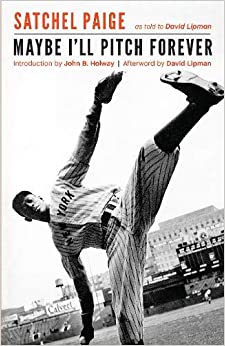
(Satchel Paige was forty-two years old in 1948 when he bec...)
Satchel Paige was forty-two years old in 1948 when he became the first black pitcher in the American League. Although the oldest rookie around, he was already a legend. For twenty-two years, beginning in 1926, Paige dazzled throngs with his performance in the Negro Baseball Leagues. Then he outlasted everyone by playing professional baseball, in and out of the majors, until 1965. Struggle - against early poverty and racial discrimination - was part of Paige's story. So was fast living and a humorous point of view.
https://www.amazon.com/Maybe-Pitch-Forever-Leroy-Satchel/dp/0803287321/ref=sr_1_2?dchild=1&keywords=Satchel+Paige&qid=1604175950&sr=8-2
1962
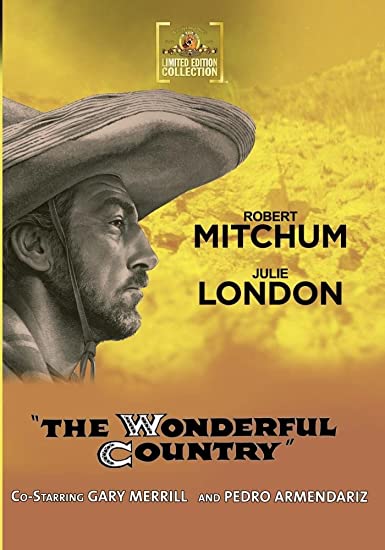
(An honorable drifter constantly on the run finds his enem...)
An honorable drifter constantly on the run finds his enemies closing in around him.
https://www.amazon.com/Wonderful-Country-Robert-Mitchum/dp/B007232DF8
1959
Satchel Paige was born Leroy Robert Paige on July 7, 1906, in Mobile, Alabama, United States. The seventh of twelve children of John Paige, a gardener, and Lula Paige, a washerwoman, he grew up poor and needy in the segregated S.
Paige spent his childhood days tossing rocks at tin cans and anything that moved, even - occasionally - people. At the tender age of seven, Paige went to work at the Mobile train station, earning tips for carrying travelers' luggage.
Paige was ten years old when he began playing organized baseball with his elementary school team. The sport provided the only reason for him to attend school, from his point of view. The love of baseball could not keep Paige out of trouble, however. At twelve he was caught snatching some toy rings from a dime store. That episode and his truancy combined to earn him a sentence to the Industrial School for Negro Children in Mount Meigs, Alabama.
The industrial school turned out to be just the right place for Paige. Freed from the distractions of his hometown - and under stricter discipline - he became educated and played baseball for the school team. He stayed in Mount Meigs until he was seventeen, practicing the baseball skills. After leaving school, he set out to find work in professional baseball.
Paige began his baseball career in 1923 with the Mobile Tigers, an all-black semi-pro team. He earned a dollar a game. He also picked up spare change by pitching batting practice for the local white minor league team. By 1925, Paige had established himself in the fledgling Negro Leagues as a pitcher with the Chattanooga, Tennessee Black Lookouts. From $50 a month his first year, he soon was earning $200 a month with bonuses. Paige discovered that baseball was more than just a game: it was entertainment, and it was a business. He adapted his methods to meet those challenges. As an entertainer, he clowned and dawdled to and from the mound, saving his seriousness for pitching. As a businessman, he was constantly on the lookout for teams that would pay him more and exhibition games that would bring in extra cash.
Most professional pitchers work only every four or five days and then rest at season's end. The most amazing aspect of Paige's career is the fact that he pitched almost every day, all four seasons of the year. He hopped from team to team in the Negro Leagues and was sent out on "loan" to other clubs by his parent team of the moment. These appearances were augmented by numerous exhibition games and barnstorming trips across the country, as well as work with winter leagues in Cuba, Venezuela, and Puerto Rico.
In 1927, Paige pitched in Alabama for the Birmingham Black Barons for $275 a month. The following year he moved to the Nashville Elite Giants and toured in the offseason with a barnstorming group led by Babe Ruth. Barnstorming gave Paige the opportunity to test his mettle against white baseball players - in fact, the very best in the white major leagues. In a game on the West Coast, against the Babe Ruth All-Stars, Satch struck out twenty-two major-leaguers - and that would have been a new record in the major leagues.
Such accomplishments assured Paige a national audience of both races for his talents. In the early 1930s, he joined the Pittsburgh Crawfords, one of the top Negro League teams, for a salary of $750 per month. In 1934, he served one season at top salary with an all-white independent league team out of Bismarck, North Dakota. It was with the Bismarck team that Paige set a never-to-be-duplicated record of pitching 29 games in a single month. After one year in North Dakota, Paige returned to the Crawfords. He left them again in 1937 to play in the Dominican Republic for the princely wage of $30,000 - a salary on par with the best white major leaguers of the time.
At the beginning of the 1940s, Paige was reported to be earning in the neighborhood of $500 per game pitched. The 1941 summer season in the United States found him with the Kansas City Monarchs of the Negro League. With Paige in their ranks, the Monarchs were able to advance to the Negro World Series in 1942 and again in 1946.
Baseball's "color barrier" was broken in 1946 when Jackie Robinson was signed by the Brooklyn Dodgers. Within a short time, most of the other major league clubs had recruited black players as well. Paige was 40 years old when baseball was integrated. Most owners considered him too old to be a force in the big leagues. During the 1948 season, however, Cleveland Indians owner Bill Veeck approached Paige at mid-year about playing for the Indians. The team was in the midst of a pennant race, and Veeck, for one, thought Paige might help clinch a pennant.
On August 13, 1948, Satchel Paige became the seventh black player recruited into the major leagues when he pitched a 5-0 shutout for Cleveland over the Chicago White Sox. Age notwithstanding, in 1948, Paige pitched to a 4-1 record for the Indians with a 2.47 earned run average. In the World Series that year, he pitched two-thirds of an inning and did not allow a hit.
Paige was back with the Indians the following year, but his record in 1949 fell to 4-7, and he was released at season's end. He returned to barnstorming until 1951, then signed a contract with the lackluster St. Louis Browns. He stayed with St. Louis, pitching mostly in relief situations until the team left town in 1954.
Paige's last hurrah as a pitcher occurred in 1965. He had applied for a pension from major league baseball that year and discovered that he lacked only three innings of work to qualify for the pension. Paige was granted the chance to work his last three innings with the Kansas City Athletics, owned by Charlie Finley. At the age of 59, he took the mound and shut out the Boston Red Sox through the required three innings. As he left the field, the lights went out and the crowd lit 9000 matches and sang songs to him. It was a fitting epilogue to a long and varied career.
In 1968, Paige held the position of deputy sheriff in Jackson County, Missouri. In August of the same year, the owner of the Atlanta Braves signed Paige to a contract running through the 1969 season as a pitching coach/pitcher. It was done so that Paige could gain service time to receive a major league pension.
In 1973, Satchel took a job with the Tulsa Oilers, a minor league team, as their pitching coach. During the mid-to-late 1970s, he made only occasional personal appearances at mostly minor league stadiums and banquets.
In 1980, Paige was named vice-president of the Triple-A Springfield Cardinals.
Satchel Paige also appeared in a United Artists movie, The Wonderful Country, starring Robert Mitchum and Julie London. He played Sgt. Tobe Sutton, a hard-bitten cavalry sergeant of the Buffalo Soldiers.

Satchel Paige was the first Negro pitcher in the American League and the seventh Negro big leaguer overall. He was the oldest rookie in baseball history, debuting in the major leagues on his 42nd birthday. In 1971, Paige became the first electee of the Negro League Committee to be inducted into the National Baseball Hall of Fame.
In 1999, Satchel ranked Number 19 on Sporting News' list of the 100 Greatest Baseball Players. He was also nominated as a finalist for the Major League Baseball All-Century Team.
On July 28, 2006, a statue of Satchel Paige was unveiled in Cooper Park, commemorating the contributions of the Negro leagues to baseball.
(Satchel Paige was forty-two years old in 1948 when he bec...)
1962(An honorable drifter constantly on the run finds his enem...)
1959Paige ran for a Missouri state assembly seat with the support of the local Democratic club against incumbent Representative Leon Jordan. Jordan defeated Paige by the margin of 1,870 votes to 382.
Quotations:
"Age is a case of mind over matter. If you don't mind, it doesn't matter."
"Ain't no man can avoid being born average, but there ain't no man got to be common."
"He (Bill Veeck) asked me to throw at a cigarette as a plate and I threw four out of five over it."
"How old would you be if you didn't know how old you were?"
"I ain't ever had a job, I just always played baseball."
"I don't generally like running. I believe in training by rising gently up and down from the bench."
"I don't know what you're going to do Mr. (Dizzy) Dean, but I'm not going to give up any runs if we have to stay here all night."
"If a man can beat you, walk him."
"I never rush myself. See, they can't start the game without me."
"I never threw an illegal pitch. The trouble is, once in a while I toss one that ain't never been seen by this generation."
"It's funny what a few no-hitters do for a body."
"I use my single windup, my double windup, my triple windup, my hesitation windup, my no windup. I also use my step-n-pitch-it, my submariner, my sidearmer, and my bat dodger. Man's got to do what he's got to do."
"I've said it once and I'll say it a hundred times, I'm forty-four years old."
"Just take the ball and throw it where you want to. Throw strikes. Home plate doesn't move."
"My feet ain't got nothing to do with my nickname, but when folks get it in their heads that a feller's got big feet, soon the feet start looking big."
"My pitching philosophy is simple - keep the ball away from the bat."
"One time he (Cool Papa Bell) hit a line drive right past my ear. I turned around and saw the ball hit his ass sliding into second."
"One time I snuck a ball on with me and when I went to winding up, I threw one of the balls to first and one to second. I was so smooth I picked off both runners and fanned the batter without that ump or the other team even knowing it."
"Smokey Joe (Williams) could throw harder than anyone."
"The only change is that baseball has turned Paige from a second class citizen to a second class immortal."
"There never was a man on Earth who pitched as much as me, but the more I pitched, the stronger my arm would get."
"There you are (after he walked a batter, told him this than stuck out the next three hitters) and there you are going to stay."
"When a batter swings and I see his knees move, I can tell just what his weaknesses are then I just put the ball where I know he can't hit it."
"You gotta keep the ball off the fat part of the bat."
Paige's showmanship, athleticism, and personality attracted both white and black audiences.
Paige often claimed to not know how old he was. While the records show that Paige was born in 1906, many reporters incorrectly believed he was born in the 19 century. Paige only added to the legend by claiming that a goat "ate the bible with the birth certificate in it." He even offered a cash reward to anyone that could find proof of his age.
Physical Characteristics:
Satchel Paige was 6 ft 3 inches (190 cm) tall and weighed 180 lb (81 kg).
Paige died of a heart attack after a power failure.
Quotes from others about the person
Joe DiMaggio: "After I got that hit off Satchel (Paige), I knew I was ready for the big leagues."
Dizzy Dean: "He's a better pitcher than I ever hope to be."
Casey Stengel: "He threw the ball as far from the bat and as close to the plate as possible."
Casey Stengel: "If the Yankees don't get ahead in the first six innings, the Browns bring in that damned old man, and we're sunk."
Dizzy Dean: "If Satch (Paige) and I were pitching on the same team, we would cinch the pennant by July fourth and go fishing until World Series time."
Rube Arb: "I hear the question of the age is, 'What's the age of Satchel Paige?'"
Hack Wilson: "It starts out like a baseball and when it gets to the plate, it looks like a marble."
Red Smith: "Like Joe Louis, only one arm like this comes along in fifty years."
Dizzy Dean: "My fastball looks like a change of pace alongside that little pistol bullet Satchel (Paige) shoots up to the plate."
Tim Cohane: "Next to the Monroe measurements, the most argued vital statistic in sports and entertainment is the true age of the phenomenal pitching man of the St. Louis Browns, Ol' Satchel Paige."
Buck O'Neil: "Of course the stories about Satchel (Paige) are legendary and some of them are even true."
Buck Leonard: "Satchel Paige was the toughest pitcher I ever faced. I couldn't do much with him. All the years I played there, I never got a hit off of him. He threw fire."
Joe DiMaggio: "The best and fastest pitcher I've ever faced."
Bill Veeck: "The best righthander baseball has ever known."
Al Hirshberg: "When (Satchel) Paige wound up to pitch, he looked like a cross between Ichabod Crane and Rip Van Winkle. He was easy to imitate and funny to watch unless you were the batter trying to hit against him."
On October 26, 1934, Paige married Janet Howard. They divorced on August 4, 1943. Paige married Lucy Maria Figueroa in 1940 but because he was not divorced from his first wife, this marriage was not legal.
Later, Paige married his longtime girlfriend LaHoma Jean Brown. The couple had seven children together. LaHoma also had a daughter from an earlier marriage.
(April 7, 1922 - September 22, 1986)

(born 1952)
(born 1948)
(born 1960)
(born 1958)
(born 1951)
(born 1949)


