

Background
Bronner, Simon Josef was born on April 7, 1954 in Haifa, Israel. Son of Morris Samuel Bronner and Betty (Wolbromska) Peterfreund).
http://www.amazon.com/gp/product/B010TT0JHU/?tag=2022091-20

http://www.amazon.com/gp/product/087483161X/?tag=2022091-20
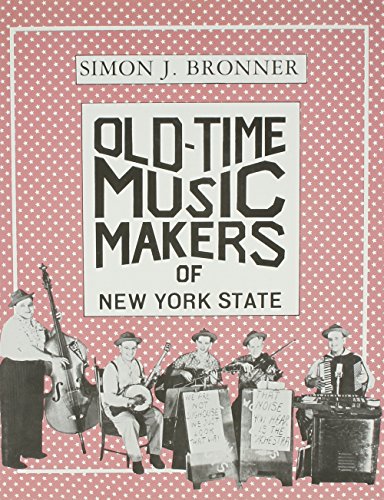
(Book by Bronner, Simon J.)
Book by Bronner, Simon J.
http://www.amazon.com/gp/product/0815602162/?tag=2022091-20

http://www.amazon.com/gp/product/B0140DRBK4/?tag=2022091-20
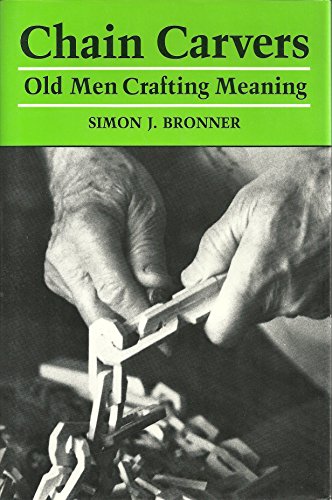
(Book by Simon J. Bronner)
Book by Simon J. Bronner
http://www.amazon.com/gp/product/081311523X/?tag=2022091-20
(Folklore. Washington Irving and Mark Twain used it in the...)
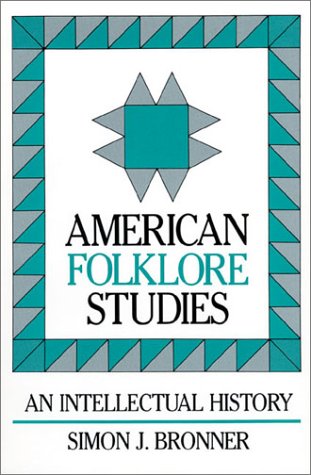
Folklore. Washington Irving and Mark Twain used it in their fiction; Sigmund Freud and William James incorporated it into their work; Henry Ford and Franklin Roosevelt promoted it. Their efforts were set against the background of folklorists who brought collections of traditional tales, songs, and crafts to the attention of a modernizing society. The ideas of these folklorists influenced how Americans thought about the character of their society and the directions it was taking. Here for the first time is a history of American folkloristic ideas and the figures who shaped them. Simon Bronner puts these ideas in cultural context, showing the interconnection of folklore studies with historical events, social changes, and intellectual movements. He follows the beginnings of American folklore studies in the antiquarian literature of the 1830s through the rise of folklore societies in the 1880s to the emergence of an independent discipline in the 1950s. In this progression, Bronner identifies several major themes tying folklore studies to intellectual history: first, the unearthing of a hidden, usable past; second, the charting of time and space; and third, the structuring of communication. More than a chronological or biographical history, this book is an interpretation of folkloristic ideas and their relationship to American society.
http://www.amazon.com/gp/product/0700603131/?tag=2022091-20
(Book by Bronner, Simon)
Book by Bronner, Simon
http://www.amazon.com/gp/product/0874211565/?tag=2022091-20

http://www.amazon.com/gp/product/B010MZLST4/?tag=2022091-20
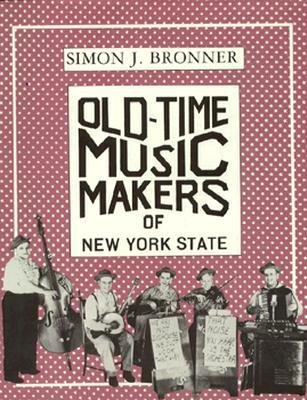
http://www.amazon.com/gp/product/B00Y4RIQXI/?tag=2022091-20
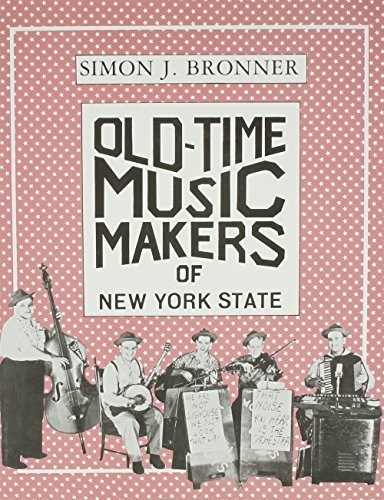
http://www.amazon.com/gp/product/B010EUSPKC/?tag=2022091-20
(illustrated edition)
illustrated edition
http://www.amazon.com/gp/product/B010MZBARE/?tag=2022091-20

(Few regions have had as energetic and influential a promo...)
Few regions have had as energetic and influential a promoter as Henry W. Shoemaker (1880-1958), who devoted his life's work to preserving Pennsylvania's cultural and natural heritage. His memory lives on in the legends he helped promote, such as that of the Indian princess 'Nita-Nee,' for whom Central Pennsylvania's Nittany Mountain is supposedly named. He was also instrumental in creating Pennsylvania's noted system of parks and forests and the Pennsylvania Historical and Museum Commission. In his own day, Shoemaker was a controversial figure, talked about for his immense wealth, powerful connections, eccentric hobbies, and, above all, his consuming passion for conserving and promoting Pennsylvania's wildlife, mountains, and common folk. During the Progressive Era, he fell in with national leaders such as Theodore Roosevelt and Gifford Pinchot, who encouraged Americans to commune with nature and to appreciate its history and legend. He espoused the Progressive belief that nature and folk cultures held vital, even spiritual, powers for a modern age, especially in America, where Shoemaker hoped to create a mythology supporting nationalism. Shoemaker hoped to 'sell Pennsylvania to Pennsylvanians' and instill an appreciation for the state's wilderness, threatened by industrialization. He authored hundreds of pamphlets and books on nature, history, and folklore. He was publisher of several influential newspapers in Pennsylvania, including the Altoona Tribune and the Reading Eagle. He became the first state folklorist in America, one of the first chairs of the Pennsylvania Historical Commission, and an influential member of the State Forest Commission and the State Geographic Board. He is responsible for the network of historical markers that dot the byways of the Commonwealth. For this book, the first full-length biography of Shoemaker, Simon Bronner has located never-before-available private papers and interviewed many people who knew Shoemaker. Included are rare photographs and a sampler of Shoemaker stories.
http://www.amazon.com/gp/product/0271014865/?tag=2022091-20

(America stocks its shelves with mass-produced goods but f...)
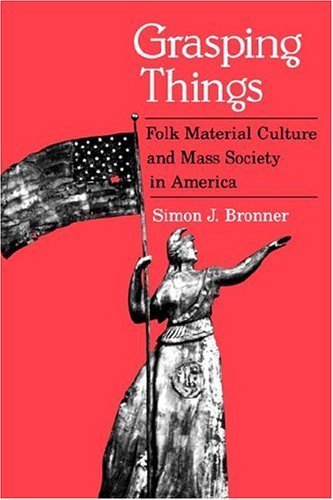
America stocks its shelves with mass-produced goods but fills its imagination with handmade folk objects. In Pennsylvania, the "back to the city" housing movement causes a conflict of cultures. In Indiana, an old tradition of butchering turtles for church picnics evokes both pride and loathing among residents. In New York, folk-art exhibits raise choruses of adoration and protest. These are a few of the examples Simon Bronner uses to illustrate the ways Americans physically and mentally grasp things. Bronner moves beyond the usual discussions of form and variety in America's folk material culture to explain historical influences on, and the social consequences of, channeling folk culture into a mass society.
http://www.amazon.com/gp/product/0813191424/?tag=2022091-20
Bronner, Simon Josef was born on April 7, 1954 in Haifa, Israel. Son of Morris Samuel Bronner and Betty (Wolbromska) Peterfreund).
Bachelor in Political Science with honors, State University of New York, Binghamton, 1974. Master of Arts in American Folk Culture, State University of New York, Oneonta-Cooperstown, 1977. Certified in museum administration, State University of New York, Oneonta-Cooperstown, 1980.
Doctor of Philosophy in American Studies and Folklore, Indiana University, 1981. Certified in Yiddish culture, Mount Holyoke College, 1992.
Director, Archive of New York State Folklife, Cooperstown, New York, 1976-1977; assistant professor, Pennsylvania State University, Harrisburg, 1981-1984; from associate professor to professor, Pennsylvania State University, Harrisburg, 1985-1991; distinguished professor, Pennsylvania State University, Harrisburg, since 1991; supervisor music internship program, Pennsylvania State University, Harrisburg, 1985-1989; project director American Studies Institute Teachers English as Foreign Language, and Curriculum Development, United States Information Agency/Academy for Ednl. Development, Harrisburg, 1992; coordinator graduate and undergraduate programs in American studies, Pennsylvania State University, Harrisburg, since 1987.
(America stocks its shelves with mass-produced goods but f...)
( Few regions have had as energetic and influential a pro...)
(Few regions have had as energetic and influential a promo...)
(Book by Bronner, Simon J.)
(Will be shipped from US. Brand new copy.)
(Book by Bronner, Simon)
(illustrated edition)
(Book by Simon J. Bronner)
(Folklore. Washington Irving and Mark Twain used it in the...)
Chairman Cultural Heritage Advisory Committee, Harrisburg. Member Member American Folklore Society (panel chairman 1982, 92, conference organizer 1988-1989, president children's folklore section 1983-1985, centennial coordinator council 1983-1989, state of profession committee 1982-1985, chairman history section since 1985, chairman foodways section 1979-1980, Fellows award 1980, 81, Opie prize 1990), American Studies Association (research committee 1987-1992, program committee 1987, panel chairman 1987), Middle Atlantic Folklife Association (president 1989-1991, panel chairman 1985, 90), Pennsylvania Folklore Society (president 1983-1985, panel chairman 1984).
