Sofonisba Anguissola was an Italian Renaissance painter.
Background
Sofonisba Anguissola was born circa 1532 in Cremona, Lombardy, Italy, to a relatively poor noble family. She was the oldest of seven children, six of whom were girls.
Her father, Amilcare Anguissola, was a member of the Genoese minor nobility, and her mother, Bianca Ponzone, was also of noble background. The Anguissola family believed they had a connection to the ancient Carthaginians and named their first daughter after the tragic Carthaginian figure Sophonisba.
Amilcare Anguissola encouraged all his daughters (Sofonisba, Elena, Lucia, Europa, Minerva and Anna Maria) to cultivate and perfect their talents. Four of the sisters (Elena, Lucia, Europa and Anna Maria) became painters, but Sofonisba was by far the most accomplished and renowned. Elena abandoned painting to become a nun. Both Anna Maria and Europa gave up art upon marrying, while Lucia Anguissola, the best painter of Sophonisba's sisters, died young. The remaining sister, Minerva, became a writer and Latin scholar. Asdrubale, Sophonisba's brother, studied music and Latin, but not painting.
Education
Anguissola was fourteen when her father sent her and her sister Elena to study with Bernardino Campi. When Campi moved to another city, Anguissola continued her studies with painter Bernardino Gatti. Dates are uncertain, but Anguissola probably continued her studies under Gatti for about three years (1551-1553).
Career
One of Anguissola's most important early works was "Bernardino Campi Painting Sofonisba Anguissola" (ca. 1550).
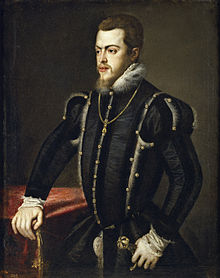
In 1554, at age twenty-two, Anguissola traveled to Rome where she was introduced to Michelangelo, who immediately recognized her talent, and to Milan, where she painted the Duke of Alba. The Spanish queen, Elizabeth of Valois, was a keen amateur painter, and in 1559 Anguissola was recruited to go to Madrid as her tutor. She later became an official court painter to the king, Philip II, and adapted her style to the more formal requirements of official portraits for the Spanish court. Anguissola then moved to Sicily, and later Pisa and Genoa, where she continued to practice as a leading portrait painter.
Her most distinctive and attractive paintings are her portraits of herself and her family, which she painted before she moved to the Spanish court. In particular, her depictions of children were fresh and closely observed. At the Spanish court she painted formal state portraits in the prevailing official style. Later in her life she also painted religious themes, although many of her religious paintings have been lost.
Anguissola died on November, 1625 in Palermo, Sicily, Italy.
Achievements
Anguissola's example, as much as her oeuvre, had a lasting influence on subsequent generations of artists, and her great success opened the way for larger numbers of women to pursue serious careers as artists.
Her paintings can be seen at galleries in Boston, Massachusetts (Isabella Stewart Gardner Museum); Milwaukee, Wisconsin (Milwaukee Art Museum); Bergamo; Brescia; Budapest; Madrid (Museo del Prado); and at the Uffizi Gallery in Florence.
Lucia, Minerva and Europa Anguissola Playing Chess
Portrait of Juana of Austria with a Young Girl
Family Portrait, Minerva, Amilcare and Asdrubale Anguissola
Portrait of Caterina Micaela of Spain
Bernardino Campi Painting Sofonisba Anguissola
Portrait of Elena Anguissola
Self-Portrait
Portrait of Diane d'Andouins and her daughter
Portrait of Massimiliano Stampa
Infantin Isabella Clara Eugenia
Infantas Isabella Clara Eugenia and Catalina Micaela
Three children with dog
Portrait of Giuliano II Cesarini aged 14
A portrait of a young Alessandro Farnese, the future Duke of Parma
Portrait of Queen Elisabeth of Spain
Portrait of Bianca Ponzoni Anguissola, the artist's mother
Self-portrait
Portrait of a young woman in profile
Portrait of Philipp II of Spain
Personality
Her contemporary Giorgio Vasari wrote about Anguissola that she "has shown greater application and better grace than any other woman of our age in her endeavors at drawing; she has thus succeeded not only in drawing, coloring and painting from nature, and copying excellently from others, but by herself has created rare and very beautiful paintings."
Connections
Anguissola entered an arranged marriage to a Sicilian nobleman chosen for her by the Spanish court in 1571. Philip II paid a dowry of 12,000 scudi for her marriage to Fabrizio Moncada Pignatelli, son of the Prince of Paternò, Viceroy of Sicily. Fabrizio was said to be supportive of her painting. Anguissola and her husband left Spain with the king's permission, and lived in Paternò (near Catania) from 1573 to 1579.
Anguissola's husband died in 1579. Two years later, while traveling to Genoa by sea, she fell in love with the ship's captain, sea merchant Orazio Lomellino. Against the wishes of her brother, they married in Pisa in 1584 and lived in Genoa until 1620. She had no children, but maintained cordial relationships with her nieces and her stepson, Giulio.