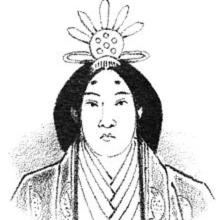
Background
Tenno Gemmei was born in Japan in 661. She was a daughter of Emperor Tenji.

Tenno Gemmei was born in Japan in 661. She was a daughter of Emperor Tenji.
In 697 Empress Jito abdicated, turning over the throne to the son of Empress Gemmei, who became Emperor Mommu.
He died in 707, however, and in accordance with his dying wish his mother ascended the throne to become Empress Gemmei, the forty-third ruler of Japan.
In 710 she moved the capital to Heijo-kyo, on the site of the present-day city of Nara, where it remained until it was moved to Kyoto in 794; the interval from 710 to 794 is accordingly known as the Nara period.
In 715 she turned over the throne to her daughter, who became Empress Genshō, though she continued until her death to play an active part in politics, doing her best to maintain the ritsuryo system of government.
During her reign, in 708, copper was for the first time mined in Japan and was used to mint the earliest Japanese currency, known as JVado-kaichin.
In 712 the Kojiki, the earliest work of Japanese mythology and history, was compiled and presented to her, and the following year she commanded the various provinces to compile fudoki, or local gazettes descriptive of their respective regions.
She married Prince Kusakabe, the son of Emperor Temmu, but in 689 her husband died.