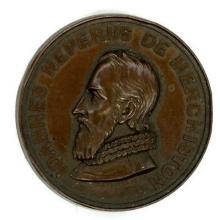
Thomas Makdougall Brisbane became an honorary member of the Royal Irish Academy in 1836.
Awards
Order of the Bath
United Kingdom
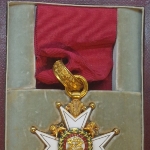
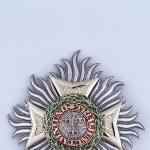
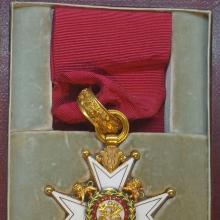
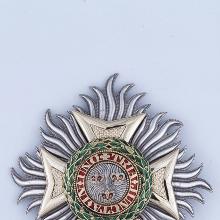
Thomas Makdougall Brisbane was created Knight Commander of the Order of the Bath in 1814.
Order of the Bath
United Kingdom
Thomas Brisbane was created Knight Grand Cross of the Order of the Bath in 1837.
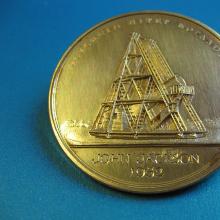
Gold Medal of the Royal Astronomical Society
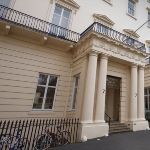
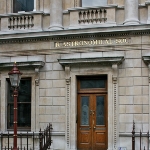
Royal Astronomical Society (RAS), Burlington House, Piccadilly, Mayfair, London W1J 0BD, United Kingdom
Thomas M. Brisbane was the first patron of science in Australia, and as such was eulogised by Sir John Herschel when he presented Brisbane with the gold medal of the Royal Astronomical Society in 1828.
Keith Medal
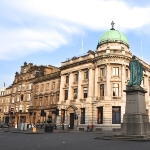
Royal Society of Edinburgh, 22-26 George St, Edinburgh EH2 2PQ, United Kingdom
In 1848, Thomas Brisbane was awarded the Keith Medal for the Makerstoun Observations on Magnetic Phenomena.
Royal Guelphic Order
Germany
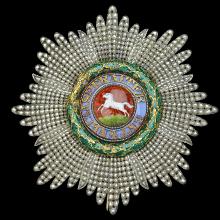
Thomas Brisbane was created Knight Grand Cross of the Royal Guelphic Order.
Military General Service Medal
United Kingdom
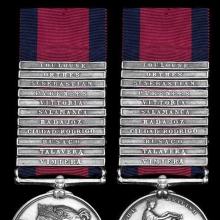
Thomas Brisbane received the silver war medal with one clasp for the Nive.
Royal Astronomical Society (RAS), Burlington House, Piccadilly, Mayfair, London W1J 0BD, United Kingdom
Thomas M. Brisbane was the first patron of science in Australia, and as such was eulogised by Sir John Herschel when he presented Brisbane with the gold medal of the Royal Astronomical Society in 1828.
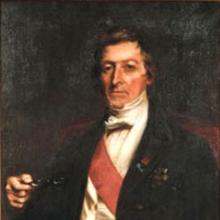
Major General Sir Thomas Makdougall Brisbane, 1st Baronet, was a British Army officer, administrator, and astronomer. Upon the recommendation of the Duke of Wellington, with whom he had served, he was appointed governor of New South Wales from 1821 to 1825. A keen astronomer, he built the colony's second observatory and encouraged scientific and agricultural training.
Background
Ethnicity:
Thomas M. Brisbane was descended from the distinguished Brisbane family of Bishopton.
Thomas Makdougall Brisbane was born on July 23, 1773, at Brisbane House in Noddsdale, near Largs, Scotland, the son of Sir Thomas Brisbane and Dame Eleanora Bruce.
Education
His early education was under tutors at home; he then studied at Edinburgh University and at Kensington Academy, where he attended lectures on astronomy and mathematics.
Career
In his seventeenth year, Brisbane joined the army as an ensign in 1789, and progressively advanced to the rank of general (1841). He saw active service in Europe, the West Indies, and Canada.
Brisbane’s decision to master practical astronomy came on his first voyage to the West Indies (1795), when an error of the ship’s commander in taking the longitude resulted in their being almost wrecked.
Retired on half pay for health reasons from 1805 to 1810, Thomas Brisbane built an observatory at Brisbane House in 1808 and became skilled in the use of astronomical instruments. This was the second of two observatories then in Scotland and the foremost in equipment, having a four-and-a-half-foot transit and an altitude and azimuth instrument (both by Troughton), a mural circle, and an equatorial. During the Peninsular campaigns (1812-1813) Brisbane took regular observations with a pocket sextant and, while serving in France (1815-1818), computed a set of tables for determining apparent time with a sextant from the altitudes of the sun and stars. These tables, commissioned by the Duke of Wellington and published privately by the army in 1818, also formed the subject of his first scientific contribution to the Royal Society of Edinburgh.
Appointed governor of New South Wales in 1821, Brisbane decided to establish, at his own expense, an observatory at Paramatta, in order to promote knowledge of the then little-known stars of the Southern Hemisphere. The observatory, equipped with a five-and-a-half-foot transit and a two-foot mural circle by Trough ton and other instruments, opened on May 2, 1822, under his personal direction, with Charles Rumker and James Dunlop as observers. The importance of this station was underlined a month later by Dunlop’s rediscovery, in its predicted place (invisible from Europe), of Encke’s comet, thus establishing the existence of comets of short period and providing information on their spatial motions. Besides standard astronomical observations, the greatest effort at Paramatta was the cataloging of 7,385 stars between 1822 and 1826 ("Brisbane Catalogue," 1835). Unfortunately, the inherent unsteadiness of the transit instrument used in this program has since caused the catalog to prove largely useless.
When he returned to Scotland, Brisbane built and equipped another observatory at Makerstoun in 1826, making astronomical observations there until about 1847. It is noteworthy, since he later supported a worldwide effort - instigated by Humboldt in 1837 and undertaken by the British and other national governments, the East India Company, and private enterprise in 1839 - to elucidate the problems of terrestrial magnetism, that a personal letter from him to the Royal Society of Edinburgh dated as early as March 15, 1830, regrets that the taking of magnetic measurements should be neglected in Britain. His support of the international cooperation took the form of personally founding and equipping a magnetic observatory at Makerstoun in 1841, thus filling the need, in view of its extreme northwesterly position in Europe, of taking magnetic measurements in Scotland. The results obtained at this station under the director John Allan Broun now constitute the most valuable fruits of Brisbane’s patronage of science.
Achievements
Thomas Makdougall Brisbane was a soldier, colonial governor, astronomer, and patron of science, who built an astronomical observatory at Parramatta, Australia, and a combined observatory and magnetic station at Makerstoun, Roxburghshire, Scotland.
He founded a gold medal for the encouragement of scientific research to be awarded by the Royal Society of Edinburgh.
Thomas Brisbane also received honorary degrees from Edinburgh (1824), Oxford (1832), and Cambridge (1833).
Numerous streets, rivers, bridges, hotels are named in his honor.
Many other uses of Brisbane derive from the Australian city and hence are indirectly named after Thomas Brisbane.
In 1810, Thomas Makdougall Brisbane was elected a fellow of the Royal Society.
Royal Society
,
United Kingdom
1810
Thomas Brisbane became a corresponding member of the Paris Institute in 1816 (for protecting its premises from military attack earlier that year).
Paris Institute
,
France
1816
Thomas M. Brisbane was elected a vice-president of the Astronomical Society in 1827.
Royal Astronomical Society (RAS)
,
United Kingdom
1827
In 1833, Thomas Brisbane was elected president of the Royal Society of Edinburgh.
Royal Society of Edinburgh
,
United Kingdom
1833
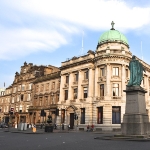
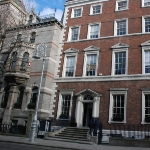
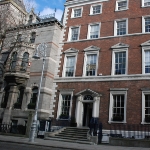
Thomas Makdougall Brisbane became an honorary member of the Royal Irish Academy in 1836.
Royal Irish Academy
,
Ireland
1836
Connections
In November 1819, Thomas M. Brisbane married Anna Maria Hay Makdougall of Makerstoun, Roxburghshire, Scotland. They had two sons and two daughters.
Father:
Thomas Brisbane
Mother:
Dame Eleanora Brisbane (Bruce)
Wife:
Anna Maria Hay Brisbane (Makdougall)
Daughter:
Isabella Maria Brisbane
Son:
Thomas Stewart Brisbane
Daughter:
Eleanor Helen Brisbane
Son:
Thomas Australia Brisbane
Friend:
Arthur Wellesley
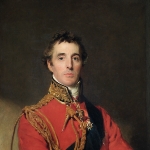
Arthur Wellesley, 1st Duke of Wellington, was a British soldier and Tory statesman who was one of the leading military and political figures of 19th-century Britain, serving twice as Prime Minister. His victory against Napoleon at the Battle of Waterloo in 1815 puts him in the first rank of Britain's military heroes.
Gold Medal of the Royal Astronomical Society,
United Kingdom
Thomas M. Brisbane was the first patron of science in Australia, and as such was eulogised by Sir John Herschel when he presented Brisbane with the gold medal of the Royal Astronomical Society in 1828.
Thomas M. Brisbane was the first patron of science in Australia, and as such was eulogised by Sir John Herschel when he presented Brisbane with the gold medal of the Royal Astronomical Society in 1828.
Thomas Brisbane was created Knight Grand Cross of the Royal Guelphic Order.
Thomas Brisbane was created Knight Grand Cross of the Royal Guelphic Order.
Army Gold Medal,
United Kingdom
For his services in the Peninsula, Thomas M. Brisbane received the Army Gold Cross with one clasp for the battles of Vitoria, the Pyrenees, Nivelle, Orthez, and Toulouse.
For his services in the Peninsula, Thomas M. Brisbane received the Army Gold Cross with one clasp for the battles of Vitoria, the Pyrenees, Nivelle, Orthez, and Toulouse.