Background
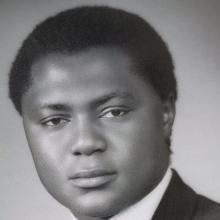
Tom Mboya was born about August 15, 1930, at Kilima Mbogu, near Nairobi, where his father, a Luo tribesman from Rusinga Island in Lake Victoria, was employed on a European sisal estate.


(Ariel. Barcelona. 1966. 22 cm. 281 p. Encuadernación en t...)
Ariel. Barcelona. 1966. 22 cm. 281 p. Encuadernación en tapa blanda de editorial ilustrada. Colección 'Nuestro siglo por dentro'. Traducido por Raimundo Griñó ; prólogo de Fernando Morán. Panafricanismo. Kenia. Historia. 1895-1963. África. Política y gobierno. 1960-. Griñó Damians, Raimundo. Morán, Fernando. 1926- .. Este libro es de segunda mano y tiene o puede tener marcas y señales de su anterior propietario. Cubierta deslucida.
http://www.amazon.com/gp/product/B00I8P0T9G/?tag=2022091-20

http://www.amazon.com/gp/product/B004IA83JI/?tag=2022091-20

(In this third issue of Health of Nation series, Health fo...)
In this third issue of Health of Nation series, Health for 21st Century Plus, we discuss five priority areas considered critical to prevent failure to achieve health and health-related targets of the Sustainable Development Goals 2016-2030. They are by no means easy. They require reforms but builds on the work already done or ongoing. Facing the Bull by the Horn in order to effect greater efficiency and effectiveness in improving health of the worlds peoples requires realistic and feasible progressive steps of a Journey of a thousand miles. We discuss new ways to foster innovation for new heath products using ANDI model in all WHO regions in order to manage the problems of antimicrobial resistance, neglected tropical diseases as well as diseases with no known cure. Necessary reforms of the WHO Secretariat to make it focus greater attention on providing technical assistance to States to substantially increase domestic health financing, and to strengthen consultation and cooperation among States and, with non-State actors considered doable, low hanging fruits. The difficult but doable reforms requests the 2016 United Nations Secretary-General High-Level Task on access to medicines to prioritize consultations towards a Convention on Universal health coverage, a Convention on Global Strategy and Plan of Action on Public Health, Innovation, Intellectual Property, Sustainable financing for research and development as well as a Framework Convention for training, accreditation and motivation of health professionals, among others. Strengthening International Health Regulations 2005 by further action by UN Security Council, Conference on Disarmament and the World Trade Organization considered. The World has gone crazy with a new epidemic of complex State-sponsored conflicts, with potential for access to biological, chemical, nuclear and other weapons of mass destructions by crazy people. Disease outbreaks have negative impact on international trade. Health for 21st Century Plus provides the way forward based on research evidence on improving quality in health care for the worlds peoples as well as over three decades of experience and knowledge contributing to making and managing health policy reforms at national and global levels.
http://www.amazon.com/gp/product/153501623X/?tag=2022091-20

(This collection of Mboya's speeches includes an introduct...)
This collection of Mboya's speeches includes an introduction written before his assassination.
http://www.amazon.com/gp/product/0435900811/?tag=2022091-20
Tom Mboya was born about August 15, 1930, at Kilima Mbogu, near Nairobi, where his father, a Luo tribesman from Rusinga Island in Lake Victoria, was employed on a European sisal estate.
Mboya was educated at various Catholic mission schools. In 1942, he joined a Catholic Secondary School in Yala, in Nyanza province, St. Mary's School Yala.
In 1946, he went to the Holy Ghost College (later Mang'u High School), where he passed well enough to proceed to do his Cambridge School Certificate. In 1948, Mboya joined the Royal Sanitary Institute's Medical Training School for Sanitary Inspectors at Nairobi, qualifying as an inspector in 1950.
In 1955, he received a scholarship from Britain's Trades Union Congress to attend Ruskin College, Oxford, where he studied industrial management. Upon his graduation in 1956, he returned to Kenya and joined politics at a time when the British government was gaining control over the Kenya Land Freedom Army Mau Mau uprising.
Here Mboya's first political inclinations became apparent when he was elected president of the student council. On successfully completing the course he accepted employment in Nairobi (1951 - 1953), devoting his abundant energies to union work.
The European-dominated society of Kenya had been struck by the Mau Mau resistance movement in 1952, and Mboya, already much impressed by the leadership qualities of Jomo Kenyatta, whom the British had sent into detention, gradually moved into politics.
He was one of the few African leaders not to be detained during the years of the Mau Mau.
This work brought him into the orbit of the International Confederation of Free Trade Unions. In 1958 Mboya was elected to its board, and he became an increasingly well-known member to the European and American supporters of the confederation.
Within Kenya he gained his first general fame for his role in the Mombasa dock strike of 1955, where his involvement helped the workers to gain a 33 percent pay raise.
On returning to Kenya, Mboya entered directly into politics; he was elected to the Legislative Council in 1957.
He rose in importance as Kenya went on to independence. When it was achieved in 1963, he gained Cabinet rank as minister of economic planning and development, continuing to exercise a predominant role in the affairs of his country until his assassination in July 1969.
His tragic death undoubtedly prevented him from fulfilling a career as one of the great East Africans of the 20th century.
He helped build the Trade Union Movement in Kenya, Uganda and Tanzania and across Africa. At one time, he served as the Africa Representative to the International Confederation of Free Trade Unions (ICFTU). In May 1959, Mboya called a conference in Lagos, Nigeria to form the first All-Africa ICFTU labour organisation.
He helped to found the Kenya Local Government Workers Union, comprising employees of the Nairobi City Council, and became its general secretary (1953 - 1957).
Mboya's increasing involvement in union affairs led to difficulties with his employers, and he soon resigned his position as sanitary inspector to participate fully in union work; by 1954 he had developed his organization into one of Africa's most successful unions.
He worked with then United States Senator John F. Kennedy (later president of the US) and Dr. Martin Luther King, Jr to create education opportunities for African students; this effort resulted in African Airlifts of the 1950s - 60s, which enabled African students to study at United States colleges.
(In this third issue of Health of Nation series, Health fo...)
(This collection of Mboya's speeches includes an introduct...)
(Ariel. Barcelona. 1966. 22 cm. 281 p. Encuadernación en t...)
Since his parents were Roman Catholics, he attended a series of mission schools, completing this phase of education at Holy Ghost College, a secondary school located near his birthplace.
Mboya joined Kenyatta's party, the Kenya Africa Union, and served as its acting treasurer until the organization was banned by the British in 1953. With open political action made virtually impossible, Mboya worked for the same ends through the labor movement, especially through the Kenya Federation of Labour; he was its secretary general from 1953 to 1963.
Mboya's intelligence, charm, leadership and oratory skills won him admiration from all over the world.
He married Pamela Mboya (née Odede) in 1960 at St. Peters Clavers Church, Nairobi. They had five children: Maureen Odero; Nairobi First Lady Dr. Susan Mboya; Luke Mboya; Peter Mboya; Patrick Mboya.