(A novel based on elements of Brittain's life, including a...)
A novel based on elements of Brittain's life, including a failed friendship with Phyllis Bentley, her feelings for George Brett Jr., and the death of her brother Edward.
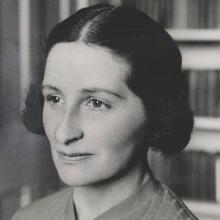
Vera Mary Brittain was an English writer, feminist, socialist, and pacifist. Her service as a Voluntary Aid Detachment nurse in the First World War and the deaths of people close to her shaped Testament of Youth (1933), the best-selling memoir that made her widely known. She also wrote novels, journalism, biography, and works opposing war and the bombing of civilians.
Background
Brittain was born in Newcastle-under-Lyme to paper manufacturer (Thomas) Arthur Brittain (1864–1935) and Edith Mary (Bervon) Brittain (1868–1948). Her father was a director of the family's paper mills in Hanley and Cheddleton. Her mother, born in Aberystwyth, Wales, was the daughter of John Inglis Bervon, a musician whose family was impoverished.
When Vera was 18 months old, the family moved to Macclesfield, Cheshire, and in 1905 moved again, to Buxton in Derbyshire. Her only sibling, Edward, nearly two years younger, was her closest companion as she grew up.
Education
At 13, Brittain became a boarder at St Monica's School in Kingswood, Surrey. Her maternal aunt, Florence Bervon, known as Miss Bervon, was a co-principal with Louise Heath-Jones, who had attended Newnham College, Cambridge. Brittain spent two years as a provincial debutante before persuading her father to accept her plan for university study.
She entered Somerville College, Oxford, in 1914 to study English literature, taught by Hilda Lorimer and others. As male contemporaries volunteered for the war, she felt increasingly detached from academic study and postponed her degree after one year, in the summer of 1915. She returned to Oxford in 1919 to read history; adjusting to postwar life as a war survivor made her studies difficult.
Brittain worked as a Voluntary Aid Detachment nurse for much of the First World War. She began at the Devonshire Hospital in Buxton and later served in London, Malta, and France. While stationed near the front at Étaples, she nursed German prisoners of war; the experience contributed to her developing internationalism and pacifism. Roland Leighton, her fiancé, her brother Edward, and close friends Victor Richardson and Geoffrey Thurlow were killed during the war. Edward died in action on the Italian Front in 1918, a loss Brittain never fully overcame.
Her first novel, The Dark Tide (1923), caused a stir by making satirical portraits of Oxford academics, particularly those at Somerville. In the 1920s she wrote widely for Time and Tide and other newspapers and journals. She also spoke regularly for the League of Nations Union, supporting collective security. Her novels often drew on actual experiences and people: Honourable Estate (1936), for example, incorporated her failed friendship with novelist Phyllis Bentley, her romantic feelings for American publisher George Brett Jr., and her brother's death.
Testament of Youth appeared in 1933 and became a bestseller in Britain and the United States. The memoir recounted her wartime experiences and marked the start of her movement toward pacifism. Some critics have observed that its account of her attitudes toward the war differs notably from her more conventional views in writings from 1914 to 1918. She followed it with Testament of Friendship (1940), a tribute to and biography of Winifred Holtby, and Testament of Experience (1957), continuing her autobiography through the years 1925–1950. Other works included the autobiographical Thrice a Stranger (1938), the novels Born 1925 (1948) and Honourable Estate, and books on women, literary figures, and history.
In June 1936, Brittain spoke at a large peace rally at Maumbury Rings in Dorchester, sharing the platform with Dick Sheppard, George Lansbury, Laurence Housman, and Donald Soper. Sheppard invited her to sponsor the Peace Pledge Union. After six months of reflection, she accepted in January 1937 and later that year joined the Anglican Pacifist Fellowship. She contributed to the pacifist magazine Peace News from the 1930s, eventually serving on its editorial board. Her Letters to Peacelovers series began during the Second World War.
Brittain put her pacifism into practical service during that war, working as a fire warden and travelling around the country to raise money for the Peace Pledge Union's food-relief campaign. Her 1944 booklet against the saturation bombing of German cities appeared in Britain as Seed of Chaos and in the United States as Massacre by Bombing; her opposition drew public vilification. In 1945 her name was included in the Nazi Black Book, a list of nearly 3,000 people slated for immediate arrest in Britain in the event of a German invasion. In the 1950s and 1960s, her Peace News articles opposed apartheid and colonialism and advocated nuclear disarmament.
In November 1966, Brittain fell on a poorly lit London street while travelling to a speaking engagement at St Martin-in-the-Fields. She went ahead with the engagement despite a fractured left arm and a broken little finger on her right hand. The injuries preceded a physical decline, with increasing confusion and withdrawal. In a BBC interview around this time, asked about Roland Leighton, she responded, “Who is Roland?”
Brittain died in Wimbledon on 29 March 1970, aged 76. In her will, she asked for her ashes to be scattered on Edward's grave on the Asiago Plateau in Italy, writing that much of her heart had remained in that village cemetery for nearly 50 years. Her daughter carried out the request in September 1970. Some of Brittain's ashes were placed in 1979 in the grave of her husband, Sir George Catlin, in the churchyard of St James the Great at Old Milverton, Warwickshire. Her archive was sold to McMaster University in Hamilton, Ontario, in 1971. Paul Berry and Mark Bostridge later donated another collection of papers, assembled while writing their authorized biography, to Somerville College Library.
Brittain's work continued to appear in posthumous editions and adaptations. Alan Bishop and Terry Smart edited her 1913–1917 diaries as Chronicle of Youth (1981); Paul Berry and Alan Bishop edited her journalism with Holtby as Testament of a Generation (1985). Her diary of the 1930s appeared as Chronicle of Friendship (1986), and her 1939–1945 diary as Wartime Chronicle (1989). In 1996 the PBS documentary series The Great War and the Shaping of the 20th Century covered her writing and experiences in its episode “Total War.” Alan Bishop and Mark Bostridge edited her wartime letters as Letters from a Lost Generation (1998); Bostridge adapted them for a BBC Radio 4 series starring Amanda Root and Rupert Graves. In 2008, Virago issued Because You Died, a selection of her First World War poetry and prose, edited and introduced by Bostridge to mark the ninetieth anniversary of the Armistice.
Cheryl Campbell portrayed Brittain in the 1979 BBC2 television adaptation of Testament of Youth. Fellow Anglican Pacifist Fellowship member and songwriter Sue Gilmurray wrote the memorial song “Vera.” BBC One's Remembrance Day schedule on 9 November 2008 included the hour-long documentary A Woman in Love and War: Vera Brittain, hosted by Jo Brand, with Katherine Manners portraying Brittain. BBC Films planned a feature adaptation of Testament of Youth in 2009. Saoirse Ronan was first cast, but Alicia Vikander was announced for the role in December 2013. The film was released in 2014 as part of the First World War commemorations; its cast also included Kit Harington, Colin Morgan, Taron Egerton, Alexandra Roach, Dominic West, Emily Watson, Joanna Scanlan, Hayley Atwell, Jonathan Bailey, and Anna Chancellor. David Heyman and Rosie Alison produced it.
In 2018, Wall Street Journal opinion writer Aaron Schnoor included Brittain's poem “Perhaps” in a tribute to First World War poetry. The Buxton Festival opened a run of The Land of Might-Have-Been performances on 7 July 2023. The musical used existing songs by Ivor Novello to present a fictionalized account of Brittain's life in 1914 and 1915, her relationships with Roland and Edward, the war's effects, and Edward's fictional gay lover, Bobbie Jones. Plaques mark former Brittain homes at 9 Sidmouth Avenue in Newcastle-under-Lyme, 151 Park Road in Buxton, Doughty Street in Bloomsbury, and 117 Wymering Mansions in Maida Vale, west London. A further plaque in Buxton Pavilion Gardens commemorates her residence there, although the dates on it are wrong. Brittain inspired Maud Gaunt, a secondary character in Alice Winn's 2023 novel In Memoriam.
Testament of Youth (1933), Brittain's memoir of the First World War and its personal consequences, became a bestseller in Britain and the United States and established her as a prominent writer on wartime experience.
Brittain's writing and public campaigning made her a prominent advocate of pacifism and collective security, and a critic of the bombing of civilians. Her journalism also addressed apartheid, colonialism, and nuclear disarmament.
Brittain moved among liberal Christian and secular humanist circles during the 1930s. Her later pacifism drew increasingly on Christian inspiration, and in 1937 she joined the Anglican Pacifist Fellowship. At a 1935 address to the Rationalist Press Association, she welcomed the growth of scientific reading and argued that reason could help people resist superstition, restrictive conventions, and destructive passions.
Politics
Brittain was a socialist and pacifist whose public writing and speeches opposed war, colonialism, and apartheid. She supported collective security through the League of Nations Union and later became a sponsor of the Peace Pledge Union. Her journalism in the 1950s and 1960s called for nuclear disarmament and criticized colonial rule and apartheid.
Views
Brittain's pacifism grew from her wartime nursing experiences into internationalism and, later, a position increasingly influenced by Christian ideas. She believed opposition to war could accompany practical service: during the Second World War she undertook fire-warden duties and raised funds for food relief while resisting the bombing of civilians.
In a 1935 address to the Rationalist Press Association, Brittain praised the decline of superstition and the wider public interest in scientific books. She held that reason and human intelligence could help people challenge restrictive conventions and destructive passions. Her later journalism also reflected her opposition to colonialism and apartheid and her support for nuclear disarmament.
Membership
Brittain became a sponsor of the Peace Pledge Union, a British pacifist organization, and joined the Anglican Pacifist Fellowship in 1937. She also served on the editorial board of Peace News, a magazine that published pacifist writing; this editorial role was part of her journalistic work.
Sponsor
Peace Pledge Union
,
United Kingdom
1937
Anglican Pacifist Fellowship
,
United Kingdom
1937
Personality
Physical Characteristics:
The injuries Brittain sustained in her 1966 fall—a fractured left arm and a broken little finger on her right hand—were followed by physical decline, confusion, and withdrawal.
Quotes from others about the person
Brittain's reception has included debate over how her postwar memoir represented her wartime outlook: some critics have argued that Testament of Youth differs considerably from the more conventional views in her writings during the war. In a 2018 Wall Street Journal opinion commentary, Aaron Schnoor paid tribute to First World War poetry by including Brittain's poem “Perhaps.” Her continuing cultural presence is also reflected in adaptations, memorial works, and Alice Winn's use of her as an inspiration for the fictional Maud Gaunt.
Connections
Brittain's brother Edward was her only sibling and closest childhood companion. She became engaged to Roland Leighton in August 1915; he had been one of Edward's friends at Uppingham School. She was also close to Victor Richardson and Geoffrey Thurlow. Many letters exchanged among Brittain, Leighton, Edward, and their circle were later gathered in Letters from a Lost Generation.
Brittain met Winifred Holtby at Somerville College, where their close friendship began. They shared London flats after leaving Oxford, and Holtby later became part of the Brittain-Catlin household. Their friendship lasted until Holtby's death in 1935 from renal failure caused by glomerulonephritis. Brittain's Testament of Friendship was her tribute and biography of Holtby.
In 1925 Brittain married political scientist George Catlin (1896–1979). Both had been raised Anglican; Catlin's father was an Anglican clergyman, and Catlin later converted to Catholicism. Their son, John Brittain-Catlin (1927–1987), was an artist, painter, and businessman. His relationship with his mother deteriorated as he grew older; his autobiography, Family Quartet, was published posthumously in 1987. Their daughter Shirley Williams (1930–2021) became a Labour Cabinet minister and later a Liberal Democrat peer. In 1981 she was one of the “Gang of Four” rebels on the Social Democratic wing of the Labour Party who founded the Social Democratic Party.
Other literary contemporaries at Somerville included Dorothy L. Sayers, Hilda Reid, Margaret Kennedy, and Sylvia Thompson.
Father:
(Thomas) Arthur Brittain
Paper manufacturer and director of the family-owned mills in Hanley and Cheddleton.
Mother:
Edith Mary (Bervon) Brittain
Born in Aberystwyth, Wales; daughter of musician John Inglis Bervon.
husband:
George Catlin
Political scientist (1896–1979); raised Anglican and later converted to Catholicism. He was buried at St James the Great, Old Milverton.
Brother:
Edward Brittain
Brittain's only sibling, nearly two years younger; he was killed in action on the Italian Front in 1918.
fiance:
Roland Leighton
A friend of Edward from Uppingham School who became engaged to Brittain in August 1915 and was killed during the war.
Friend:
Victor Richardson
A close friend who was killed during the First World War.
Friend:
Geoffrey Thurlow
A close friend who was killed during the First World War.
Friend:
Winifred Holtby
Writer; Brittain met her at Somerville College, and they remained close friends until Holtby's death in 1935.
Son:
John Brittain-Catlin
Artist, painter, and businessman; his autobiography Family Quartet was published posthumously in 1987.
Daughter:
Shirley Williams
Labour Cabinet minister and later Liberal Democrat peer; one of the founders of the Social Democratic Party in 1981.
aunt:
Florence Bervon
Known as Miss Bervon, she was co-principal of St Monica's School.
colleague:
Louise Heath-Jones
Co-principal of St Monica's School; she had attended Newnham College, Cambridge.
colleague:
Hilda Lorimer
Taught Brittain at Somerville College, Oxford.
Friend:
Phyllis Bentley
Novelist whose friendship with Brittain failed; their relationship informed Honourable Estate.
colleague:
George Brett Jr.
American publisher for whom Brittain had romantic feelings; he was one of the real-life inspirations incorporated into Honourable Estate.
References
Vera Brittain: A Life
Mark Bostridge's biography of Brittain, published by Little, Brown Book Group.
Behind the Lines: Gender and the Two World Wars
Margaret R. Higonnet's book on gender and the two world wars.
1987
Fighting Forces, Writing Women: Identity and Ideology in the First World War
Sharon Ouditt's study of identity and ideology in women's writing during the First World War.