Background
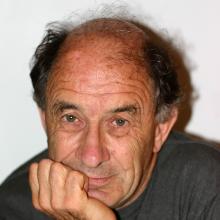
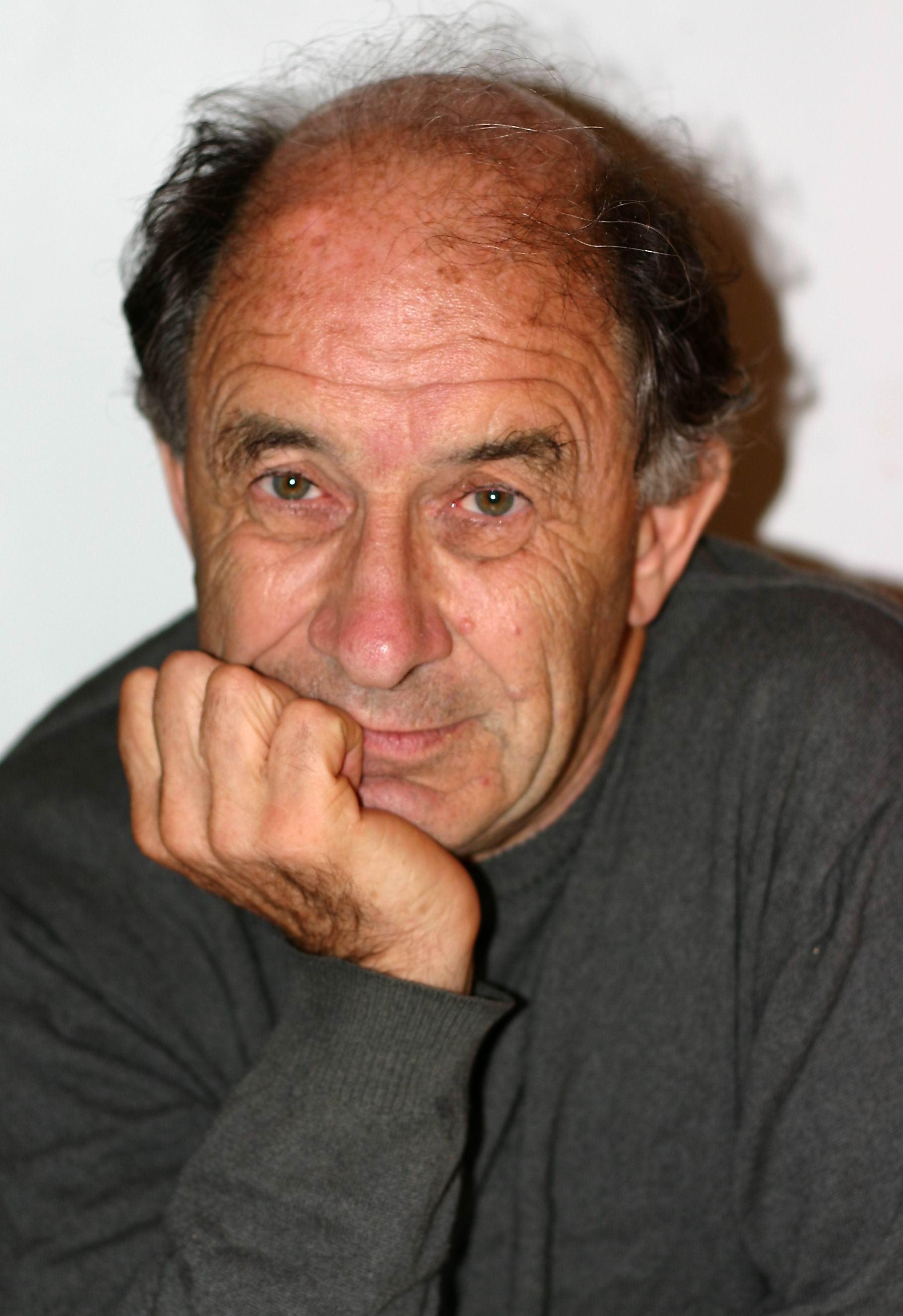
Arnold, Vladimir Igorevich was born on June 12, 1937 in Odessa, Union of the Soviet Socialist Republics. Son of Igor Vladimirovich and Nina Alexandrovna (Isakovich) Arnold.
(In this text, the author constructs the mathematical appa...)
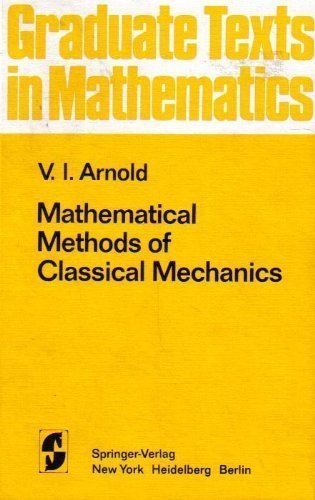
In this text, the author constructs the mathematical apparatus of classical mechanics from the beginning, examining all the basic problems in dynamics, including the theory of oscillations, the theory of rigid body motion, and the Hamiltonian formalism. This modern approch, based on the theory of the geometry of manifolds, distinguishes iteself from the traditional approach of standard textbooks. Geometrical considerations are emphasized throughout and include phase spaces and flows, vector fields, and Lie groups. The work includes a detailed discussion of qualitative methods of the theory of dynamical systems and of asymptotic methods like perturbation techniques, averaging, and adiabatic invariance.
http://www.amazon.com/gp/product/0387903143/?tag=2022091-20
http://www.amazon.com/gp/product/B003VELY0M/?tag=2022091-20
http://www.amazon.com/gp/product/B010WEYPEU/?tag=2022091-20

(This book constructs the mathematical apparatus of classi...)
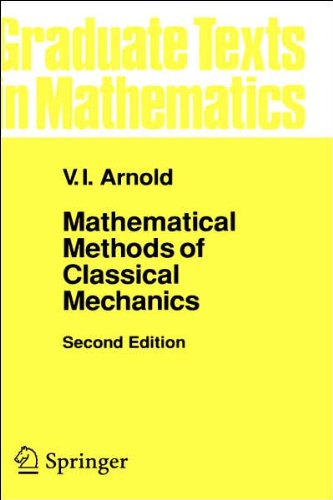
This book constructs the mathematical apparatus of classical mechanics from the beginning, examining basic problems in dynamics like the theory of oscillations and the Hamiltonian formalism. The author emphasizes geometrical considerations and includes phase spaces and flows, vector fields, and Lie groups. Discussion includes qualitative methods of the theory of dynamical systems and of asymptotic methods like averaging and adiabatic invariance.
http://www.amazon.com/gp/product/B006VDZBIG/?tag=2022091-20
http://www.amazon.com/gp/product/B011SJOMBY/?tag=2022091-20
(One of the traditional ways mathematical ideas and even n...)
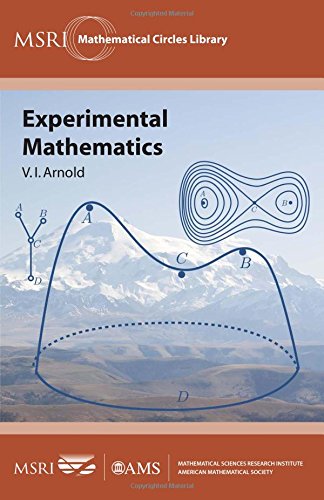
One of the traditional ways mathematical ideas and even new areas of mathematics are created is from experiments. One of the best-known examples is that of the Fermat hypothesis, which was conjectured by Fermat in his attempts to find integer solutions for the famous Fermat equation. This hypothesis led to the creation of a whole field of knowledge, but it was proved only after several hundred years. This book, based on the author's lectures, presents several new directions of mathematical research. All of these directions are based on numerical experiments conducted by the author, which led to new hypotheses that currently remain open, i.e., are neither proved nor disproved. The hypotheses range from geometry and topology (statistics of plane curves and smooth functions) to combinatorics (combinatorial complexity and random permutations) to algebra and number theory (continuous fractions and Galois groups). For each subject, the author describes the problem and presents numerical results that led him to a particular conjecture. In the majority of cases there is an indication of how the readers can approach the formulated conjectures (at least by conducting more numerical experiments). Written in Arnold's unique style, the book is intended for a wide range of mathematicians, from high school students interested in exploring unusual areas of mathematics on their own, to college and graduate students, to researchers interested in gaining a new, somewhat nontraditional perspective on doing mathematics. In the interest of fostering a greater awareness and appreciation of mathematics and its connections to other disciplines and everyday life, MSRI and the AMS are publishing books in the Mathematical Circles Library series as a service to young people, their parents and teachers, and the mathematics profession.
http://www.amazon.com/gp/product/0821894161/?tag=2022091-20

( This book constructs the mathematical apparatus of clas...)
This book constructs the mathematical apparatus of classical mechanics from the beginning, examining basic problems in dynamics like the theory of oscillations and the Hamiltonian formalism. The author emphasizes geometrical considerations and includes phase spaces and flows, vector fields, and Lie groups. Discussion includes qualitative methods of the theory of dynamical systems and of asymptotic methods like averaging and adiabatic invariance.
http://www.amazon.com/gp/product/0387968903/?tag=2022091-20
educator mathematics researcher
Arnold, Vladimir Igorevich was born on June 12, 1937 in Odessa, Union of the Soviet Socialist Republics. Son of Igor Vladimirovich and Nina Alexandrovna (Isakovich) Arnold.
Doctor of Philosophy, Moscow State University, 1959. Doctor of Philosophy (honorary), University P. et M. Curie Paris, 1979. Doctor of Philosophy (honorary), University Warwick, England, 1988.
Doctor of Philosophy (honorary), Utrecht University, The Netherlands, 1991. Doctor of Philosophy (honorary), University Bologna, Italy, 1991. Doctor of Philosophy (honorary), University Toronto, Canada, 1997.
Doctor in Physical Mathematics Science, Keldysh Applied Mathematics Institute, Moscow, 1963.
Dozent mathematics faculty, Moscow State University, 1963-1965; professor, Moscow State University, 1965-1986; professor, Steklov Mathematics Institute, Moscow, since 1986; professor, U. Paris-Dauphine, since 1993.
(In this text, the author constructs the mathematical appa...)
(This book constructs the mathematical apparatus of classi...)
( This book constructs the mathematical apparatus of clas...)
(One of the traditional ways mathematical ideas and even n...)
Fellow Russian Academy of Sciences, Russian Natural Sciences Academy, Moscow Mathematics Society (vice president 1966, president 1996), American Phil. Society (foreign), London Mathematics Society (honorary), National Academy of Sciences (foreign), American Academy Arts and Sciences (foreign), Royal Society London (foreign), Academy des Sciences Paris (foreign associate), Academy Lincei Rome (foreign), Academy Europaea, European Academy of Sciences, International Mathematics Union (vice president 1995-1999).
Married Nadejda Nikolaevna Brouchlinskaia (divorced). 1 child, Igor; Married Elionora Alexandrovna Voronina, December 25, 1976. 1 child, Dimitri.